
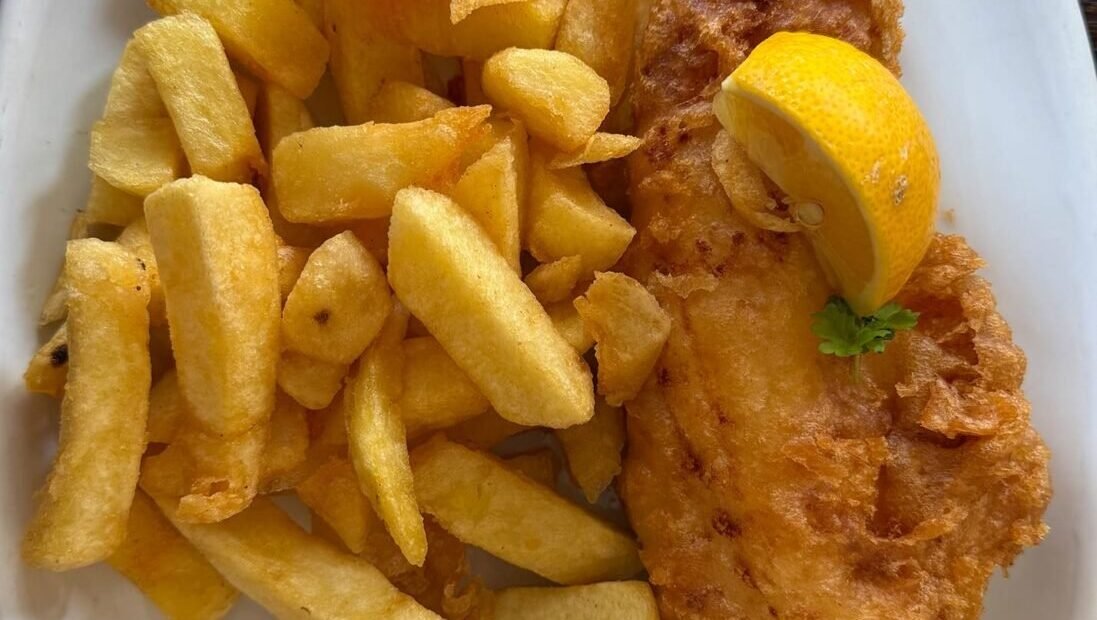
Learning how to make fish and chips at home without a deep fryer is one of the most satisfying kitchen upgrades there is. A chippy tea costs a tenner a head these days, and while nothing truly replaces the local chip shop, you can get remarkably close at home — crispy batter, fluffy chips, the works — with nothing more exotic than your oven and a frying pan.
The secret is splitting the job: chips go in the oven (where you can get them genuinely crisp with the right technique), and the fish gets shallow-fried in a pan with an inch of oil. No vat of bubbling fat, no lingering smell for three days, no special equipment. Here's exactly how.
Fish and Chips at Home Without a Deep Fryer: The Two-Part Method
Proper chip-shop chips are fluffy inside and crisp outside, and the oven can absolutely deliver that. Use Maris Piper or King Edward potatoes — floury varieties that go fluffy. Cut them thick (about 1.5cm), rinse off the surface starch, then parboil for 8 minutes until the edges just start to soften and go fluffy. Drain, let them steam-dry in the colander for 5 minutes (this step is crucial — wet chips steam instead of crisping), then rough them up a bit by shaking the colander.
Toss with 2-3 tablespoons of oil and plenty of salt, spread on a hot baking tray in a single layer with space between each chip, and roast at 220°C fan for 35-45 minutes, turning once. The parboiling-plus-roughing creates a craggy surface that goes shatteringly crisp. Beef dripping instead of oil, if you can get it from a butcher, gives the most authentic chip-shop flavour — it's what the best chippies still use. These are essentially the same principles as a what is the best way to cook salmon without drying it out: fluffy interior, crisp exterior, hot oven.
- Use Maris Piper or King Edwards, cut thick at 1.5cm
- Parboil 8 mins, steam-dry 5 mins, rough up the edges
- Single layer on a hot tray with space between chips
- 220°C fan for 35-45 minutes; beef dripping for authentic flavour
The Fish: Crispy Batter From a Shallow Pan
For the fish, cod and haddock are traditional; pollock is a cheaper, sustainable alternative that tastes excellent in batter. The batter is simple: 150g self-raising flour, 200ml very cold lager or sparkling water, a pinch of salt and a teaspoon of turmeric for colour. Cold liquid is the key — it slows gluten development and makes the batter crisp rather than chewy. Whisk it just before frying and don't overmix; lumps are fine.
Heat 1-2cm of vegetable or sunflower oil in a deep frying pan until it hits 180°C (a cube of bread should sizzle and brown in 30 seconds). Pat the fish completely dry, season, dust lightly with flour, then dip in batter and lower away from you into the oil. Fry 4-5 minutes per side until deep golden. Don't crowd the pan — two fillets max — and keep the oil temperature up between batches. Drain on a wire rack over a tray, not on kitchen paper, which traps steam and softens the crust. If you're what is the best way to defrost chicken safely, apply the same one-hour rule here: battered fish shouldn't hang around.
The Full Chippy Experience: Sides and Serving
Fish and chips without the trimmings is only half the job. Mushy peas take 10 minutes: frozen peas simmered until soft, mashed roughly with butter, salt and a splash of vinegar. Homemade tartare sauce is just mayo, chopped gherkins, capers and lemon — infinitely better than the jar. And chip-shop curry sauce? A spoonful of curry powder fried in butter, stirred into a roux with stock, done in 5 minutes.
Serve it properly: on warmed plates (or actual newspaper-style paper if you're committing to the bit), with salt and vinegar applied generously at the table, never before — vinegar on too early makes the batter soggy. Lemon wedges for the fish. And a proper brew to wash it down. A how do i make a proper gravy from scratch made while the chips roast rounds out the most British dinner imaginable.
- Mushy peas: frozen peas, butter, salt, vinegar — 10 minutes
- Tartare sauce: mayo + gherkins + capers + lemon
- Salt and vinegar at the table, never before serving
- Serve on warmed plates the moment everything is ready
The Air Fryer Shortcut (If You Have One)
If you own an air fryer, the fish gets even easier. Battered fish doesn't work well in an air fryer (wet batter drips through the basket), but breaded fish does brilliantly: flour, beaten egg, then panko breadcrumbs pressed on firmly. Air fry at 200°C for 10-12 minutes, flipping once, and you get a genuinely crisp crumb coating with a fraction of the oil. It's not traditional chip-shop batter, but it's delicious in its own right and far healthier.
Chips in the air fryer are superb too — parboiled as above, tossed in a teaspoon of oil, 200°C for 18-20 minutes with a shake halfway. Honestly, if weeknight fish and chips becomes a regular craving, the air fryer earns its counter space fast. BBC Good Food's fish and chips recipe
- Battered fish needs shallow frying; breaded fish suits the air fryer
- Panko + egg + flour gives a crisp crumb at 200°C for 10-12 mins
- Air fryer chips: parboil, 1 tsp oil, 200°C, 18-20 mins
- Wet batter drips through air fryer baskets — don't attempt it
Choosing Sustainable Fish for Your Chippy Tea
Cod and haddock are traditional, but stocks are under pressure — and the alternatives are excellent. Pollock is the closest swap (mild, flaky, half the price), coley is even cheaper and delicious in batter, and hake is the connoisseur's choice. Ask your fishmonger what's sustainable and in season; they'll respect the question and often point you at something better and cheaper than what you asked for.
Look for MSC-certified fish where you can — the blue label means it's from a certified sustainable fishery. Frozen fish is often fresher than 'fresh' (frozen at sea within hours), cheaper, and perfect for battering from… well, defrost it first for the best batter adhesion. Eating sustainable fish isn't about sacrifice; it's about discovering that the cheaper, better-stocked fish was delicious all along.
Practical Takeaway
Making fish and chips at home without a deep fryer is entirely doable: parboiled, roughed-up oven chips at high heat, and shallow-fried battered fish in an inch of hot oil. Cold batter, dry fish, hot oil, wire rack for draining — those four details are the whole game. Add mushy peas and tartare sauce and you've got a chippy tea for a third of the takeaway price.


