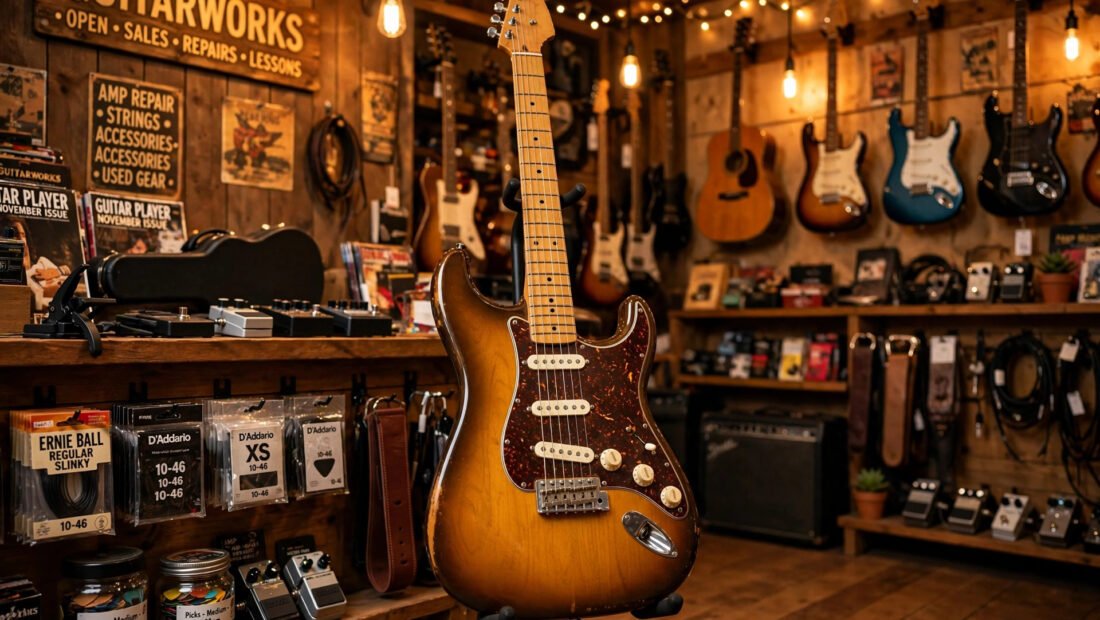
Walk into any guitar shop in Nottingham and the wall of instruments is thrilling and paralysing: dozens of shapes, brands you have never heard of, prices from £99 to £9,000. As a complete beginner with £300, you are actually in a great position — the budget guitar market has never been better, and £300 buys a genuinely good instrument that will not fight you while you learn. The trick is knowing what matters and what is marketing.
This guide walks you through choosing your first electric guitar: the shapes that suit beginners, the brands that deliver at this price, what to check before buying, and the amp question.
The Shapes: Strat, Les Paul, or Something Else?
Three body shapes dominate the beginner market. The Stratocaster style (Squier, Yamaha Pacifica): contoured body, comfortable to hold, versatile single-coil/humbucker pickup combinations, lighter weight — the default recommendation for good reason. The Les Paul style (Epiphone, Harley Benton): thicker, warmer humbucker sound, heavier, shorter scale length (slightly easier string bending) — great for rock and blues. Superstrat/shredder styles (Ibanez, Jackson): thin necks, flat fingerboards, built for speed — exciting but less forgiving for chord work.
For a complete beginner, the Strat-style is the safest choice: comfortable, versatile across genres, and easy to resell if you change direction. But the real rule: buy the one you cannot put down. Motivation is the scarcest resource in learning guitar, and the guitar you love looking at gets played. Try several shapes in the shop — comfort in your hands beats theory every time.
Brands That Deliver Under £300
The budget market’s open secret: a handful of brands consistently deliver quality that embarrasses guitars twice the price. Squier (Fender’s budget line): the Affinity and Classic Vibe series are the beginner benchmarks — proper Fender designs, decent hardware, reliable. Yamaha Pacifica 112V: arguably the best-reviewed beginner guitar ever made — versatile HSS pickup layout, excellent build consistency. Epiphone Les Paul Special/Melody Maker: Gibson flavour at beginner prices. Harley Benton (Thomann’s house brand): astonishing value — features and finishes that shame big brands — with the caveat of online-only buying (no trying first) and variable setup quality.
What to avoid: no-name Amazon brands with fake reviews and unplayable setups, “£99 guitar + amp + everything” bundles where every component is the cheapest possible (the guitar is usually barely playable, which kills motivation), and vintage-looking cheap guitars with terrible hardware. At £300, buy the guitar from the good list and sort the amp separately.
What to Check Before You Buy
In the shop (or on arrival, for online buys), run these checks. Action (string height): strings should sit low without buzzing — high action makes beginners’ fingers bleed unnecessarily and is the top motivation-killer. Ask the shop for a setup if needed (many include a basic setup free). Frets: run a finger along the neck edges — sharp fret ends snag and indicate poor finishing. Tuning stability: tune it, play for five minutes, check tuning again — cheap tuners that slip constantly are maddening.
Electronics: flick every pickup switch position, turn every knob — crackling or dead spots mean poor wiring. Weight and balance: hold it standing with a strap — neck-heavy guitars dive annoyingly. And the intonation check: play the 12th fret harmonic versus the fretted 12th note — they should match; if not, the guitar needs setup. A good shop (Nottingham has several excellent independents alongside the chains) will walk you through all of this — ask, it is literally their job. Which? reviews instruments and gear periodically.
The Amp Question (and the Headphone Answer)
Budget £80–£150 of your £300 for the amp — the guitar matters more, but a terrible amp makes a good guitar sound bad. For beginners in 2026, modelling amps (Boss Katana Mini, Fender Mustang LT25, Blackstar Fly 3) are the smart buy: multiple amp sounds and effects built in, headphone sockets for silent practice, aux input for playing along with tracks. They are more inspiring than a basic practice amp with one dull clean tone.
Alternatively, skip the amp initially: audio interfaces (£40–£80) plus free amp-simulator software turn a laptop into a superb practice rig with headphones — silent, versatile, and cheaper. This is ideal for flats and late-night practice. Whatever you choose, get a tuner (clip-on, £10–£15 — non-negotiable), a comfortable strap, picks in varied thicknesses (start medium), and a gig bag. The Musicians’ Union offers beginner guidance and can point you to teachers when you are ready.
Buying Second-Hand: The Value Play
Your £300 goes 40–50% further second-hand: last year’s £450 guitar for £250, often already set up and played in. The safe route is reputable shops’ used sections (most Nottingham guitar shops carry used stock with proper checks and return policies) and guitarist forums with feedback systems. Check the same things as new (action, frets, electronics, tuning stability) plus fret wear (flat shiny spots on frequently-played frets — light wear is fine, deep grooves mean a refret bill) and neck straightness (sight down the neck — it should be near-straight with slight relief). Avoid anything with a twisted neck, cracked headstock repairs, or “project” in the description. A used Yamaha Pacifica or Squier Classic Vibe in good condition is one of the best value purchases in all of music.
The First Month: Making It Stick
The guitar is bought; now the real challenge begins. Set up for success: keep the guitar on a stand in the room you live in (in its case = unplayed), practise little and often (15–20 minutes daily beats a 3-hour weekend session), and learn songs you love from week one — technique exercises alone kill motivation. Sore fingertips are normal for 2–3 weeks (calluses form); sharp wrist or forearm pain is not — check posture and consider one lesson to fix technique early.
Free resources are abundant: JustinGuitar’s beginner course is the gold standard (structured, free, genuinely excellent), supplemented by song tutorials for your favourite tracks. When you can play a few songs cleanly, the live music world opens up — finding live gigs near you cheaply shows you what the goal looks like. And for listening inspiration while you learn, see whether a vinyl record player is worth it in 2026. BBC music news keeps you connected to the wider guitar world.
Conclusion
Under £300, choose a Strat-style beginner guitar from Squier, Yamaha, Epiphone or Harley Benton; check action, frets, tuning stability and electronics before committing; budget £80–£150 for a modelling amp (or go the headphone/interface route); and set yourself up to practise daily with songs you love. The best beginner guitar is the playable one you cannot put down — at this price, that is entirely achievable.
Frequently Asked Questions
What is the best beginner electric guitar under £300?
The Yamaha Pacifica 112V and Squier Classic Vibe/Affinity series are the perennial recommendations — versatile, well-built, and easy to resell. Epiphone and Harley Benton offer excellent alternatives in different styles.
Should I buy a guitar pack or guitar and amp separately?
Separately, if your budget allows. Cheap all-in-one packs compromise every component; a £200 guitar plus a £100 modelling amp outperforms a £300 pack significantly.
How much should I spend on my first amp?
£80–£150 for a modelling amp with headphone output (Boss Katana Mini, Fender Mustang LT25). Or skip the amp and use an audio interface with free amp software for silent practice.
Is it better to learn on acoustic or electric?
Electric is physically easier (lighter strings, lower action) and more motivating if you love rock, pop or blues. Learn on the one whose music excites you — motivation beats theory.