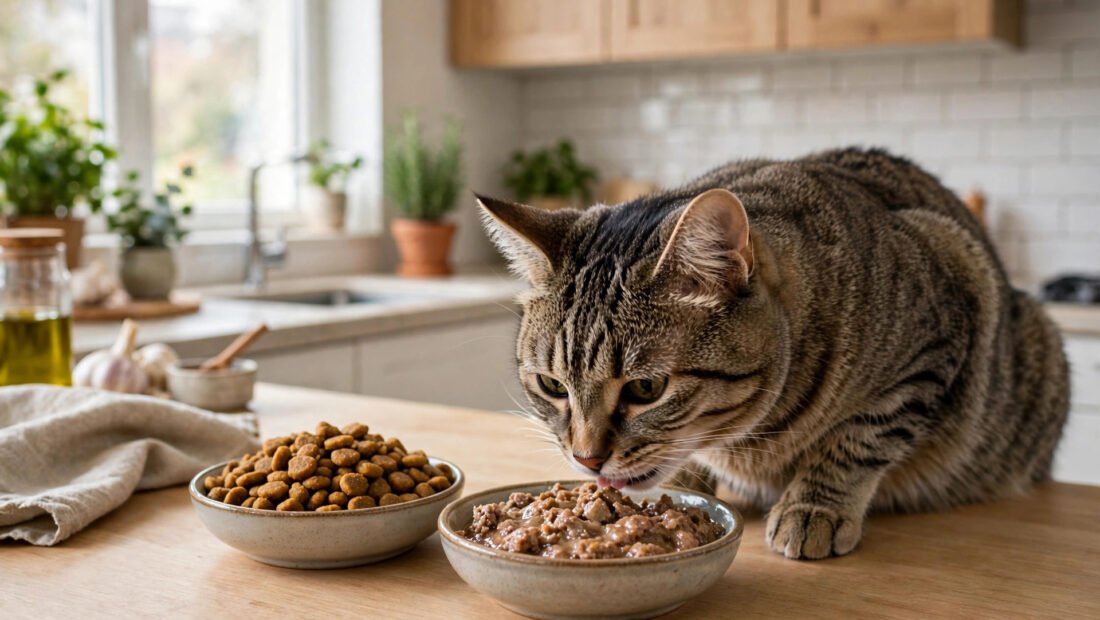
Stand in the cat food aisle of any UK supermarket and you will face a wall of pouches, tins, and kibble bags, each claiming to be the healthiest choice your cat will ever taste. For a first-time cat owner, the wet-versus-dry debate feels like it carries enormous stakes — choose wrong, and will your cat suffer? The reassuring truth is that both wet and dry food can support a perfectly healthy cat, but they differ in ways that genuinely matter for hydration, dental health, weight, and your budget.
This guide gives beginners a clear, vet-aligned framework for deciding between wet and dry cat food — what the science actually says, where each type wins, and how most UK owners sensibly combine the two.
The Single Biggest Difference: Water
Wet food is roughly 75–80% water; dry kibble is about 8–10%. That gap matters because cats are desert-descended animals with a famously weak thirst drive. In the wild, cats get most of their moisture from prey. A cat eating only dry food and drinking too little water produces concentrated urine, which is linked to a higher risk of urinary tract problems — one of the most common reasons cats visit UK vets.
This does not mean dry food is dangerous. Millions of cats eat it exclusively and stay healthy, especially if they drink well. But if your cat is a reluctant drinker — and many are — wet food is the easiest way to get water into them without a battle. Cats Protection’s feeding guide notes that a mixed diet is a practical compromise many owners choose for exactly this reason.
Where Dry Food Genuinely Wins
Dry food has real advantages that explain its popularity. It is far cheaper per day than wet food, it keeps for weeks once opened (wet food spoils within a day in the fridge), and it is convenient for automatic feeders and grazers. The often-repeated claim that kibble “cleans teeth” is overstated — most cats swallow kibble whole — but some veterinary dental diets with larger, fibrous kibble do have proven dental benefits.
Dry food also suits multi-cat households and owners who work long hours. If you are weighing up the commitment of cat ownership generally, our guide on whether pet insurance for a cat is worth it covers the other big financial decision new owners face.
Where Wet Food Genuinely Wins
Beyond hydration, wet food is typically higher in animal protein and lower in carbohydrates than dry food, which suits an obligate carnivore’s biology. It is also more aromatic and palatable — useful for fussy eaters, elderly cats with fading appetites, and cats recovering from illness. For overweight cats, wet food’s higher water content means more volume per calorie, which can help them feel fuller on a weight-loss plan.
The downsides are cost and convenience: feeding wet food exclusively can cost two to three times as much as dry, and opened tins need refrigerating and using within 24 hours. Some cats also develop a strong preference for one texture and refuse the other, so variety from kittenhood is wise.
What “Complete” on the Label Really Means
Here is the beginner fact that matters most: in the UK, look for the word “complete” on the packaging. Under European pet food regulations (FEDIAF guidelines, still followed by UK manufacturers), a “complete” food contains everything your cat needs nutritionally — whether wet or dry. “Complementary” foods (many treats and some premium-looking pouches) do not, and must be fed alongside a complete food.
Beyond that, ignore the marketing poetry and check the analytical constituents: protein content, and whether meat or animal derivatives are named first in the ingredients. The RSPCA’s cat diet advice emphasises that cats need meat-based protein and specific nutrients like taurine, which reputable complete foods all provide.
The Beginner’s Decision Framework
For most new owners, the safest answer is a mixed diet: wet food as the main meal (for hydration and palatability) with a measured portion of dry food for grazing, cost control, and convenience. Feed to the guidelines on the pack, adjusted for your cat’s weight and body condition — and weigh the food rather than eyeballing it, because “a handful” of kibble creeps upward over time.
Transition gradually over 7–10 days when changing foods to avoid stomach upsets. Keep fresh water available in multiple spots (many cats prefer water away from their food bowl), and consider a water fountain — moving water triggers drinking instincts. Kittens, seniors, and cats with kidney or urinary issues have specific needs worth discussing with your vet, not the pet shop.
Transitioning Between Foods Without the Drama
Whether you are switching from dry to wet, wet to dry, or introducing a mixed diet, do it gradually over 7–10 days. Cats are neophobic — suspicious of new foods — and abrupt changes cause vomiting, diarrhoea, and food refusal that beginners mistake for the food “not agreeing” with the cat. Start with 75% old food and 25% new, shifting the ratio every couple of days. Warm wet food slightly (ten seconds in the microwave, stirred well) to release aromas for reluctant cats, and try different textures — pâté, chunks in gravy, jelly — because texture preference is intensely individual. If your cat refuses a new food entirely, do not panic and do not starve them into accepting it: cats that go more than 24–48 hours without eating risk hepatic lipidosis, a serious liver condition. Go slower instead, or accept that this particular cat is a dry-food devotee and optimise around it with extra water stations and a fountain.
Life stages deserve a mention too. Kittens need kitten-formulated food (higher in protein and calories) until around 12 months; seniors (11+) benefit from senior recipes with adjusted protein and phosphorus levels, especially if kidney values start creeping up at vet checks. Pregnant and nursing queens have the highest nutritional demands of all. The “complete” label applies within life stages — a complete adult food is not complete for a kitten. When in doubt, your vet’s advice beats any internet debate, because they know your individual cat.
Conclusion: There Is No Wrong Answer, Only Trade-offs
Wet food wins on hydration and natural nutrition; dry food wins on cost and convenience; a mix captures most of both. What matters far more than the wet-versus-dry decision is feeding a “complete” food, controlling portions, and keeping fresh water available. Get those three right and your cat will thrive whichever texture you choose — leaving you free to enjoy the far more entertaining challenges of cat ownership, like the 3am zoomies and planning pet-friendly holiday cottages where the feeding routine can continue.
Frequently Asked Questions
Is wet or dry food better for cats?
Neither is definitively better. Wet food provides much more moisture, which benefits urinary health, while dry food is cheaper and more convenient. Most vets consider a mixed diet the best all-round option for healthy adult cats.
Can I feed my cat only dry food?
Yes, provided it is a “complete” dry food and your cat drinks enough water. Encourage drinking with multiple water stations or a fountain, and watch for signs of urinary issues such as straining in the litter tray.
How much should I feed my cat each day?
Follow the feeding guide on the packaging for your cat’s weight, then adjust based on body condition — you should be able to feel (not see) the ribs. Weigh portions with kitchen scales; most owners overfeed by eye.
Is expensive cat food worth it?
Price is a poor guide to quality. A mid-range “complete” food from a reputable manufacturer meets the same nutritional standards as premium brands. Spend the savings on vet care and insurance instead.