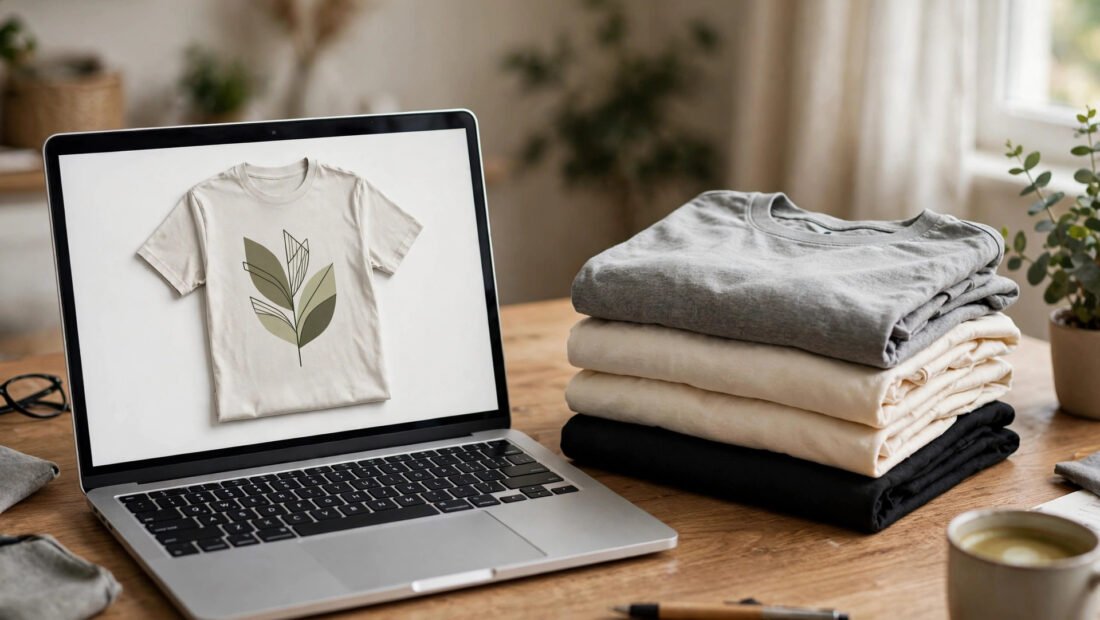
To make money with print on demand, you create original designs, upload them to a POD platform like Printful, Printify, or Gelato, and earn profit on every sale without holding any stock. The platform prints and ships each order for you — your job is design, marketing, and choosing products with healthy margins, typically £5–£15 profit per item. Realistic earnings range from a few hundred pounds a month for beginners to full-time income for established sellers with strong niches.
Print on demand (POD) is one of the lowest-risk online businesses you can start: no inventory, no packing, no upfront manufacturing costs. But the market is crowded, so success comes from smart niching and consistent marketing rather than uploading a hundred generic designs. This guide shows you how to make money with print on demand step by step.
Choose a Profitable Niche
Generic designs don’t sell. Profitable POD niches combine a passionate audience with buying intent: specific hobbies (fishing, gaming, gardening), professions (nurses, teachers, truck drivers), pet breeds, family roles, or niche humour. The narrower and more specific your niche, the easier your marketing becomes — “funny beagle mum gifts” outsells “funny dog shirts” every time.
Validate demand before designing: check Etsy and Amazon for bestsellers in your niche, look at what’s trending on TikTok and Pinterest, and use free tools like Google Trends. Avoid trademarked terms, celebrity names, and brand logos — POD platforms will remove infringing designs and can ban your account.
Pick the Right Print-on-Demand Platform
Your platform choice affects product quality, shipping times, and profit. The main options for UK sellers:
- Printful — premium quality, UK/EU fulfilment centres, integrates with Shopify, Etsy, and more.
- Printify — huge product catalogue with multiple print providers; compare providers on price and UK shipping speed.
- Gelato — local production in 30+ countries, fast UK delivery, good for wall art and apparel.
- Etsy + POD integration — sell on the marketplace with the biggest gift-buying audience, fulfilled by Printful or Printify.
- Amazon Merch on Demand — invite-based, but puts designs in front of Amazon’s massive UK traffic.
Order samples from your chosen provider before selling. Check print quality, garment feel, and actual delivery times to UK addresses — your reviews depend on it.
Create Designs That Sell
You don’t need to be a professional designer. Many successful POD sellers use Canva, Creative Fabrica templates (with commercial licences), or hire freelancers on Fiverr and Upwork for £10–£30 per design. What matters is understanding what your niche wants: bold typography, clean layouts, and designs that work at a glance on a product mockup.
Keep text short and punchy — three to seven words outperforms paragraphs. Test multiple design styles (vintage, minimalist, bold) within your niche and let sales data tell you what works. Always create original work or properly licensed assets; copyright strikes are the fastest way to lose a POD business. Save designs at 300 DPI in the platform’s recommended dimensions for crisp printing.
Price for Real Profit
Your profit is the retail price minus the platform’s base cost and fees. On a £24.99 t-shirt with a £12 base cost and Etsy fees, you might keep £8–£10. Aim for at least £5 profit per item on apparel and more on premium products like hoodies, sweatshirts, and wall art, where margins are kinder.
Don’t undercut yourself to compete — buyers of niche designs pay for relevance, not the lowest price. Factor in advertising costs when pricing: if you spend £3 in ads per sale, a £5 margin leaves almost nothing. Review your bestsellers quarterly and raise prices on proven winners; small increases rarely hurt conversion on unique designs.
Market Your Products Relentlessly
Uploading designs is 20% of the work — marketing is the other 80%. The most effective free channels for POD sellers are TikTok and Pinterest: short videos showing your designs on real products, niche humour content, and gift-guide pins drive consistent traffic. Etsy SEO matters enormously too — use all 13 tags, descriptive titles, and niche keywords buyers actually search.
Consider paid traffic once a design proves itself organically: modest Etsy ads or TikTok ads (£5–£10/day) on proven winners can scale nicely. Build an email list from your store for repeat sales, especially around Christmas, Mother’s Day, and Father’s Day — gift occasions drive the majority of POD revenue in the UK.
Scale and Diversify
Once you have winning designs, scale by expanding them across more products (hoodies, mugs, posters, tote bags) and more niches. Successful sellers typically find that 10–20% of their designs generate 80% of revenue — identify your winners and double down.
Diversify your sales channels over time: your own Shopify store gives you full control and better margins than marketplaces. Keep an eye on quality — order periodic samples, monitor reviews, and switch providers if fulfilment slips. Treat it as a real business: track profit monthly, reinvest in winning designs, and register as self-employed with HMRC once you’re earning. The gov.uk website explains how to register and what records to keep.
Frequently Asked Questions
How much money can you realistically make with print on demand?
Beginners typically earn £100–£500/month in the first six months. Established sellers with 100+ optimised listings in strong niches commonly reach £1,000–£5,000/month profit. It takes consistent effort — it’s a real business, not passive income from day one.
Do I need design skills to start print on demand?
No. Many sellers use Canva, licensed graphics, or hire freelance designers for £10–£30 per design. Success depends more on niche selection and marketing than on artistic brilliance.
Which is better: Printful or Printify?
Printful generally offers more consistent quality and branding options, while Printify offers lower base costs through competing providers. Many UK sellers use both — Printful for flagship products and Printify for price-sensitive lines.
Is print on demand still profitable in 2026?
Yes, but only with differentiation. Generic designs face brutal competition; sellers who target specific niches, build audiences on social media, and maintain quality still build profitable POD businesses.
Conclusion
Making money with print on demand comes down to a focused niche, quality products, and relentless marketing. Start with one platform and one niche, order samples, price for real profit, and treat every design as a test. The sellers who win are the ones who keep publishing, keep promoting, and keep learning from their data.