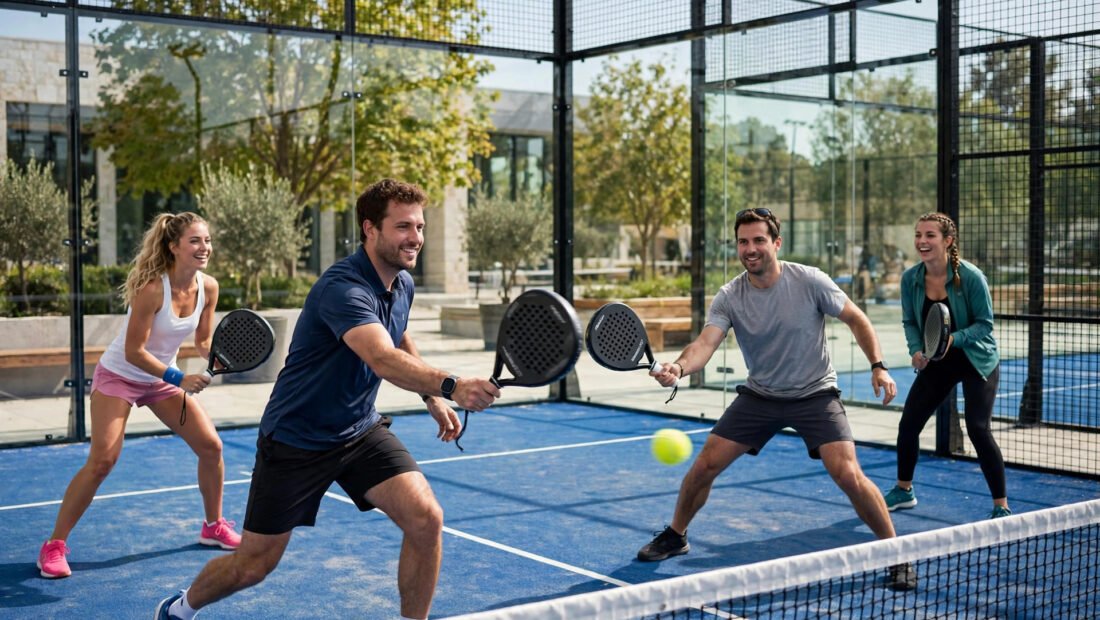
Padel is the fastest-growing sport in Britain — a wall of new courts is appearing from London to Manchester to Edinburgh, and the waiting lists tell the story. A hybrid of tennis and squash played on an enclosed court with walls you can play off, padel is social, fast to learn and absurdly fun. But should you start now as a total beginner, or wait until you’re “fitter,” “better at racket sports,” or less busy? This guide makes the case, covers what beginners actually need, and explains why waiting is usually the wrong call.
The Case for Starting Now
Padel’s beginner-friendliness is not marketing — it’s structural. The court is smaller than tennis (20m × 10m), the rackets are short, solid and stringless (no sweet-spot anxiety), the balls are depressurised (slower, bouncier, more forgiving), and it’s always doubles (a partner covers your mistakes). Most people rally competently within their first hour — compare that with tennis, where months of lessons precede a sustainable rally. The learning curve is the gentlest in racket sports, which is precisely why waiting to “get better first” makes no sense: padel is the getting-better.
The social argument is equally strong. Padel is inherently doubles and inherently chatty — points are short, changeovers are frequent, and the post-game coffee is practically compulsory. For adults seeking both exercise and social connection, few activities deliver both as efficiently. The LTA’s padel hub (the Lawn Tennis Association now governs padel in Britain) lists the explosive court growth and beginner programmes.
What Total Beginners Actually Need
Equipment: almost nothing to start. Centres rent rackets (£3–£5) and balls; wear normal sports clothes and court-appropriate trainers (running shoes work initially; padel-specific shoes with herringbone soles help later on sandy artificial turf). Don’t buy a racket before your third or fourth session — you’ll have opinions by then, and beginner rackets (£40–£80, round-shaped, light) differ meaningfully from advanced ones.
Fitness: basic mobility suffices. Padel is interval-like — short bursts, frequent rests — and far less demanding than squash or 5-a-side football. If you can walk briskly and change direction without pain, you can play. The sport is notably joint-friendly for a racket game: the smaller court means less sprinting, and the walls keep rallies alive without athletic heroics.
Skill: zero. Beginner sessions and “pay and play” mix-ins are designed for people who have never held a racket. Coaches consistently report that complete novices often progress faster than tennis converts, who must unlearn ingrained habits (padel technique differs significantly — continental grips, wall play, the bandeja). Coming fresh is an advantage, not a handicap.
Cost: £10–£20 per person for court hire split four ways, or £8–£15 for coached beginner sessions. It’s mid-range as sports go — cheaper than golf, pricier than parkrun. Many centres offer introductory deals precisely to hook beginners — first-timer taster sessions at half price are common, and some clubs run free open days monthly. If the cost gives pause, our guide to gym versus home exercise compares the economics of staying active generally.
What to Expect: The First Month
Session 1: the rules in 10 minutes (serve underarm into the service box, ball must bounce once before hitting walls on your side, you can play off your own walls after the bounce, first to 6 games like tennis scoring), then rallying. You’ll hit walls accidentally, miss easy balls, and laugh constantly. Normal.
Sessions 2–4: the fundamentals click — positioning (the golden rule: get to the net when you can, defend from the back when you must), the glass/wall game (let the ball come off the back wall rather than volleying awkwardly), and basic tactics (play to the weaker opponent, keep the ball low). A single group lesson (£10–£15) at this stage corrects the big errors cheaply.
Weeks 3–4: you’re playing real games, understanding scoring, and developing the padel-specific shots — the chiquita (a soft return to the servers’ feet), the lob (to buy net position), and eventually the bandeja (the controlled overhead that replaces the tennis smash). The addiction typically sets in around week three: the “just one more game” phenomenon is universal.
Common beginner errors to skip: standing too far back (the net is where points are won), smashing everything (control beats power until you’re advanced), and ignoring the walls (they’re teammates, not obstacles). The International Padel Federation site is the authority on the global game — search beginner fundamentals from reputable coaches.
When Waiting Might Make Sense (Rare Cases)
Honesty requires the exceptions. Active injury: padel involves twisting, lunging and overhead motions — if you’re rehabbing a shoulder, knee or back issue, clear it with a physio first (though many find padel easier on joints than the sports they came from). Genuinely no local courts: the court boom is real but uneven — rural areas may still lack facilities, though the LTA’s finder shows the rapid expansion. Extreme time poverty: if you truly cannot spare 90 minutes weekly, no sport works — but padel’s efficiency (great workout plus social life in one session) arguably makes it the best choice for the time-poor.
What doesn’t justify waiting: fitness (“I’ll start when I’m fitter” — padel builds the fitness), racket-sport inexperience (beginners are the target market), age (the UK’s fastest-growing padel demographic includes the over-50s, and the sport’s low impact suits them), or partnerlessness (mix-in sessions exist precisely to match solo players). Every common reason to wait dissolves on inspection — which is why the waiting list, not the starting line, is where most future players currently stand. For staying injury-free once you start, see joint-friendly exercise guidance.
Conclusion
Should you start playing padel as a total beginner now or wait? Now — the sport is structurally designed for beginners (small court, forgiving equipment, always doubles), needs no prior skill or fitness, costs £10–£20 a session, and the only good reasons to wait are active injury or genuinely no local courts. Book a beginner session this week: within a month you’ll be playing real games, and within three you’ll understand why Britain can’t build courts fast enough to meet demand — so book early, because everyone else had the same idea.
Frequently Asked Questions
Is padel hard for beginners?
No — it’s the easiest racket sport to start. The small court, solid rackets, slower balls and doubles format mean most people rally competently within their first hour. Complete novices often progress faster than tennis players, who must unlearn old habits.
How much does it cost to play padel in the UK?
£10–£20 per person for court hire split four ways, or £8–£15 for coached beginner sessions. Racket hire is £3–£5; beginner rackets cost £40–£80 once you’re committed. Many centres offer introductory deals.
What is the difference between padel and tennis?
Padel is played on a smaller enclosed court (20m × 10m) with walls you can play off, using short solid rackets and depressurised balls. It’s always doubles, serves are underarm, and scoring mirrors tennis. Think tennis-meets-squash, more social and easier to learn.
Do I need to be fit to start padel?
No — basic mobility is enough. Padel is interval-like with frequent rests, the small court limits sprinting, and it’s notably joint-friendly. It’s suitable for all ages, with the over-50s among the UK’s fastest-growing player groups.