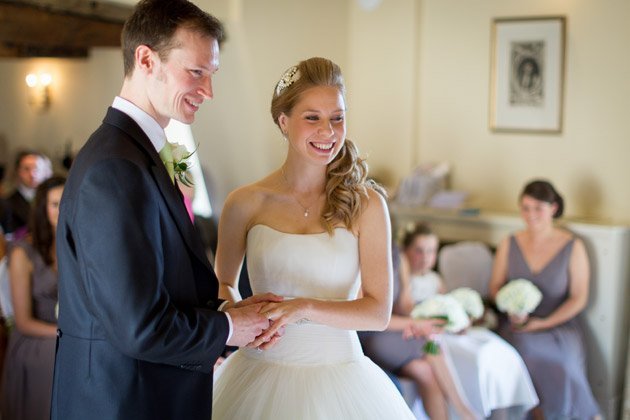
Half the couples I know now admit AI had some hand in their speeches — and wedding vows are next in line. But something about outsourcing the most personal words of the day feels off, doesn’t it?
Let’s think honestly about whether letting AI write your wedding vows is cheating.
Should I Let AI Write My Wedding Vows or Is That Cheating?
It depends entirely on what the AI is doing. Using it as a brainstorming partner — ‘help me structure my thoughts’, ‘give me ten ways to say why I love her laugh’ — is no more cheating than reading example vows online or asking your best friend for ideas. Nobody considers that dishonest. The line gets crossed when the vows are essentially the AI’s words, assembled from generic romantic phrases with your partner’s name inserted. Your guests may not know, but you’ll know — and vows are one of the few moments in life where the words are supposed to cost you something. The most moving vows I’ve heard were clumsy, specific and unmistakably personal: the burnt toast story, the hospital waiting room, the exact terrible joke from the first date. AI can approximate romance; it cannot know your relationship.
There’s also a practical consideration: AI vows have a recognisable sheen — polished, balanced, slightly hollow — and wedding guests are getting good at spotting it. Being caught with obviously AI-written vows would be far more embarrassing than stumbling over your own heartfelt words. The sweet spot most celebrants quietly recommend: write your own messy first draft, then let AI help you tighten it — cut the rambling, fix the structure, suggest a stronger closing line. You keep the stories and the soul; it handles the editing. That’s not cheating — that’s just good writing process, the same as any author uses an editor.
The bigger picture
Scepticism about AI claims is a healthy default with a long pedigree. We’ve been promised revolutionary AI breakthroughs every decade since the 1960s; most arrived late, smaller than advertised, and still genuinely useful. When you hear a dramatic claim — about jobs, capabilities or timelines — ask who benefits from your belief and what the track record of similar predictions is. Calm, evidence-based expectations beat both hype and panic every time.
Voice assistants and smart speakers deserve a periodic privacy review. They only record after the wake word, but those recordings accumulate — and household members, including children, may not realise they’re being stored. Take ten minutes yearly: review and delete old recordings, check who’s in the household profile, and use the mute button during sensitive conversations. Convenience doesn’t require keeping everything forever.
If You’re Stuck Staring at a Blank Page
Start with prompts to yourself, not to the AI: the moment you knew, the hardest time you got through together, the small daily thing they do that you love, what you want to promise specifically. Write badly — truly badly — for twenty minutes. Then, and only then, ask AI to help shape it. The raw material must be yours; the polish can be borrowed. Your future spouse isn’t marrying a language model, and the vows should prove it.
Prompting is a skill worth deliberately practising. The difference between ‘write me an email’ and a prompt with context, audience, tone and constraints is the difference between generic sludge and something genuinely useful. Give the AI the background a competent colleague would need, specify what good looks like, and iterate — the first output is a draft, not a verdict. Ten minutes learning this beats any amount of expensive software.
Accessibility is one of AI’s quiet triumphs. Real-time captions, voice control, text-to-speech, translation — features that transform life for disabled and older users are now built into mainstream devices, often free. If you or someone you know could benefit, the tools are probably already on the device in their pocket, waiting to be switched on. Spread the word; awareness is the main barrier.
Hype cycles are worth recognising because AI goes through them relentlessly. Every capability gets announced as revolutionary, then quietly settles into being merely useful. The trick is to ignore both the utopian promises and the doom headlines and ask the boring question: what does this actually do for me this week? Tools that survive that question are the ones worth your time.
AI-generated video has crossed into convincing territory, which changes the trust equation for everything you watch. A clip of a public figure saying something outrageous, a ‘live’ event that never happened — healthy scepticism is now a survival skill. Check the source, look for corroboration from reputable outlets, and remember that extraordinary footage with no mainstream coverage is a red flag. Teach this to older relatives especially; they’re the most targeted.
There’s an environmental cost to AI that’s rarely mentioned in the marketing. Training and running large models consumes significant energy and water, and every frivolous generated image has a footprint. This doesn’t mean never using AI — the benefits are real — but it does argue for using it purposefully rather than generating a hundred variations of something you needed once. Thoughtful use is sustainable use.
The privacy habit to build now is simple: pause before pasting. Every AI tool has terms about data retention, and the defaults usually favour the company, not you. Check whether there’s an opt-out for training, prefer tools with clear data policies, and keep genuinely sensitive material — health details, financial data, other people’s information — out of chat boxes entirely. These habits take seconds and prevent problems that take months to fix.
Key points at a glance
- AI as brainstorming partner: fine. AI as ghostwriter: that’s where it feels wrong.
- The best vows are specific and clumsy — AI produces polished and generic.
- Guests are getting good at spotting AI-written vows.
- Sweet spot: your messy draft, AI-assisted editing.
- Start with your own memories; borrow only the polish.
Related reading: How do i know if my anxiety needs professional help walks through a neighbouring topic step by step, and How do i spot an AI generated fake review online covers what to do when things get complicated.
For the official position, see the NHS website.
The bottom line
Letting AI help edit your vows is sensible; letting it write them is missing the point. The words should cost you something — that’s what makes them vows rather than content.