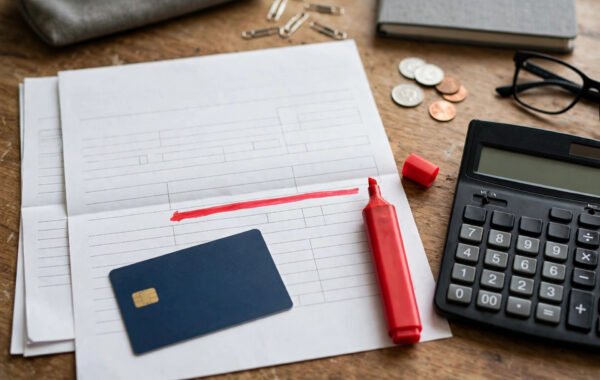
You have just started freelancing — the first invoices are going out, the money is irregular but exciting — and someone asks which bank account the payments should go into. Your personal current account seems fine for now. Opening a separate account feels like admin for a “real business”, which you are not sure you are yet. So should you choose the right bank account for freelancing now, or wait until later? For UK households where freelancing is becoming a serious income stream, the answer matters more than it looks: the decision affects your taxes, your professionalism, your sanity at Self Assessment time, and even your mortgage prospects. Here is how to think about it clearly.
Why “Later” Is More Expensive Than It Looks
Waiting feels free; it is not. Every month of mixing freelance income with household spending creates a tangled record you will eventually have to untangle — usually in January, under deadline pressure, reconstructing which transactions were business and which were Tesco. HMRC does not require a separate account for sole traders, but it does require accurate records, and a mixed account makes accuracy dramatically harder.
There are subtler costs too. Some banks’ terms technically prohibit business use of personal accounts — most tolerate small-scale freelancing, but a sudden surge of business transactions can trigger account reviews or closures. And when you apply for a mortgage, clean separated finances make the affordability assessment smoother; a personal account full of mixed transactions invites questions. The “right” account is not just about convenience — it is about building financial infrastructure that scales with your ambitions.
What “the Right Account” Actually Means for Freelancers
UK freelancers have three broad options:
1. A second personal current account (the minimalist route)
Completely legal for sole traders: open a free second personal account and dedicate it to freelance income and expenses. It delivers 90% of the benefit — clean separation — at zero cost. The limitation: no business-specific features (invoicing tools, tax pots, multi-user access), and some banks frown if volumes grow large. For side-hustle-scale freelancing, this is often the perfect answer.
2. A dedicated freelancer/business bank account
Digital banks now offer free or low-cost business accounts designed for sole traders: automatic tax calculations, expense categorisation, invoicing, and integrations with accounting software. If freelancing is your main income or growing fast, these features pay for themselves in time saved. Compare properly — opening a business bank account as a UK freelancer involves choices about fees, features and eligibility that deserve an hour of comparison, not a rushed signup.
3. A limited company account (if you incorporate)
If you operate through a limited company, the law requires separation — company money and personal money must not mix. This is a different decision with bigger implications (accountants, corporation tax, payroll), and the account choice follows the business structure, not the other way round.
Now vs Later: The Decision Framework
Choose now if: freelancing already provides meaningful income; you find yourself dreading the bookkeeping; you want to appear professional to clients (invoices from a business account inspire more confidence); you are approaching the VAT threshold or hiring; or you simply value clean finances. The cost of acting now is an hour of admin; the benefit compounds monthly.
Waiting is defensible if: freelancing is genuinely occasional — a few hundred pounds a year — and you keep simple records anyway. But set a trigger: “when monthly freelance income exceeds £X” or “when I take on my third concurrent client”, the account gets opened. Waiting without a trigger becomes waiting forever.
One more consideration: closing accounts later is also admin. If you open the wrong business account now, closing a business bank account you no longer need is straightforward but takes effort — another reason to choose carefully once rather than churn through options.
What to Look for in a Freelancer Account
Prioritise: zero or low monthly fees (many excellent options are free); FSCS protection (£85,000 — non-negotiable); tax features (automatic percentage set-asides for Self Assessment are transformative); accounting integration (direct feeds to your bookkeeping software); invoicing tools if you want them; and foreign currency handling if clients pay in euros or dollars. Do not pay for prestige — a freelancer needs function, not a marble banking hall. Also check the practical details: how quickly can you open the account (digital banks often approve within a day; high-street business accounts can take weeks), are there transaction limits that would cramp your invoicing, and does customer support actually answer when you need it? The official GOV.UK guidance on setting up as a sole trader sits alongside the banking decision — register correctly, keep records diligently, and the account becomes the hub of a compliant, low-stress freelance operation rather than just another login.
The Household Dimension
For UK households where one partner freelances, the account decision affects both: clear separation protects the household budget from income volatility (pay yourself a “salary” transfer monthly from the freelance account, smoothing the feast-or-famine cycle), simplifies the joint tax picture, and makes the true profitability of the freelancing visible — which is essential data for big decisions like going full-time. It also prevents the most common household finance argument: “where did the money go?” When freelance income lands in a dedicated account and a fixed “wage” transfers to the joint account, both partners can see exactly what the freelancing contributes. MoneyHelper’s guidance on bank accounts offers impartial help on choosing accounts for different needs, and the official GOV.UK guidance on setting up as a sole trader covers the registration duties that sit alongside the banking decision.
Conclusion
Should you choose the right bank account for freelancing now or wait? If freelancing is more than pocket money, now — the hour of admin buys clean records, professional credibility, easier taxes and scalable finances. If it is truly occasional, waiting is fine, but set a concrete trigger so “later” actually arrives. Either way, the principle is the same: separate your freelance money from your household money, because the cost of untangling them later always exceeds the cost of separating them now.
Frequently Asked Questions
Do I legally need a separate bank account as a UK freelancer?
No — sole traders can legally use a personal account. But separation is strongly advisable for record-keeping, and limited companies must keep business finances separate by law.
Can I just open a second personal account for freelancing?
Yes — for sole traders this is perfectly acceptable and free. It provides clean separation without business-account fees, though it lacks business-specific features like tax pots and invoicing tools.
When should a freelancer open a proper business account?
When freelancing becomes a main income source, when bookkeeping gets painful, when you want business features (tax automation, invoicing), or when approaching VAT registration. Set a concrete income or client-count trigger.
Are free business bank accounts any good?
Many are excellent for freelancers — FSCS-protected, with useful tax and invoicing features. Compare fee-free options before paying monthly fees; most sole traders never need a paid tier.
Will a separate account help with taxes?
Enormously. Clean separation makes Self Assessment straightforward, ensures no deductible expense is missed, and provides clear evidence if HMRC ever queries your records.