
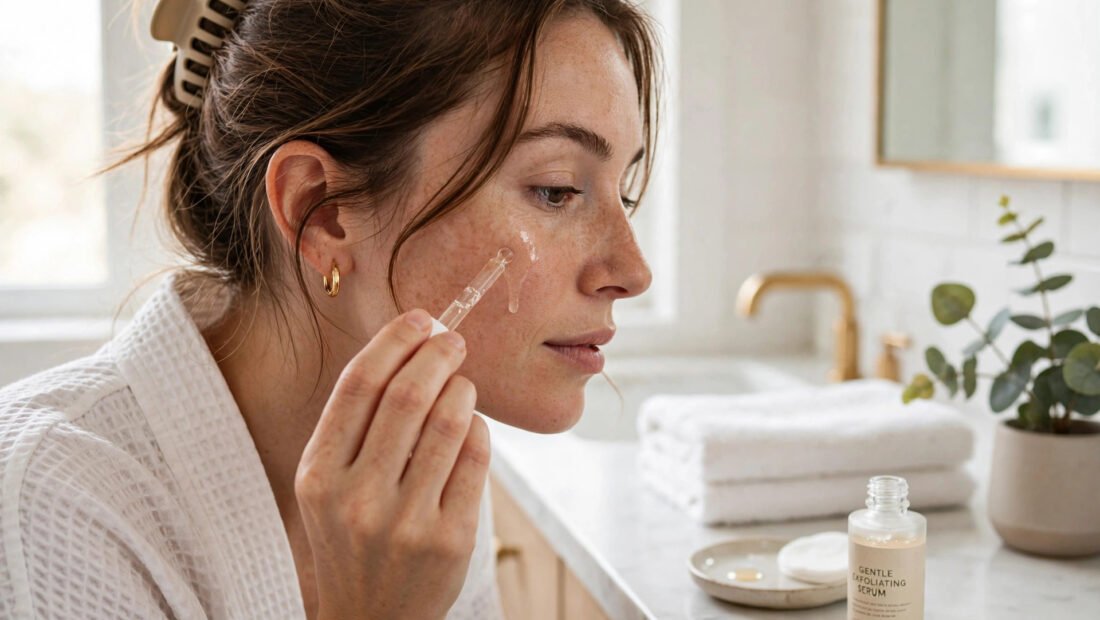
Exfoliation promises glowing skin — and delivers damaged skin with remarkable frequency. Somewhere between the ten-step routines and the “just use a flannel” minimalists lies the truth: exfoliation is genuinely useful, genuinely easy to overdo, and the line between the two is thinner than the skincare industry admits. Redness, stinging, mysterious breakouts on previously calm skin? That is usually over-exfoliation talking.
This beginner’s guide explains exfoliation from scratch: the two types, how to choose, how often each skin type should exfoliate, and exactly how to recognise — and recover from — overdoing it.
What Exfoliation Actually Does
Your skin naturally sheds dead cells (desquamation) roughly every 28 days in young adults, slowing with age. Exfoliation accelerates that removal. Done right, it unclogs pores, smooths texture, fades marks faster, and helps other products absorb better. Done wrong, it strips the moisture barrier — the skin’s protective lipid layer — leaving it inflamed, dehydrated and reactive.
Think of it like sanding wood: light, even passes smooth the surface; pressing hard gouges it. Most over-exfoliation comes not from one product but from stacking — an acid cleanser plus an acid toner plus a scrub plus retinol, each “fine” alone, collectively brutal.
Chemical vs Physical: Which Should Beginners Choose?
Chemical exfoliants (usually the better choice)
AHAs (glycolic, lactic, mandelic acids) dissolve the bonds between dead cells; they suit normal to dry skin and help with dullness and marks. BHAs (salicylic acid) are oil-soluble, so they get inside pores — the go-to for oily, congested, acne-prone skin. PHAs (gluconolactone, lactobionic acid) are the gentle newcomers, good for sensitive skin. Enzyme exfoliants (papaya, pineapple) are the mildest option. For beginners, chemical exfoliants are generally safer than physical ones because the action is even and controllable — no pressure variable.
Physical exfoliants (use with care)
Scrubs, brushes, konjac sponges and flannels work by friction. The problem is uneven pressure and harsh particles — walnut shell and apricot kernel scrubs are notorious for micro-tears. If you prefer physical, choose gentle: a soft konjac sponge or a muslin cloth with light pressure, 1–2 times a week. Harsh grainy scrubs used daily are the classic route to a damaged barrier.
How Often Should You Exfoliate?
Start with once a week. This single sentence would prevent most over-exfoliation. After 2–3 weeks with no irritation, most skin types can move to 2–3 times weekly — and many people never need more than that. Oily, resilient skin may tolerate alternate days; dry, sensitive or rosacea-prone skin may stay at once weekly indefinitely.
Concentration matters as much as frequency: a 5–10% AHA used twice weekly beats a 30% peel used recklessly. Beginners should start low (5–8% glycolic or 2% salicylic) and only increase if results plateau after a month. More is not better; consistent and gentle wins. And never exfoliate compromised skin — sunburn, open spots, or during a reaction means hands off until healed. For authoritative skin guidance, the British Association of Dermatologists and British Skin Foundation are worth bookmarking alongside NHS skin advice.
The Warning Signs You Are Overdoing It
Learn these, because the skincare industry will not warn you: persistent redness or flushing; stinging when applying products that never stung before; tight, shiny, “plastic” looking skin; new breakouts on previously clear skin; increased sensitivity to sun, wind or temperature; and products pilling or absorbing strangely. The cruel irony: over-exfoliated skin often looks dull and congested, tempting you to exfoliate more. If your skin is getting worse while your routine gets “better,” over-exfoliation is suspect number one.
The recovery plan
Stop all exfoliants and actives (acids, retinoids, vitamin C, harsh scrubs) immediately. Strip back to cleanser, moisturiser and sunscreen for 2–4 weeks. Use barrier-supporting ingredients: ceramides, niacinamide, squalane, centella. Do not “push through” — barriers heal in weeks with rest, or not at all with continued assault. Reintroduce one exfoliant, once weekly, only when skin feels normal again.
Body Exfoliation: Different Rules
Everything above is about faces. Body skin is thicker and hardier, so it tolerates more: a gentle body scrub or exfoliating mitt 1–2 times weekly works well for most people, and chemical options (glycolic body lotions, salicylic washes) help with keratosis pilaris (those rough bumps on upper arms), ingrown hairs and rough feet. The same principles apply — start gentle, moisturise after, sunscreen on exposed areas — but the margin for error is wider. Feet can handle a pumice stone weekly; faces cannot.
One caution: do not use face-strength acids on freshly shaved or waxed skin, and go easy on the neck and chest, where skin is nearly as delicate as facial skin. Body breakouts (bacne) respond well to salicylic acid body washes left on for a minute before rinsing — contact time matters more than concentration here.
Exfoliation Myths, Busted
“You can feel it working”
Tingling or mild stinging is not proof of efficacy — it is irritation. Effective exfoliation should feel like nothing. If a product burns, it is too strong or your barrier is compromised; either way, stop.
“Natural scrubs are gentler”
Ground apricot kernels, walnut shells and DIY sugar scrubs are among the harshest exfoliants available — irregular, jagged particles that tear skin unevenly. “Natural” describes the source, not the effect on your face.
“Oily skin needs daily exfoliation”
Oily skin is resilient, not invincible. Daily strong exfoliation strips the barrier and can actually increase oil production as the skin overcompensates. Oily types do well with regular but moderate exfoliation — 2–4 times weekly, not daily.
“If it’s not peeling, it’s not working”
Visible peeling means the product is too strong or used too often. The best exfoliation is invisible: smoother texture, clearer pores and better glow emerging gradually over weeks, with zero drama.
Building a Sensible Routine
Audit your current products for hidden exfoliants — acids hide in cleansers, toners, “brightening” serums and even some moisturisers. Count total weekly acid exposures, not products. Exfoliate in the evening (acids increase sun sensitivity), always follow with moisturiser, and wear sunscreen daily — non-negotiable when using acids, since they thin the stratum corneum and raise UV vulnerability.
Do not combine strong exfoliation with retinoids on the same night when starting out — alternate them. And be patient: visible improvement takes 4–6 weeks of consistent gentle use. Skincare is a long game; the people with the best skin are usually doing the least aggressive routines. Small parallel note: healthy skin shows better in the right colours — see what colours suit pale skin tones — and remember that overall health shows in skin and hair alike (hair thinning in your 30s is often the same stress story).
Conclusion
Exfoliation works when it is gentle and consistent: choose a chemical exfoliant suited to your skin type (BHA for oily, AHA for dry/dull, PHA for sensitive), start once weekly at low strength, watch for the warning signs of overdoing it, and recover with a stripped-back barrier routine if you cross the line. Glow comes from a healthy barrier, not from how much dead skin you can remove. Less, done regularly, beats more every time.
Frequently Asked Questions
How often should a beginner exfoliate?
Once a week to start, building to 2–3 times weekly after a few weeks if skin tolerates it. Sensitive skin may never need more than weekly.
Is chemical or physical exfoliation better?
Chemical is generally safer and more even for beginners. Physical methods depend heavily on pressure and particle harshness, making overdoing it easier.
Can I exfoliate every day?
Most people should not. Daily exfoliation suits only very resilient, oily skin with gentle formulas — and even then, watch for the warning signs. For most, 2–3 times weekly is the sweet spot.
What should I do if I over-exfoliated?
Stop all actives immediately, use only cleanser, moisturiser and sunscreen for 2–4 weeks, favour barrier ingredients (ceramides, niacinamide, squalane), and reintroduce exfoliation slowly once skin normalises.


