
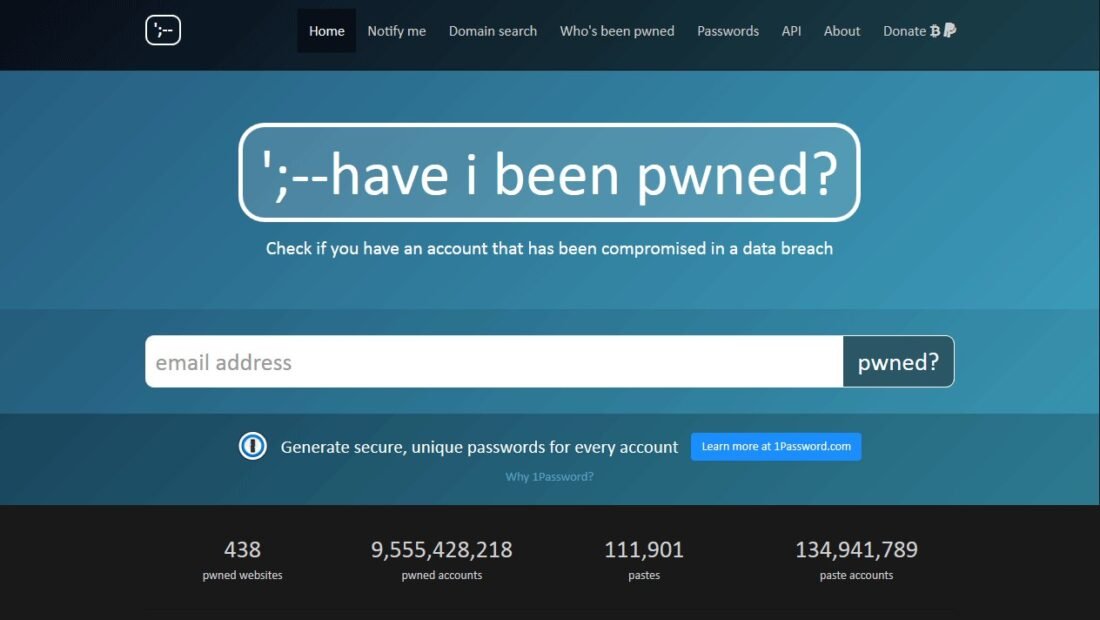
There’s a surprising amount of nonsense talked about how can i check if my email address has been in a data breach. Half of it is out of date, a quarter of it never applied to the UK in the first place, and the rest is people confidently repeating something they heard third-hand.
Time to clear it up. Below is a proper, practical walkthrough based on how things actually work here: the real costs, the options genuinely worth considering, and the traps to avoid. Have I Been Pwned lets you check any email address against known breach databases. By the end you’ll be able to handle this with confidence.
I’ve assumed you’re starting from scratch, so no prior knowledge needed. If you already know the basics, skim the first couple of sections and jump straight to the practical walkthrough further down.
How can i check if my email address has been in a data breach
If you only take one thing from this article, make it this: Have I Been Pwned lets you check any email address against known breach databases. Everything else is optimisation. If your address appears, change that password everywhere you reused it.
I know that sounds almost too simple, but most people who get a bad result here skipped exactly this step. They rushed, picked the first option Google showed them, and paid for it later. Spending ten minutes understanding the basics puts you ahead of most of the market.
And don’t let perfect be the enemy of good. A decent decision made this week beats a perfect decision you never get around to. Most of this stuff is adjustable later anyway, so there’s no need to agonise.
How this works in practice
Let’s talk about the bit nobody mentions. Turn on two-factor authentication on email first, it protects everything else downstream. Once that clicks, a lot of the confusing advice out there suddenly makes sense, and you can filter the useful from the noise.
And while we’re at it: A password manager means you never have to reuse a password again. This pairs well with our piece on What is a mesh wifi system and is it worth it for a uk semi, which covers the other half of the picture. It is one of those small things that makes a disproportionate difference to the outcome.
Your step-by-step game plan
Right, let’s make this actionable. Work through these in order and you’ll be sorted:
- If your address appears, change that password everywhere you reused it.
- Turn on two-factor authentication on email first, it protects everything else downstream.
- A password manager means you never have to reuse a password again.
- Watch for phishing emails that exploit breach news to scare you into clicking.
- Breach notification services can alert you the next time your details appear.
Follow that sequence and the whole thing becomes a minor errand rather than a saga.
Where people usually go wrong
Here’s where it tends to go sideways for people:
- Assuming it’s a hardware fault when the real culprit is something simple.
- Paying premium-brand prices when a mid-range alternative does the same job.
- Watch for phishing emails that exploit breach news to scare you into clicking.
- Breach notification services can alert you the next time your details appear.
What the adverts don’t tell you
Here’s a detail that deserves more airtime: Turn on two-factor authentication on email first, it protects everything else downstream. On its own it looks minor, but it’s exactly the kind of thing that separates a smooth experience from an annoying one. Ask anyone who’s been through this and they’ll usually point to something like this as the thing they wish they’d known.
And on a related note: Breach notification services can alert you the next time your details appear. Between that and the point above, you now know more than most people who’ve already been through this process. That knowledge is what turns a stressful decision into a straightforward one.
Keep these in mind and you’ll dodge most of the common pitfalls:
- Remember: If your address appears, change that password everywhere you reused it.
- Don’t forget: A password manager means you never have to reuse a password again.
- And finally: Watch for phishing emails that exploit breach news to scare you into clicking.
If all of that sounds like a lot, don’t worry: you don’t need to memorise it. Just keep the two big points above in mind and refer back to the checklist when you’re actually making the decision.
Your options at a glance
You’ve basically got three routes here, and the right one depends on your priorities. Turn on two-factor authentication on email first, it protects everything else downstream. Watch for phishing emails that exploit breach news to scare you into clicking.
The budget route gets you there cheapest but demands the most legwork and patience from you. The middle route, which is what I’d recommend to most people, balances cost against convenience sensibly. The premium route costs more but removes nearly all the hassle. If you want a second opinion from an authoritative source, check Ofcom’s official consumer advice. Be honest about which of those people you are and choose accordingly.
One last thought on choosing: there’s no prize for picking the cleverest option, only for picking the one you’ll actually follow through on. The best choice is usually the one that fits your life with the least friction, not the one that looks best on paper.
For the official line on all of this, Ofcom’s official consumer advice is the place to check.
A couple of questions that come up a lot:
What do most people overlook?
Watch for phishing emails that exploit breach news to scare you into clicking. Honestly, most people overthink this part. Pick the sensible middle option and move on with your day.
Is the cheapest option ever the right one?
Breach notification services can alert you the next time your details appear. Put simply, don’t rush it; the right choice is usually obvious once you’ve compared two or three options side by side.
How long does this usually take to sort out?
If your address appears, change that password everywhere you reused it. Honestly, most people overthink this part. Pick the sensible middle option and move on with your day.
The bottom line: None of this is complicated once you see it laid out. Have I Been Pwned lets you check any email address against known breach databases, and everything else is just choosing your preferred route there. You may also want a look at our guide to How do i set parental controls on my home broadband router. Also relevant: How do i mirror my phone screen to my tv without wifi.


4 Comments