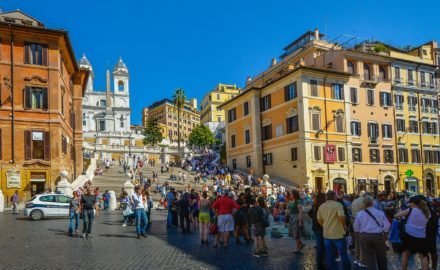
Rome is magnificent — and magnificently efficient at separating tourists from their money. The restaurant with the hawker outside, the £8 espresso, the “skip the line” ticket at triple price: the Eternal City has traps refined over millennia. If you’re asking how do I avoid tourist traps in Rome, here’s the local’s playbook: eat well, pay fairly, and see the real city.
The Restaurant Rules (Where Most Money Is Lost)
- Never eat where someone hawkers you in. Good Roman restaurants don’t need to beg. The tout outside is the single most reliable trap indicator in Italy.
- Walk 10 minutes from any major sight. Prices halve and quality doubles within two streets of the Colosseum, Vatican or Pantheon. The rule is iron: proximity to monuments = inverse of value.
- Check for “coperto” and “servizio”: the cover charge (£2-4 per person) is legal in Rome (unlike some regions) but must be on the menu. “Servizio” (service, 10-15%) added on top is the real trap — check the menu’s small print.
- Menus in 6 languages with photos: walk away. Real trattorias have Italian menus (maybe English underneath), handwritten specials, no pictures.
- Eat the Roman classics where Romans eat them: carbonara, cacio e pepe, amatriciana, supplì — in Testaccio, Trastevere (the back streets, not the main drag), San Lorenzo, Pigneto. Lunch menus (pranzo di lavoro) are the value sweet spot.
- Coffee rules: espresso at the bar (£1-1.50) vs table service (£4-8) — drink standing like a Roman. Never order a cappuccino after 11am (they’ll serve it, but you’ll be marked).
- Gelato: avoid the Day-Glo mountains — real gelato is muted colours, stored in metal tins (pozzetti), not piled high. San Crispino, Fatamorgana, Fior di Luna: the real thing.
Attractions: Skip the Lines, Not the Sights
- Colosseum/Forum/Palatine: book the official Coopculture site weeks ahead (£20-25) — the “skip the line” touts charge £50-80 for the same ticket plus a lanyard. First entry slot (8:30am) is golden.
- Vatican Museums: official site only, book ahead (£20); Wednesday papal audiences make it busier. The 7am early-entry tickets are worth it.
- Free wonders: the Pantheon exterior (interior now charges £5 — still worth it), Trevi Fountain (go at 7am or midnight, not noon), Piazza Navona, the Spanish Steps, the Appian Way, the keyhole on Aventine Hill (free, magical), Villa Borghese gardens.
- Roma Pass: do the maths — it pays off at 3+ major sights in 48/72 hours; otherwise pay as you go.
- “Gladiator” photo touts: the centurions outside the Colosseum charge £10+ per photo and can get aggressive — a firm “no” and keep walking.
Getting Around Without Getting Ripped Off
- Walk: historic Rome is compact — most sights are 20-30 minutes apart on foot, and walking is the sightseeing.
- Metro/bus: £1.50 per 100 minutes; the daily cap makes it cheap. Validate tickets (fines are £50+).
- Taxis: only white licensed ones, meter on, from ranks — never accept rides from touts at stations/airports. Fixed fares exist: Fiumicino to central Rome £50 flat (official).
- Fiumicino transfer: the Leonardo Express (£14, 32 mins to Termini) vs regional train (£8, slower, stops) vs fixed-fare taxi (£50). The Express wins for most.
Shopping and Souvenirs
- Avoid: the souvenir streets near the Vatican and Colosseum (3x prices for identical tat).
- Instead: Monti’s vintage shops, Porta Portese flea market (Sunday mornings), Eataly for food gifts, local alimentari for the olive oil and pasta you’ll actually use.
- Leather “deals”: the street vendors’ “genuine leather” is rarely genuine. Buy from shops, check stitching.
The Mindset: Tourist vs Traveller
The traps work on a specific psychology: the fear of missing out, the reluctance to walk 10 minutes, the deference to anyone in a uniform. Flip it: the best Rome is slightly inconvenient — the trattoria down the side street, the 7am Trevi visit, the neighbourhood (Testaccio, Garbatella, San Lorenzo) where menus are Italian-only. Learn 10 words of Italian (per favore, il conto, quanto costa) — effort is rewarded with warmth and often better treatment. And build in unscheduled time: Rome’s greatest moments — the church you duck into, the piazza you stumble on — can’t be booked. For the broader trip, see cheap European city breaks and Europe travel documents.
Day Trips From Rome (Escape the Crowds)
Rome’s surroundings reward escape: Ostia Antica (£30 mins by train) — Rome’s ancient port, as impressive as Pompeii, a tenth of the crowds. Tivoli — Villa d’Este’s fountains and Hadrian’s Villa; the perfect hot-day escape. Orvieto (1h by train) — hilltop Umbrian perfection, the duomo, white wine. Castelli Romani — the Pope’s summer towns; fraschette (wine taverns) with porchetta, the Roman weekend ritual. The Appian Way by bike — rent a bike, ride the ancient road past aqueducts and catacombs. Each is cheap, uncrowded, and the Rome the tour buses miss. See cheap city breaks for the wider Italy picture.
Scams to Watch For (Beyond Tourist Traps)
- The “gold ring” trick: someone “finds” a ring near you, offers it, then demands payment. Ignore and walk on.
- Petition clipboard: signers get pickpocketed while distracted. Never engage.
- Rose sellers in restaurants: a rose placed on your table isn’t free — firm “no grazie” before it lands.
- Fake gladiators/tickets: only buy attraction tickets from official sites or the venue; touts sell fakes and overpriced resales.
- Pickpockets: the 64 bus, Termini station, crowded metros — front pockets, zipped bags, no back-pocket phones. Rome’s pickpockets are professionals; be boringly careful.
- Taxi scams: covered above — white cars, meters, ranks, fixed airport fare. That’s the whole defence.
Rome is safe for the alert traveller — these are annoyances, not dangers. Stay aware, keep valuables secure, and enjoy the greatest open-air museum on earth.
For the practical essentials, the FCDO travel advice for Italy covers safety, entry requirements and local laws.
The Practical Takeaway
Avoid Rome’s tourist traps with: the 10-minute rule (walk from sights to eat), no hawkers ever, official attraction sites booked ahead, bar-standing coffee, muted-colour gelato, and white-metered taxis only. The real Rome — the trattorias, the neighbourhoods, the 7am fountains — is cheaper, better, and hiding in plain sight just off the tourist trail.