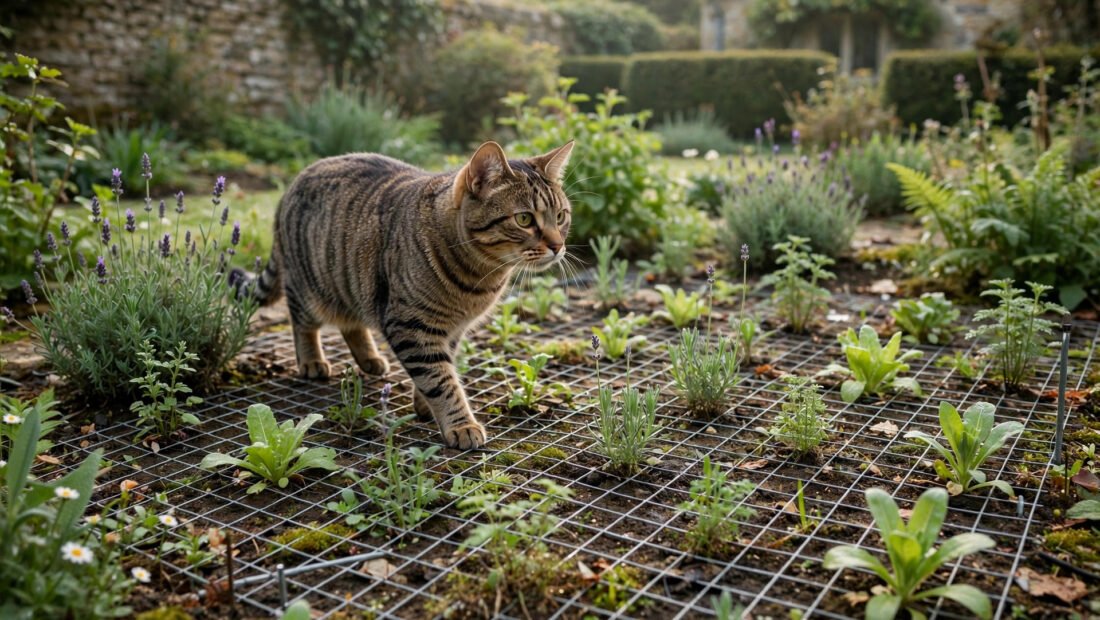
Every gardener with feline neighbours knows the particular fury of plunging a trowel into what the local cats have decided is their personal toilet. Freshly dug soil, warm mulch, a newly sown seed bed — to a cat, these are irresistible. The question is not whether you can stop it, but how often you need to act and which methods actually hold up in real British gardens. The honest answer: deterring cats is a maintenance routine, not a one-time fix, and the gardeners who succeed are the ones who layer several gentle methods and refresh them regularly.
Why Your Garden, and Why Now
Cats choose toileting spots by texture: loose, diggable, well-drained material they can scrape and cover. Your lovingly prepared seed bed is, from a cat’s perspective, a five-star facility — far superior to compacted lawn or patio. They also favour spots with cover nearby (under shrubs, behind the shed) and, crucially, habit: once a cat has used a spot, the scent marks it as the place to return to. This is why a new problem escalates fast and why early action matters.
Timing matters too. Cats toilet most at dawn and dusk, and newly dug or mulched areas are most vulnerable in the first fortnight. Spring is peak season — breeding activity increases roaming, and every gardener in Britain is digging at once, creating fresh vacancies. If you only defend your garden for one month of the year, make it April.
How Often You Need to Act: The Realistic Schedule
Here is the maintenance rhythm that actually works, based on what long-suffering gardeners report:
Daily (30 seconds): scan vulnerable beds each morning and remove any deposits immediately with a trowel into a bag. Speed matters — every deposit left in place re-marks the spot. Wear gloves; cat faeces can carry toxoplasmosis, a genuine health concern for pregnant gardeners in particular, as the NHS toxoplasmosis guidance explains.
Weekly: refresh scent deterrents. Citrus peels, coffee grounds, lavender sprigs and commercial citronella granules all lose potency within days in British rain. Reapply after every heavy downpour — which, realistically, means weekly through much of the year.
Monthly: check physical barriers. Chicken wire laid flat over beds (cats hate the feel underfoot), prickly prunings (holly, rose, pyracantha) tucked among plants, and spiky “cat mats” all work — but they shift, sink into mulch and get buried. A monthly reset keeps them effective.
Seasonally: reassess. New cats move into the neighbourhood, kittens grow bold, and a method that worked all summer can fail in autumn. Rotate your deterrents rather than relying on one forever.
What Actually Works: Ranked by Evidence
Physical barriers — most reliable. Anything that makes the surface undiggable wins. Chicken wire or plastic mesh pegged flat just under the mulch surface stops digging completely while plants grow through. For seed beds, horticultural fleece or cloches do double duty: warming the soil and excluding cats. Thorny prunings woven among shrubs are free and effective.
Motion-activated sprinklers — very effective, some faff. Devices like the Contech ScareCrow detect movement and fire a short jet of water. Gardeners consistently rate these the best high-tech option; cats learn within days. Downsides: cost (£30–£50), batteries, and the risk of soaking yourself or the postman. Position carefully.
Ultrasonic deterrents — mixed results. Battery or solar-powered units emit high-frequency sound when triggered. Some gardeners swear by them; others report cats sunbathing next to them within a week. They are worth trying as part of a layered approach but rarely solve the problem alone. Note they can disturb other wildlife — position away from bird feeders and hedgehog highways.
Scent deterrents — weak alone, useful in combination. Citrus, coffee, lavender oil, lion dung (sold as “Silent Roar”) — all have devoted fans and equally devoted sceptics. They wash away fast and cats habituate. Use them to reinforce barriers, not replace them. For general garden improvement alongside deterrence, see how to make your garden look nice without spending much.
What Does Not Work (Save Your Money)
Mothballs are sometimes suggested — they are toxic, illegal for this use in the UK, and dangerous to children, pets and wildlife. Never use them. Plastic spikes sold as “cat deterrent strips” are widely reported as useless; cats simply step between them. CDs hung on strings, plastic bottles of water, and aluminium foil entertain the neighbours but deter nothing for more than a day or two. And shouting at the cat, while satisfying, teaches it only to visit when you are not watching.
The Diplomatic Option: Talk to the Owner
Before escalating, consider the human route. Most cat owners have no idea their pet is using your vegetable bed as a latrine, and many will act — keeping the cat in at dawn and dusk, providing an outdoor litter tray in their own garden, or fitting a bell collar (which also helps birds). If you share your home with a cat, see our guide to whether pet insurance for a cat is worth it for responsible-ownership basics. The charity Cats Protection advises owners to provide outdoor toileting options; a polite conversation referencing this often works. Keep it friendly and specific: “your tabby is using my raised bed daily” lands better than general complaints. As a last resort, your local council’s environmental health team can advise, though enforcement options for cat fouling are limited compared with dog fouling.
Protecting Food Crops Specifically
Cat faeces in the vegetable patch is not just annoying — it is a food-safety issue. Toxoplasmosis and other pathogens are a real (if manageable) risk on unwashed produce. Prioritise barriers on all food-growing areas: fleece or mesh over salads and root veg, chicken wire under mulch in the fruit cage. Always wash home-grown produce thoroughly, peel root vegetables, and wear gloves when handling soil. Pregnant gardeners should avoid handling potentially contaminated soil entirely or wear gloves and wash meticulously — the NHS guidance linked above is worth reading in full. These precautions are simple and make the vegetable garden safe regardless of neighbourhood cats.
Conclusion
Stopping cats from using your garden as a litter tray is a routine, not a project: daily removal, weekly scent refreshes, monthly barrier checks, and a layered combination of physical exclusion plus one or two deterrents. No single gadget works forever, but gardeners who maintain the system report the problem shrinking to occasional incidents within a season. Start with chicken wire and swift removal — the two highest-impact moves — and build from there.
Frequently Asked Questions
How often should I reapply cat deterrents in the UK?
Scent-based deterrents need reapplying weekly, and after every heavy rain. Physical barriers (wire mesh, prickly prunings) need checking monthly as they shift and sink. Motion sprinklers and ultrasonic units need battery or position checks monthly.
Is cat poo in the garden dangerous?
It can carry toxoplasmosis, which is a particular risk in pregnancy. Always wear gloves, remove deposits promptly, wash produce thoroughly, and peel root veg. The risk is manageable with basic hygiene — there is no need to stop gardening.
Do ultrasonic cat deterrents really work?
Results are mixed: some cats are deterred, others habituate within days. They work best as one layer among several (barriers, sprinklers, scent) rather than a standalone solution, and should be kept away from bird feeders.
Can I stop my neighbour’s cat coming into my garden?
You cannot legally trap or harm it, but you can make your garden unwelcoming with barriers and deterrents, and you can ask the owner politely to provide outdoor toileting at home. Councils have limited enforcement powers for cat fouling, so deterrence plus diplomacy is the realistic path.