Smart contracts are routinely described as one of the most important inventions in modern finance — and routinely explained in ways that make them sound like science fiction. “Self-executing code on the blockchain” is accurate and almost entirely unhelpful to a normal person. So how long does it take to really understand smart contracts in simple terms? The honest answer: about twenty minutes for a working understanding, and a lifetime for mastery — but the twenty minutes is enough to grasp why they matter, what they can and cannot do, and why they simultaneously excite and terrify the financial world. This guide delivers that twenty minutes.
Smart Contracts in One Paragraph
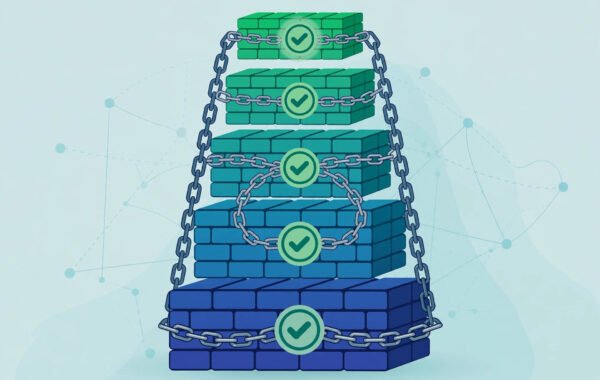
A smart contract is a program stored on a blockchain that automatically carries out an agreement when conditions are met — no humans, no intermediaries, no discretion. Think of a vending machine: you put in coins, select a product, and the machine delivers it — the “contract” (money in, product out) executes mechanically, without a shopkeeper. A smart contract is a vending machine for digital agreements: “if X happens, then do Y”, enforced by code that no one can alter or stop. The blockchain guarantees the machine cannot be tampered with, switched off, or bribed.
Why “Smart” and Why “Contract”
Neither word is quite right, which causes half the confusion. They are not “smart” — they cannot think, negotiate or exercise judgement; they follow instructions literally, including instructions with bugs. And they are not “contracts” in the legal sense — they are closer to automated escrow machines. A better mental model: unstoppable, transparent software. Once deployed, a smart contract runs exactly as written, visible to everyone, executable by anyone, alterable by no one. That combination — automation plus immutability plus transparency — is what makes them powerful and dangerous in equal measure.
Demystifying them is similar to understanding what generative AI actually is beneath the hype — strip away the buzzwords and you find a specific technology with specific capabilities and specific limits. And like the distinction between AI and machine learning, precision about what a smart contract is (and is not) prevents most misunderstandings before they start.
What Smart Contracts Actually Do: Real Examples
Lending without banks. Deposit crypto as collateral; the contract automatically lets you borrow against it, liquidating your collateral if its value falls too far. No application, no credit check, no banker — the code enforces everything.
Trading without exchanges. Decentralised exchanges are smart contracts holding pools of tokens; traders swap against the pools at algorithmically set prices. Billions in daily volume flows through code with no company operating it.
Insurance and prediction markets. Contracts that automatically pay out when verifiable events occur — flight delays, election results, sports outcomes — with no claims adjuster.
Digital ownership. NFTs are smart contracts certifying ownership and encoding rules like creator royalties on resale.
Organisational governance. DAOs (decentralised autonomous organisations) use smart contracts to manage treasuries and votes — companies run substantially by code.
The Oracle Problem: The Achilles’ Heel
Here is the subtle flaw most explanations skip: blockchains cannot see the real world. A smart contract managing flight-delay insurance needs to know whether the flight was delayed — but the blockchain has no eyes. It relies on “oracles”: services that feed real-world data to contracts. Oracles reintroduce trust — if the data feed lies or fails, the perfect contract executes perfectly on false premises. Many smart-contract failures are really oracle failures. “Code is law” turns out to mean “code plus data feeds are law, and the feeds are the weak link”.
What Smart Contracts Cannot Do
They cannot exercise judgement — a contract cannot consider extenuating circumstances, negotiate, or show mercy; edge cases produce absurd outcomes. They cannot be fixed after deployment — bugs are permanent (the most expensive typos in history live on blockchains). They cannot keep secrets easily — everything on public blockchains is visible, complicating confidential agreements. They cannot act without being triggered — contracts sit dormant until someone interacts with them; there is no initiative. And they cannot guarantee the real world cooperates — a contract can release payment for a house, but it cannot evict a tenant.
How Long to Really Understand Them? A Learning Path
Twenty minutes: the vending-machine model, the examples above, and the key limits — enough to follow any news story about DeFi or NFTs intelligently.
A few hours: reading about the oracle problem, famous hacks (which teach more than successes), and gas economics — enough to evaluate whether a smart-contract-based product deserves your money.
Weeks to months: learning to read contract code or audit reports — the level needed to assess risk professionally rather than by reputation.
For most people, the twenty-minute level plus healthy scepticism suffices. The critical understanding is not technical but conceptual: smart contracts remove intermediaries and human discretion simultaneously — gaining efficiency and losing flexibility, gaining transparency and losing privacy, gaining automation and losing recourse. Every smart-contract application is a trade of those pairs.
Smart Contracts and the Law: Unresolved Territory
Are smart contracts legally enforceable agreements? In the UK, the Law Commission has examined the question, concluding that existing contract law can largely accommodate them — but edge cases abound, and when code and legal intent conflict, courts have barely begun to rule. The FCA’s consumer guidance reminds users that crypto activity is largely unregulated: if a smart contract misbehaves, there is no ombudsman, no reversal, no compensation scheme. Code may be law on the blockchain, but it is not yet settled law in the courts — and that gap is where risk lives.
Conclusion
How long does it take to really understand smart contracts in simple terms? Twenty focused minutes: they are unstoppable vending machines for digital agreements — transparent, automatic, unalterable — powerful because they remove intermediaries, limited because they remove judgement, secrecy and recourse along with them. Grasp the oracle problem, respect the permanence of bugs, and you understand more than most participants. The technology will keep evolving; the conceptual foundation you have just built will not need to. For wider context on the risks of putting money into crypto technology, MoneyHelper’s guidance on investing is a balanced starting point.
Frequently Asked Questions
What is a smart contract in simple terms?
A program on a blockchain that automatically executes an agreement when conditions are met — like a vending machine for digital deals: no humans, no intermediaries, no way to alter it once running.
Are smart contracts legally binding in the UK?
Potentially — the Law Commission has found existing contract law can accommodate them, but the area is evolving and largely untested in courts. Do not assume code and legal enforceability are the same thing.
Can smart contracts be hacked?
The blockchain itself is secure, but contract code can contain bugs — and bugs are permanent once deployed. Major exploits have drained hundreds of millions from flawed contracts. Audits reduce but never eliminate this risk.
Do smart contracts need cryptocurrency to work?
On public blockchains, yes — executing contract actions requires network fees paid in the chain’s currency. The contract logic itself is just code; the crypto is the fuel.
What happens if a smart contract has a bug?
Usually, the bug executes exactly as written — there is no undo button and often no way to patch a deployed contract. This immutability is why audits matter and why large sums in unaudited contracts are reckless.