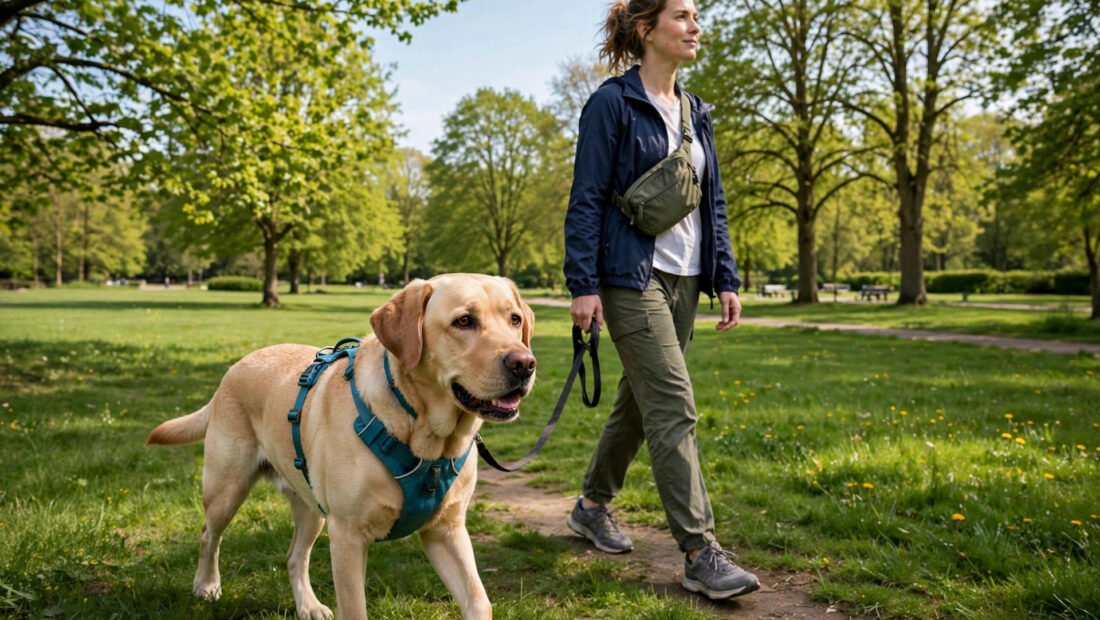
There is a special kind of embarrassment in being towed down the street by your own dog — arm extended, shoulder aching, apologising to neighbours as your Labrador lunges toward every interesting smell. Pulling on the lead is the most common complaint of new dog owners, and it is also one of the most fixable. Dogs do not pull to dominate you or because they are badly behaved. They pull because pulling works: it gets them where they want to go, faster.
This guide gives beginners the safest, most effective way to stop lead pulling — built on reward-based training that works with your dog’s instincts rather than against them, with realistic timelines for UK owners.
Why Dogs Pull (and Why Punishment Backfires)
A dog’s world is smells, and the lead is the only thing between them and all of it. Every time a dog pulls and the owner follows, the dog learns a simple equation: pull = forward. It is self-rewarding behaviour, which is why it gets worse the longer it continues — the dog has had hundreds of successful practice sessions.
Punishment-based tools — choke chains, prong collars, yanking the lead — appear to work because they suppress behaviour through pain or fear. But the evidence, including position statements from the RSPCA on dog training, is clear: aversive methods increase stress and aggression risk, damage the owner-dog relationship, and often create new problems (a dog that fears the lead, or redirects frustration onto other dogs). The safe beginner path is reward-based training, full stop.
The Right Equipment First
Before training a single step, fix the equipment. A flat collar is fine for ID tags, but for a puller, a well-fitted front-clip harness changes the physics: when the dog lunges, the front attachment gently turns them back toward you instead of letting them lean into the pull like a sled dog. Look for a Y-shaped harness that does not restrict shoulder movement — cheap no-pull harnesses that cut across the shoulders can affect gait.
Use a standard 1.5–2 metre lead, not an extendable one. Extendable leads teach the dog that pressure on the lead is normal and constant, which is the exact opposite of what you want, and they are dangerous near roads. Treats should be tiny, soft, and high-value — pea-sized pieces of chicken or cheese beat dry biscuits for holding a distracted dog’s attention.
The Core Technique: Be a Tree, Then Be a Reward
The foundation exercise is beautifully simple. The moment the lead goes tight, you stop — you become a boring tree. No yanking back, no scolding, just stillness. The instant the dog glances back or the lead slackens, you mark it (“yes!”) and move forward or deliver a treat. Forward movement becomes the reward for a loose lead.
Most beginners fail this exercise in one specific way: they stop, wait two seconds, then carry on walking while the lead is still tight — teaching the dog that pulling works after a short pause. The rule is absolute: tight lead = no forward progress, ever. In the first week this means walks that cover 50 metres in 20 minutes. That is normal. You are not going for a walk; you are doing a training session that happens outdoors.
Training Sessions That Actually Fit Your Life
Do short, dedicated sessions — 5 to 10 minutes, once or twice a day — rather than trying to train through an entire hour-long walk. Start in a boring environment (your garden or a quiet street) where your dog can succeed, and only add distractions gradually: quiet park, then busier park, then the high-distraction gauntlet of the local high street.
Exercise the dog before training sessions, not after. A dog bursting with unspent energy cannot learn; a 10-minute game of fetch or a sniff-heavy wander first makes training dramatically easier. And train before meals when treats matter most — a satiated dog finds your chicken far less interesting. If you work long hours, our guide on whether getting a dog while working full-time is realistic covers how to structure exercise and training around a job, while choosing the right flooring for a home with dogs is the other practical decision most new owners face.
Common Beginner Mistakes That Stall Progress
Inconsistency between family members. If one person enforces loose-lead rules and another lets the dog drag them to the park, the dog learns that pulling sometimes works — and “sometimes” is the most addictive reward schedule there is. Everyone who walks the dog must follow the same rules.
Moving too fast through environments. A dog that walks beautifully on a quiet street and loses its mind at the park has not “forgotten” its training; it has been asked to perform at a difficulty level it has not been trained for. Drop back to easier environments and rebuild.
Poisoning the recall word or luring forever. Treats start the learning, but fade the lure within a couple of weeks — reward from your pocket after the behaviour, rather than waving food as a bribe beforehand. And never punish a dog for coming back to you, even if it took ten minutes; you want returning to always feel safe.
When to Get Professional Help
Most pulling resolves with consistent training in 4–8 weeks. Seek a professional if the pulling involves aggression (lunging, barking, or snapping at people or dogs), if the dog is large enough to be physically dangerous, or if you have made no progress after a month of consistent work. Choose a trainer accredited by the Animal Behaviour and Training Council (ABTC) or a member of the Association of Pet Dog Trainers (APDT UK) — both require reward-based methods. Avoid any trainer who reaches for a choke chain or talks about “dominance.”
The Blue Cross guide to loose-lead walking offers excellent video demonstrations of the techniques in this article, which many beginners find easier to follow than written descriptions.
Conclusion: Patience Beats Strength Every Time
Stopping lead pulling is not a battle of strength — you will never out-muscle a determined Labrador, so do not try. It is a retraining of the dog’s expectations: pulling stops the walk, slack leads keep it moving, and you are the most rewarding thing in the environment. With the right harness, tiny treats, short sessions, and household consistency, most beginners see real change within a month — and walks transform from an ordeal into the best part of the day.
Frequently Asked Questions
How long does it take to stop a dog pulling on the lead?
With consistent daily training, most owners see significant improvement in 4–8 weeks. Dogs that have pulled for years take longer, as you are undoing a deeply rehearsed habit. Consistency across all family members matters more than total training time.
Are anti-pull harnesses cruel?
A well-fitted front-clip harness that does not restrict shoulder movement is humane and widely recommended. Avoid harnesses that cut across the shoulders or tighten painfully, and never use choke chains or prong collars.
Should I use an extendable lead for training?
No. Extendable leads maintain constant tension, teaching the dog that pulling is normal, and they offer poor control near roads. Use a fixed 1.5–2 metre lead for all training.
My dog only pulls when excited — is that normal?
Completely normal. Excitement pulling (toward other dogs, people, or smells) is the most common type. Train in low-distraction environments first and gradually increase difficulty; asking for calm behaviour in overwhelming situations too soon is the main reason training stalls.