
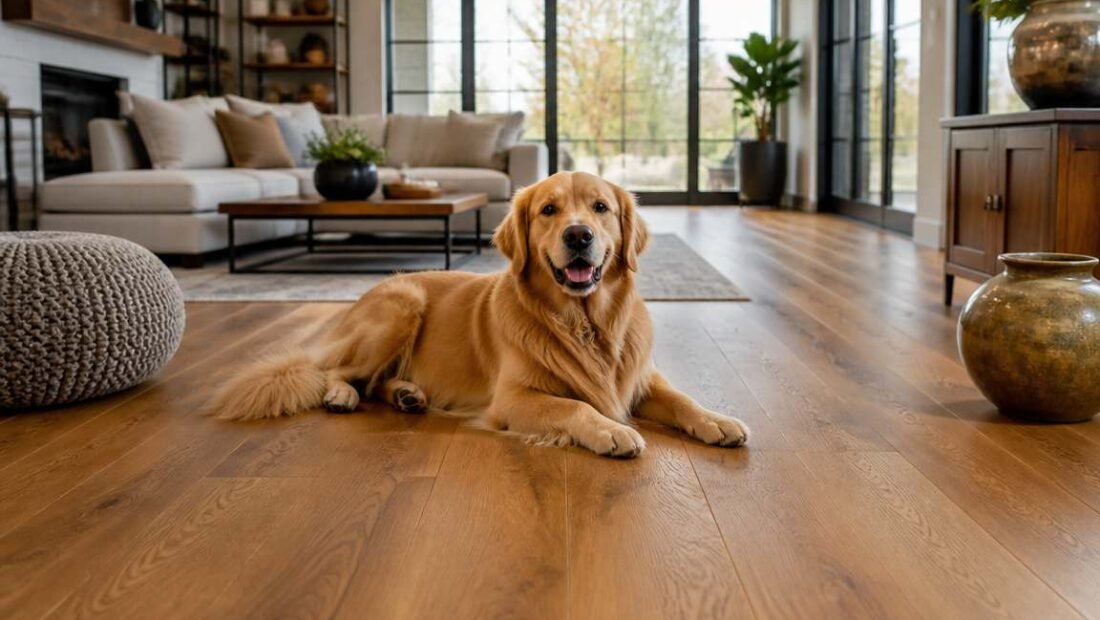
Kids, dogs, muddy boots, spilled juice, the occasional “accident” — family flooring takes a beating that showroom samples never hint at. The wrong choice means scratched boards, stained carpets and a floor you resent within a year. The right choice shrugs off claws, cleans in minutes and still looks good when the chaos subsides. So what is the best flooring for a busy family home with dogs? Here’s the honest ranking.
The best flooring for a busy family home with dogs
1. Luxury vinyl tile (LVT) — the overall winner
If I had to pick one floor for a dog-owning family, it’s LVT. It’s waterproof (not just water-resistant — genuinely waterproof), scratch-resistant enough for claws, warm underfoot, quiet, and available in convincing wood and stone looks. Muddy paw prints wipe off; accidents don’t soak in; a damaged plank can be replaced individually. Cost: £25–£45/m² fitted. Brands like Karndean, Amtico and Polyflor are the quality benchmarks. The only real downside is cost — it’s pricier than laminate — but for a busy home it’s worth every penny.
2. Laminate — the budget workhorse
Modern laminate is far tougher than its reputation suggests. AC5-rated laminate resists scratches well, cleans easily and costs £12–£25/m² fitted — half the price of LVT. The catch: it’s not waterproof. Standing water (dog bowls, accidents left too long) seeps into joints and swells the boards. Fine for living rooms and hallways with prompt clean-ups; risky for utility rooms. Our laminate flooring cost guide breaks down the pricing.
3. Tile (porcelain) — indestructible but cold
Porcelain tiles laugh at claws, water and stains. They’re the toughest domestic flooring available and ideal for kitchens, utility rooms and boot rooms. Downsides: hard (dropped mugs shatter, toddlers’ knees suffer), cold without underfloor heating, and slippery for older dogs. Underfloor heating transforms tiled floors — worth considering if you’re tiling large areas.
4. Engineered wood — beautiful but vulnerable
Real wood warmth and character, but claws scratch it and water damages it. Large dogs + solid wood = a floor that looks “rustic” within two years. If your heart is set on wood, choose a hard species (oak over pine), a matte lacquered finish, and accept the patina — or restrict it to low-traffic rooms.
5. Carpet — proceed with caution
Carpet and dogs are natural enemies: stains, smells, embedded hair. If you must (bedrooms, stairs), choose a short-pile, stain-resistant polypropylene in a mid-tone that hides sins, and invest in a decent carpet cleaner. Runners on hard floors give you the warmth without the commitment.
Room-by-room recommendations
- Hallway: LVT or tile — the mud zone. A washable runner over the top.
- Kitchen/diner: LVT or porcelain tile. Waterproof is non-negotiable near the dog’s water bowl.
- Living room: LVT for practicality; engineered wood if the dog is small and calm.
- Bedrooms: carpet for comfort (dogs allowed?) or laminate/LVT for practicality.
- Utility/boot room: porcelain tile. Hose it down. Done.
The dog-specific details nobody mentions
- Slip resistance matters for older dogs. Glossy tiles and high-sheen laminates become ice rinks for arthritic dogs. Choose textured finishes or add runners on their routes.
- Scratch warranties exclude pet damage — read the small print, but in practice LVT handles claws fine.
- Dark floors show every hair; very light floors show every muddy paw. Mid-tones with pattern are the camouflage sweet spot.
- Underlay matters: good acoustic underlay under laminate/LVT cuts the clickety-claw noise dramatically — your downstairs neighbours (or your own sanity) will thank you.
If you’re refreshing the whole house, our professional decorating guide pairs well with new floors — paint first, floors second, always. And for keeping the rest of the dog-friendly home in shape, our pet-friendly cottages guide proves the chaos doesn’t have to stop at holidays.
Rugs and runners: the damage-limitation layer
Even with the perfect hard floor, rugs are the secret weapon of dog-owning households:
- Washable rugs (£30–£80) have changed the game — proper-looking rugs you can put in the washing machine. Ruggable pioneered them; IKEA, Dunelm and others now do versions. Place them in the dog’s favourite spots and high-traffic zones.
- Runners in hallways protect the floor’s most abused area and give older dogs grip on slippery surfaces. Rubber-backed runners stay put; tape the ends if they curl.
- Layer for seasons: heavier rugs in winter (warmth, mud season), lighter in summer. It’s cheaper than replacing floors.
- Door mats, plural: one outside, one inside every external door. The two-mat system catches 80% of paw dirt before it reaches your floors.
Making the home dog-safe (beyond floors)
Flooring is one piece of a dog-proof home. The rest of the checklist: secure bins (dogs open “dog-proof” bins — get a locking one), keep food, medications and cleaning products above nose height, protect cables from chewers with trunking, and check your plants — lilies, sago palms and many common houseplants are toxic to dogs. The RSPCA’s pet care advice covers home safety in detail. And if you’re renting with a dog, document the floor condition with dated photos on moving day — it turns deposit disputes from arguments into arithmetic.
The muddy-paw station
The highest-ROI dog-home upgrade isn’t flooring at all — it’s a paw-cleaning station by the back door: a microfibre mat, a paw washer cup (£10–£15 — the silicone-bristle kind actually works), and a towel hook. Thirty seconds per paw on return from a walk saves hours of floor cleaning per week. Train it as part of the coming-home routine and dogs accept it within days. Combined with washable runners, it’s the difference between “we have a dog” and “our house smells of dog”.
Nails, claws and floor protection
The floor-dog relationship is two-way — floors damage paws too (slippery surfaces stress joints, especially in older dogs). The maintenance routine that protects both: trim nails regularly — long nails click on hard floors (the sound is the floor telling you they’re too long) and scratch more. A £10–£15 nail grinder is quieter and safer than clippers for nervous dogs. Paw balm in winter protects pads from grit salt on walks (which then gets tracked onto floors). And place mats under water bowls — the single most spill-prone square metre in a dog-owning home; a £10 waterproof mat saves the floor beneath. These small habits do more for floor longevity than any amount of scratch-resistant marketing.
The takeaway
LVT is the best all-round flooring for a busy family home with dogs — waterproof, tough, and good-looking. Laminate is the budget alternative (keep it dry), tile rules the wet zones, and carpet should be quarantined to bedrooms. Choose mid-tones, textured finishes, and good underlay, and your floors will survive the beautiful chaos.


