
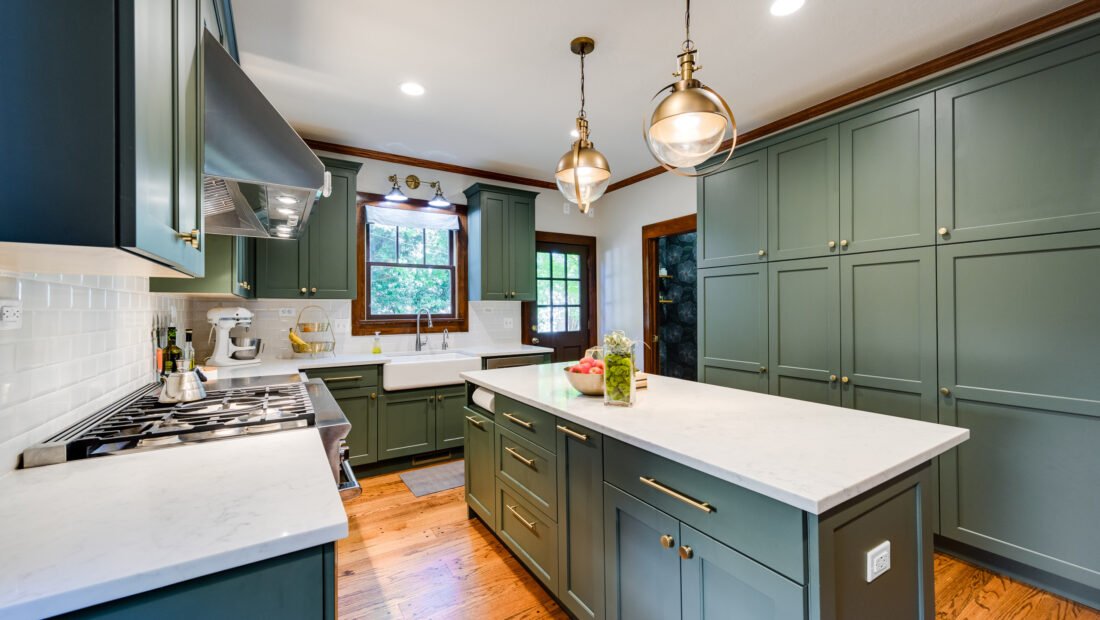
The kitchen is the most expensive room in the house to renovate and the one where budgets go to die — a “quick refresh” somehow becomes a five-figure project involving structural engineers. Whether you’re planning a full rip-out or just trying to understand what the neighbours actually paid, here’s how much a new kitchen costs in the UK on average, broken down honestly.
How much does a new kitchen cost in the UK on average?
The average UK kitchen renovation costs £10,000–£15,000 for a mid-range fitted kitchen including installation. But “average” hides a huge spread:
- Budget refresh (flat-pack units, laminate worktops, DIY or budget fitter): £5,000–£8,000
- Mid-range fitted kitchen (Howdens/Wickes/Magnet, quartz worktops, professional fit): £10,000–£18,000
- High-end bespoke (independent joiner, stone worktops, premium appliances): £20,000–£40,000+
- Luxury/designer (architectural, structural changes): £40,000+
Where the money goes
For a typical £12,000 kitchen, roughly:
- Units and cabinetry: 30–35% (£3,500–£4,500)
- Worktops: 10–15% (£1,200–£2,000 — laminate £500, quartz £1,500–£2,500)
- Appliances: 15–20% (£1,800–£2,500 — integrated costs more than freestanding)
- Installation/fitting: 20–25% (£2,500–£3,500)
- Electrics, plumbing, plastering, tiling, flooring: 15–20%
The fitting and trades often surprise people — a kitchen isn’t just units, it’s an electrician, a plumber, a plasterer and a tiler, each billing separately unless your fitter project-manages them.
How to keep costs down (without regret)
- Keep the layout. Moving the sink, cooker or boiler means new plumbing, electrics and waste runs — £1,000–£3,000 before you’ve bought a single unit. The existing layout is usually fine.
- Flat-pack + good fitter beats expensive units + cheap fitter. A skilled installer makes IKEA carcasses look bespoke; a bad one ruins premium units.
- Ex-display and end-of-line: showroom ex-displays sell for 40–70% off. Check eBay, Facebook Marketplace and showroom clearance pages.
- Don’t over-spec appliances you’ll barely use. A £1,200 range cooker is lovely; a £400 decent oven cooks food identically.
- Consider painting instead of replacing. If the carcasses are sound, repainting kitchen cabinets costs £500–£1,500 versus £5,000+ for new units.
- Phase the work: units and worktops now, new floor and tiling later. Not everything must happen at once.
What about value added?
A new kitchen is consistently cited as one of the best home improvements for resale — estate agents suggest a quality kitchen can add 5–10% to a home’s value, often more than it costs in competitive markets. But there’s a ceiling: don’t put a £25,000 kitchen in a £180,000 terrace. Match the kitchen to the house and the street. Our guide to adding value before selling covers where kitchens sit in the priority order.
Timeline and disruption
A straightforward replacement takes 2–3 weeks; a full renovation with layout changes takes 4–6 weeks. You’ll be without a kitchen for most of it — plan for microwave meals, a temporary washing-up station in the bathroom (we’ve all been there), and dust everywhere despite the fitter’s promises. Order appliances early; delivery lead times of 4–8 weeks are normal.
If you’re renovating the bathroom too, our bathroom refit cost guide helps you budget the pair — and doing both together can save on trades’ day rates. For reliable fitters, see how to find a reliable tradesperson, and check Which?’s fitted kitchen reviews for supplier satisfaction scores.
Kitchen design: zones, not triangles
The old “work triangle” (sink-cooker-fridge) has given way to zone planning, and it produces better kitchens:
- Prep zone: near the sink, with chopping space, bins and the dishwasher. This is where 70% of kitchen time happens — give it the most space.
- Cooking zone: hob/oven with heatproof landing space on at least one side, oils and utensils within reach.
- Storage zone: fridge, dry goods, everyday crockery. Deep drawers beat cupboards for accessibility — you can see everything, nothing disappears at the back.
- Cleaning zone: sink, dishwasher, bin, recycling. Under-sink is prime real estate; use pull-out organisers.
Two design rules that matter more than style: no through-traffic across the cooking zone (the person carrying a pan of boiling water shouldn’t dodge children), and landing space beside every appliance — 40cm minimum next to the oven, hob and fridge. Get the ergonomics right and even a budget kitchen feels premium; get them wrong and no amount of quartz fixes it.
Appliances: bundle or buy separately?
Kitchen companies push appliance packages, and they’re not always bad value — but compare properly:
- Bundles (£1,500–£3,000 for oven, hob, extractor, dishwasher, fridge) suit one-stop shoppers; the discount is real but the models are mid-range and your choice is limited.
- Separate purchases let you cherry-pick (a great oven matters more than a great dishwasher) and exploit seasonal sales — Black Friday and January sales routinely cut 20–30% off major appliances.
- Integrated vs freestanding: integrated looks better and costs 20–40% more, both for the appliance and the housing units. Freestanding is cheaper, easier to replace, and honestly fine in most kitchens.
- Energy ratings matter: an A-rated fridge-freezer and dishwasher save £50–£100 a year over D-rated equivalents. Over a 12-year appliance life, that’s £600–£1,200 — often more than the price difference.
- Measure twice: the number one appliance-buying error is assuming standard sizes are standard. Integrated appliances vary by millimetres that matter. Measure the aperture, not the old appliance.
The 10% contingency: non-negotiable
Every kitchen renovation finds something — the wall behind the old units is crumbling, the floor level differs by 30mm, the “standard” plumbing is anything but. Budget a 10–15% contingency and consider it spent from day one; if you don’t need it, it’s a bonus. Where the surprises hide: electrics (old wiring that needs upgrading to support the new circuits — budget £500–£1,500 if the kitchen hasn’t been touched in 20 years); plastering (removing old tiles takes the plaster with it — allow £300–£800); flooring levels (new floor meeting old floors at different heights needs thresholds or levelling); and asbestos (pre-2000 homes — old vinyl flooring, textured coatings and some insulation boards may contain it; a survey is £200–£400 and non-negotiable if you suspect it). The contingency isn’t pessimism — it’s the most realistic line in the budget.
The takeaway
Budget £10,000–£15,000 for a decent mid-range kitchen. Keep the layout, spend on the fitter not just the units, consider ex-display, and repaint rather than replace if the bones are good. The most expensive kitchen is the one you have to redo because you rushed the planning.


