
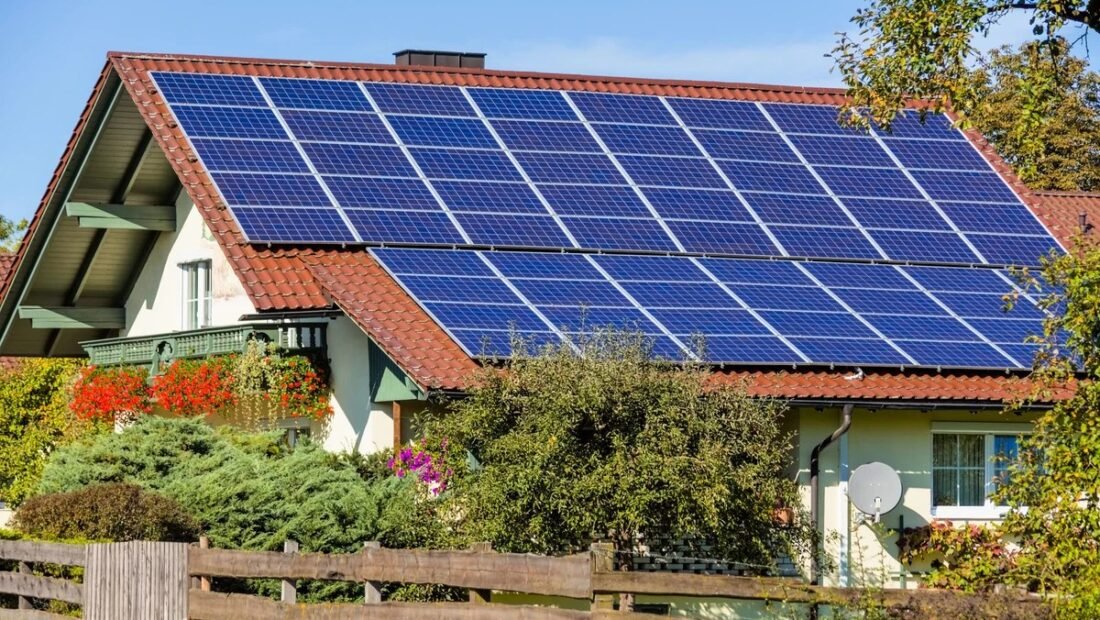
“Solar panels in Britain? We barely get any sun!” — the objection I hear most often, usually from someone whose roof would actually do fine. Here’s the thing the sceptics miss: solar panels don’t need blazing sunshine, they need daylight, and modern panels generate meaningful power even on overcast days. Germany — not exactly the Costa del Sol — is a world leader in solar. So is it worth getting solar panels in the UK in 2026? For most suitable homes: yes, with caveats.
Is it worth getting solar panels in the UK in 2026?
For a typical suitable home, yes. A 3.5–4kW system (10–12 panels) costs £5,000–£8,000 installed and saves £400–£700 a year on electricity bills, plus £100–£200 from selling surplus back to the grid. That puts payback at roughly 8–12 years, with panels warranted for 25 years and lasting 30+. After payback, you’re generating free electricity for a decade or more.
The numbers in detail
- System cost: £5,000–£8,000 for 3.5–4kW; £8,000–£11,000 for 5–6kW on larger roofs.
- Annual generation: a 4kW south-facing system in southern England generates ~3,800kWh/year; in Scotland, ~3,000kWh. The Energy Saving Trust has regional estimates.
- Bill savings: using your own solar power instead of buying at 24p+/kWh is where the real money is — self-consumption beats export payments.
- Export payments: the Smart Export Guarantee pays 5–15p/kWh for surplus exported (Octopus and others offer the best rates, some with time-of-use bonuses).
- Battery addition: £3,000–£6,000 for a home battery, letting you use evening solar. Improves economics if you’re out during the day; extends payback otherwise.
What makes a home suitable?
- Roof orientation: south-facing is ideal; east/west works at ~80% output; north-facing is usually not viable.
- Shading: chimneys, trees and neighbouring buildings matter — even partial shade disproportionately cuts output. A good installer surveys this properly.
- Roof condition: if your roof needs replacing within 10 years, do the roof first. Scaffolding twice is expensive.
- You’re home (or can shift usage) during the day: running the washing machine, dishwasher and EV charging on solar hours maximises savings.
Battery or no battery?
The honest answer: batteries improve the experience more than the economics — for now. Without a battery, you export daytime surplus cheaply and buy evening power expensively. With one, you time-shift your own power. Battery prices are falling steadily; if the maths is marginal today, it’s worth rechecking in a year or two. Some installers push batteries hard because the margins are good — run your own numbers on your actual usage pattern.
Solar and your EPC
Solar panels boost your EPC rating noticeably — often by a full band — which matters for saleability and for meeting future minimum standards if you rent the property out. Combined with a heat pump, solar gets you close to the all-electric, low-carbon home the government’s policies are pushing toward. Check GOV.UK’s Smart Export Guarantee guidance for the current export framework.
Avoiding the cowboys
Solar has attracted its share of pushy sales operations. Protect yourself:
- Use MCS-certified installers only — required for Smart Export Guarantee payments. Verify on the MCS website.
- Get 3 quotes and compare the price per kW, not just the headline.
- Ignore “free solar” rent-a-roof schemes — the company keeps the payments, you get the hassle and a complicated property sale later.
- Be wary of inflated generation estimates — ask for the MCS shade analysis and check it against Energy Saving Trust regional figures.
- Finance carefully: 0% offers are often baked into a higher price. Compare the cash price.
Solar for flats, renters and tricky roofs
Not everyone has a south-facing pitched roof they own outright. The alternatives:
- Flats: individual flat installations are difficult (shared roof, freeholder permission, scaffolding logistics), but community solar schemes are growing — you buy into a local solar farm or shared rooftop array and get credited for your share. Check what’s operating in your area.
- Renters: you can’t install panels, but you can switch to a green tariff, use a smart plug to shift usage to sunny hours (when grid solar is abundant and prices dip on time-of-use tariffs), and plug-in balcony solar kits (£300–£600) are emerging for those with suitable outdoor space — check your tenancy agreement first.
- North-facing or shaded roofs: usually not viable for traditional panels, but get a proper shade analysis before writing it off — east/west splits and even some north-facing roofs with good pitch can work in southern England.
- Conservation areas/listed buildings: planning permission may be needed, and panels must often be discreet (in-roof systems, or rear slopes only). Talk to your council’s conservation officer early — many are more supportive than you’d expect.
Winter, clouds and the generation curve
Let’s be honest about the British climate: a 4kW system that generates 400kWh in June might generate 80kWh in December. Solar is a summer-weighted investment — roughly 70% of annual generation comes between March and September. This doesn’t break the economics (the annual total is what matters for payback), but it shapes how you use the system: summer is for running everything on solar and exporting the surplus; winter is for benefiting from the SEG export payments banked… actually no — SEG pays per kWh exported in real time, there’s no banking. The real winter strategy is a battery (storing summer evening surplus for night use) and a time-of-use tariff (cheap overnight grid electricity in winter, solar self-consumption in summer). Size your expectations seasonally and the system delivers exactly what the numbers promise.
Pigeons: the unglamorous solar problem
The number one maintenance issue with UK rooftop solar isn’t the panels — it’s pigeons nesting underneath them. The warm, sheltered gap is prime real estate, and pigeon droppings corrode frames, block drainage and look awful. The fix is pigeon proofing — wire mesh clipped around the panel perimeter (£200–£400 for a typical array). Get it fitted at installation (cheapest — the scaffolding’s already up) rather than retrofitted. Some installers include it; most charge extra; all of them have seen what happens without it. If you’re getting quotes, ask for proofing to be itemised — the installers who raise it unprompted are usually the thorough ones. Gulls are a separate, louder problem with no good solution beyond siting panels away from their nesting routes where possible.
The takeaway
For a south-facing, unshaded roof on a home you’ll stay in for 10+ years, solar panels in the UK are a solid investment in 2026: £5,000–£8,000 upfront, 8–12 year payback, then decades of cheap power. Get MCS-certified quotes, be realistic about shading, and think of the battery as phase two.


