To treat eczema on the face, apply a fragrance-free emollient moisturiser liberally several times daily, use a mild topical corticosteroid such as hydrocortisone 1% cream on flare-ups for short courses as directed, and avoid triggers like harsh skincare, fragranced products and known allergens. Facial skin is thin and sensitive, so steroid creams should be used cautiously and never long-term without medical advice. Most facial flare-ups settle within one to two weeks of consistent treatment.
Why Facial Eczema Needs Special Care
Atopic eczema (atopic dermatitis) on the face is common in both children and adults, typically appearing on the cheeks, forehead, around the eyes and mouth, and behind the ears. The skin here is among the thinnest on the body, which means it absorbs topical medicines more readily — good for treatment, but also a reason for caution with steroid creams.
Related reading: lifestyle and tech guides covers this in detail.
Facial flare-ups bring redness, dryness, scaling, itching and sometimes weeping or crusting. Because the face is always visible, the psychological impact can be significant. The NHS guidance on atopic eczema covers diagnosis and the full range of treatments your GP can offer.
Step-by-Step: Treating Eczema on the Face
Step 1: Moisturise Aggressively with Emollients
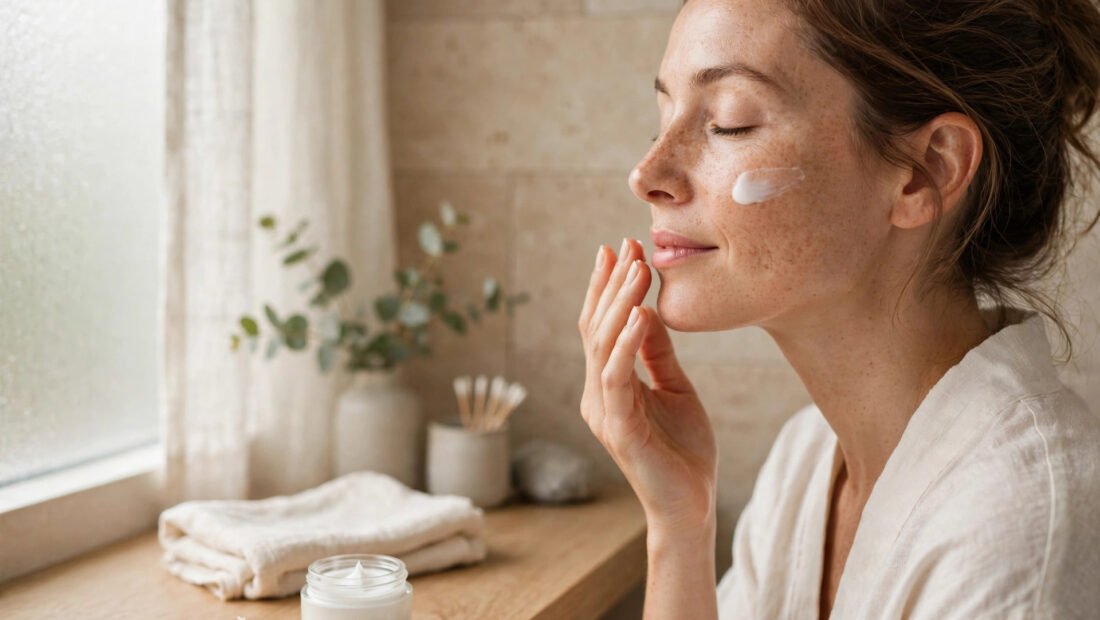
Emollients are the foundation of all eczema treatment. Apply a thick, fragrance-free emollient — ointments like emulsifying ointment or creams such as E45, Aveeno or Cetraben — all over the face at least twice daily, and ideally whenever the skin feels dry. During a flare, reapply every few hours. Use generous amounts: roughly a fingertip unit (the cream squeezed along an adult fingertip) covers an area twice the size of a hand. Apply in smooth downward strokes rather than rubbing up and down, which can irritate hair follicles.
Keep a small tube with you during the day. Ointments are greasier but more effective than lotions for very dry skin; many people use ointment at night and a lighter cream during the day. Your GP can prescribe large tubs of emollients on repeat prescription.
Step 2: Use Topical Steroids Correctly — and Cautiously
For active flare-ups, a mild topical corticosteroid calms inflammation quickly. Hydrocortisone 1% cream is available over the counter and is the usual choice for the face, applied thinly once or twice daily for up to 7 days. Stronger steroids should only be used on the face if specifically prescribed by a doctor, and only for short, defined courses.
Facial skin is vulnerable to steroid side effects — thinning, visible blood vessels, and perioral dermatitis — with prolonged use, so never use potent steroid creams on the face without medical supervision, and stop once the flare has settled, continuing with emollients alone. If you need steroids frequently, tell your GP: it is a sign your maintenance treatment needs reviewing.
Step 3: Ask About Non-Steroid Prescription Options
If facial eczema keeps returning, your GP or dermatologist may prescribe tacrolimus ointment or pimecrolimus cream — calcineurin inhibitors that calm inflammation without the skin-thinning risks of steroids, making them particularly suited to the face, eyelids and neck. They can cause a brief burning sensation when first applied, which usually fades within a few days. These are prescription-only in the UK and often the long-term answer for stubborn facial eczema.
Step 4: Simplify Your Skincare Routine
During a flare, strip your routine back to basics: a gentle, fragrance-free cleanser (or just lukewarm water), your emollient, and SPF. Pause retinoids, vitamin C serums, exfoliating acids (AHAs/BHAs), and any fragranced products — all can sting and worsen inflamed skin. Avoid “natural” remedies like essential oils, which are common irritants. Patch-test any new product on the jawline before using it across the face.
Step 5: Identify and Avoid Your Triggers
Common facial eczema triggers include fragranced cosmetics and skincare, harsh soaps, dust mites, pet dander, pollen, stress, sweat, central heating, and sudden temperature changes. Keep a simple diary during flares to spot patterns. Launder pillowcases frequently in fragrance-free detergent, and consider dust-mite-proof covers if night-time itching is prominent. A cool bedroom and lukewarm (not hot) face washing reduce irritation.
Soothing a Flare-Up Tonight
If your face is flaring right now: wash gently with lukewarm water only, pat (do not rub) dry with a soft towel, apply your emollient thickly, then apply hydrocortisone 1% to the inflamed patches if you have it. A cool, damp flannel laid over the face for 10 minutes calms itching. Take an antihistamine if itching is keeping you awake — the drowsy types (like chlorphenamine) are sometimes used at night for this purpose. Try not to scratch: keep nails short, and cotton gloves at night help if you scratch in your sleep.
Make-up and Sun Protection with Facial Eczema
You can wear make-up with facial eczema, but choose fragrance-free, hypoallergenic products and remove them gently — micellar water or a mild cleansing oil beats harsh wipes. Avoid make-up on actively weeping or cracked skin. For sun protection, mineral sunscreens (zinc oxide or titanium dioxide) tend to irritate eczema-prone skin less than chemical filters; apply over your emollient. Sunlight helps some people’s eczema but triggers others — observe your own pattern.
When to See a GP or Dermatologist
See your GP if facial eczema does not improve after a week of correct treatment, if it is weeping, crusted or painful (possible infection needing antibiotics), if it is severely affecting sleep or daily life, or if you need steroid creams repeatedly. Babies and children with facial eczema should be assessed by a GP for a proper management plan. Referral to a dermatologist is appropriate for severe, widespread or treatment-resistant cases — newer treatments including biologics exist for severe eczema.
Eczema Around the Eyes: Take Extra Care
Eyelid eczema deserves special caution because the skin there is the thinnest on the body and sits millimetres from your eyes. Use only the mildest treatments on the eyelids — your emollient plus hydrocortisone 1% for very short courses if needed — and never apply stronger steroids near the eyes unless an ophthalmologist or dermatologist directs it, as they can raise eye pressure and contribute to glaucoma or cataracts with prolonged use. Tacrolimus ointment is often the preferred prescription option for eyelid eczema precisely because it avoids these risks. Avoid getting any creams actually in the eyes, remove eye make-up with exceptional gentleness, and see your GP promptly if eyelid eczema causes swelling that affects vision, weeping, or does not respond within a week — the eye area is one place where early professional input genuinely matters.
Frequently Asked Questions
Can I use hydrocortisone cream on my face?
Yes — hydrocortisone 1%, the mildest steroid cream, is suitable for short courses (up to 7 days) on facial eczema. Do not use moderate or potent steroids on the face unless a doctor specifically prescribes them, and never use them long-term without review.
What is the best moisturiser for eczema on the face?
The best one is a fragrance-free emollient you will actually use generously and often — ointments for very dry skin, creams for daytime. E45, Aveeno, Cetraben and emulsifying ointment are all widely used in the UK; your GP can prescribe them.
Does diet affect facial eczema?
For most adults, no specific food causes eczema flares, and restrictive diets are not recommended without evidence. In young children, cow’s milk or egg allergy can occasionally play a role — discuss testing with your GP rather than cutting out foods on your own.
Can stress cause eczema on the face?
Stress does not cause eczema, but it is a well-established flare trigger — it disrupts the skin barrier and intensifies itching. Stress management, good sleep and treating flares promptly all help break the cycle.
Will my child’s facial eczema go away?
Often, yes. Many children with atopic eczema improve significantly as they grow, with a large proportion outgrowing it by their teens. Consistent emollient use and prompt flare treatment give the best long-term outlook.
Conclusion
Treating eczema on the face successfully means respecting how delicate facial skin is: emollients as the daily foundation, mild steroids for short flare courses, non-steroid prescriptions for recurring cases, and a simplified, fragrance-free routine. Identify your triggers, protect the skin barrier, and seek medical help when flares resist treatment or keep returning. With the right approach, facial eczema is highly manageable — and clearer, calmer skin is an achievable goal.