You should drink 3–4 litres of water per day while taking creatine — roughly an extra 500ml to 1 litre above your normal intake. Creatine draws water into your muscles, so staying well hydrated supports its effectiveness and helps your kidneys process it comfortably. Your exact needs depend on body size, training intensity and climate, so use the guidance below to dial in your intake.
Why Creatine Increases Your Water Needs
Creatine works by pulling water into your muscle cells, which is part of how it boosts strength and muscle fullness. This intracellular shift means slightly less water is available elsewhere in your body, so you need to drink more to compensate. Mild dehydration is the most common reason people report headaches or cramps when starting creatine — and it is easily avoided.
There is no good evidence that creatine damages healthy kidneys, but it does increase creatinine levels in the blood, which is why adequate hydration matters. Drinking enough water keeps everything flushing through as it should. The NHS notes that most adults need around 6–8 glasses of fluid daily as a baseline — creatine users should treat that as a minimum, not a target.
How Much Water to Drink With Creatine
A practical rule: drink 35–45ml of water per kilogram of body weight per day while supplementing. For an 80kg person, that is roughly 2.8–3.6 litres, rising toward 4 litres on heavy training days or in hot weather. During the loading phase (20g per day for 5–7 days, if you choose to load), stay at the higher end of that range, since you are saturating muscles faster.
Spread your intake through the day rather than chugging litres at once. A sensible pattern: 500ml on waking, 500ml with each meal, 500ml–1 litre around training, and the rest sipped between. Your urine is the simplest gauge — pale straw colour means you are on track; dark yellow means drink more. Clear-as-water urine all day means you can ease off slightly.
Hydration Tips for Creatine Users
- Start hydrated: drink 500ml of water within 30 minutes of waking to offset overnight fluid loss.
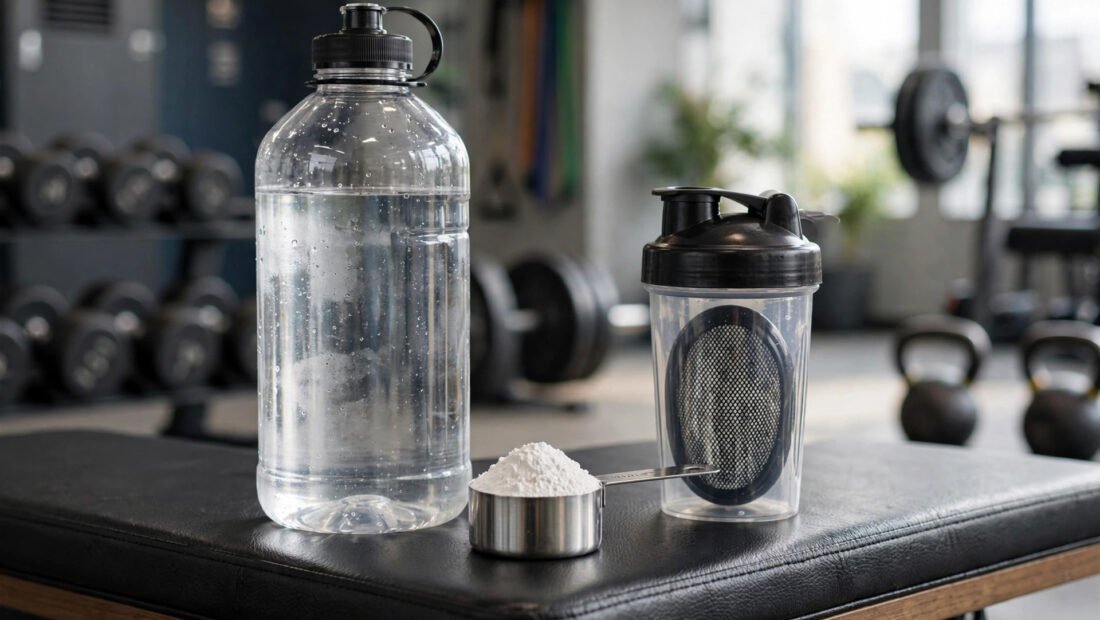
- Mix creatine properly: dissolve your 3–5g daily dose in a full glass of water or your protein shake — never take it dry.
- Boost intake on training days: add an extra 500ml–1 litre around workouts, especially for sessions over an hour.
- Watch the signs: headaches, dark urine, dizziness or muscle cramps are early warnings to drink more.
- Ease off the diuretics: heavy caffeine and alcohol intake work against hydration — moderate both while supplementing.
- Consider electrolytes: on long or sweaty sessions, an electrolyte drink replaces salts that plain water cannot.
What Counts Toward Your Daily Fluid Intake
Water does not have to come from a bottle alone. Tea, coffee (in moderation), milk, diluted squash, and water-rich foods such as fruit, vegetables, soups and yoghurt all contribute to your daily total. Roughly 20% of most people’s fluid intake comes from food, which is worth remembering before you force down another litre. That said, while taking creatine it is wise to make plain water the backbone of your intake, since caffeinated drinks have a mild diuretic effect.
A practical approach is to front-load: drink a large glass with your creatine dose, keep a 1-litre bottle at your desk or in your gym bag and finish it twice during the day, and have water with every meal. If you struggle to drink enough, set phone reminders or use a marked bottle showing hourly targets. Fizzy water, herbal teas and water with lemon or cucumber all count and can make the volume far more palatable if plain water bores you.
Common Hydration Mistakes on Creatine
The biggest mistake is taking creatine with barely any fluid — a dry scoop chased with a sip of water does not count as hydration. Another is relying on pre-workout stimulants loaded with caffeine while neglecting water, which compounds fluid loss exactly when muscles need water most. Some people also make the opposite error, forcing down extreme volumes that leave them bloated and running to the toilet all day. The middle path works: steady, consistent intake, a glass with every dose, and adjustments for training days and hot weather. If you take any medication that affects fluid balance, such as diuretics, discuss creatine use with your GP first.
Frequently Asked Questions
Can you drink too much water with creatine?
Yes, though it is rare — consistently forcing down 6+ litres daily can dilute blood sodium (hyponatraemia). Drink to thirst plus the guidelines above, and let pale-yellow urine be your guide rather than chasing extreme volumes.
Does creatine dehydrate you?
Creatine shifts water into muscles rather than removing it from your body, so it does not dehydrate you directly. Problems only arise if you fail to increase your intake to match — which is why the extra 500ml–1 litre matters.
Do I need more water during the creatine loading phase?
Yes — during a 20g-per-day loading phase, aim for the top of your range (around 4 litres for most adults). Once you drop to the 3–5g maintenance dose, 3–3.5 litres is typically enough.
Is creatine safe for kidneys if I drink enough water?
In healthy adults, research consistently shows creatine is safe for kidneys at recommended doses. Staying hydrated supports normal kidney function, but if you have existing kidney issues, speak to your GP before supplementing.
The Bottom Line
Drink 3–4 litres of water daily with creatine — about 35–45ml per kilo of body weight, spread through the day. That single habit maximises creatine’s benefits, prevents the headaches and cramps that put beginners off, and keeps your body running smoothly while you train. Build the routine into your day with a marked bottle and regular top-ups, and hydration becomes effortless rather than a chore.