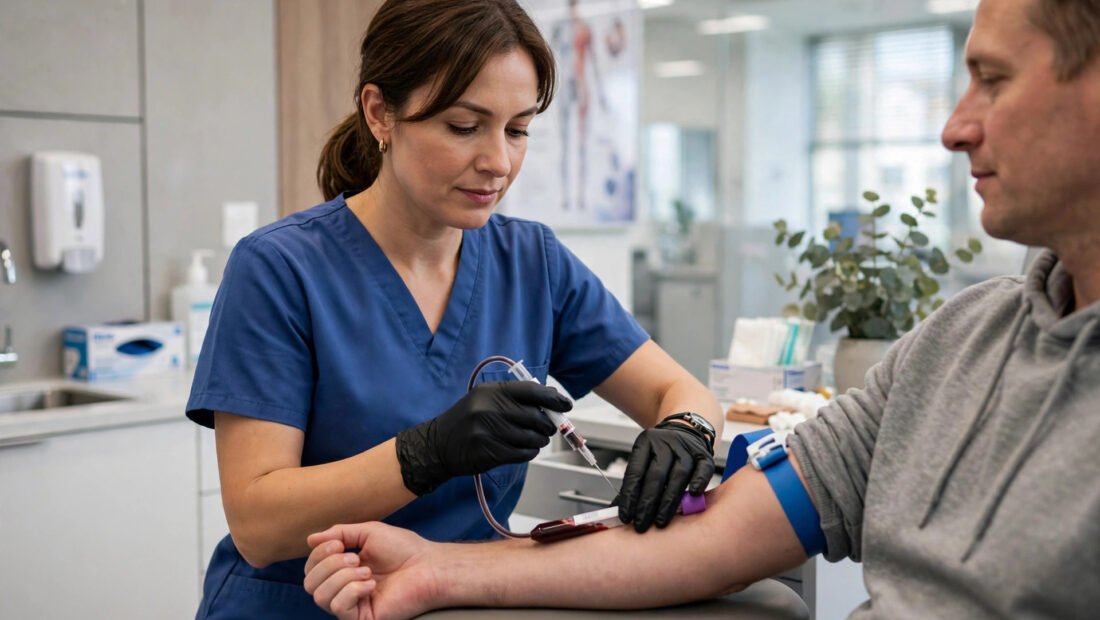
How long do you have to fast for blood work? For most fasting blood tests in the UK — including cholesterol (lipid profile) and blood glucose tests — you need to fast for 8 to 12 hours beforehand. That usually means no food or drink except plain water from the evening before a morning appointment. A fasting glucose test requires a minimum of 8 hours, while a full lipid profile typically needs 9 to 12 hours. Many common blood tests, such as a full blood count, thyroid function or kidney function, do not require fasting at all. Your GP surgery letter, text message or hospital appointment details will always tell you whether your specific test needs fasting — if it does not mention it, you do not need to fast.
How Long Do You Have to Fast for Blood Work? By Test Type
Fasting times vary because different substances clear from the blood at different rates. The most common UK requirements are:
- Fasting blood glucose: at least 8 hours. Used to check for diabetes and prediabetes.
- Lipid profile (cholesterol and triglycerides): 9–12 hours. Triglycerides in particular spike after eating, which is why a longer fast gives the most accurate reading.
- Glucose tolerance test (GTT): 8–12 hours before the first blood draw, then sugary drinks and further samples at the clinic — allow up to two hours for the appointment.
- Iron studies: often done fasting in the morning, as iron levels fluctuate through the day — your request form will specify.
- Full blood count, thyroid (TSH), liver and kidney function, HbA1c, vitamin D: no fasting needed.
If you are having several tests at once and any one of them requires fasting, fast for the longest period requested. When in doubt, phone your GP surgery the day before — reception staff deal with this question daily.
What Counts as Fasting?
Fasting for blood work means consuming nothing that your body has to digest. The rules are simple:
- Allowed: plain water — and you should drink it, because being well hydrated makes your veins easier to find and the blood draw quicker.
- Not allowed: food of any kind, tea, coffee (even black — it can affect some results), fizzy drinks, fruit juice, chewing gum, mints, sweets and vaping or smoking, which can alter certain measurements.
- Medicines: take essential prescription medicines as normal with a sip of water unless your doctor specifically tells you otherwise. Never skip heart, blood pressure, epilepsy or diabetes medication to fast — mention everything you take when you arrive.
- Diabetes medication and insulin need special instructions: your GP or diabetes nurse will tell you exactly what to do, as fasting changes your dose requirements.
How to Prepare the Night Before
A little planning makes fasting painless:
- Book a morning appointment (8–9 am) so most of the fast happens while you sleep.
- Eat a normal, balanced evening meal — do not overeat “to stock up”, as a heavy fatty meal can skew triglyceride results even after 12 hours.
- Avoid alcohol for 24 hours before the test; it affects liver and triglyceride readings.
- Set out a water bottle and take sips through the morning.
- Avoid strenuous exercise the morning of the test, which can temporarily alter some results.
- Bring a snack — a banana, cereal bar or sandwich — to eat immediately afterwards, especially if you tend to feel faint.
What Happens If You Do Not Fast Properly?
Eating before a fasting test does not harm you, but it can make the results meaningless — a post-breakfast glucose or triglyceride reading looks very different from a fasting one. The likely outcome is that the lab flags the sample, your GP cannot interpret it, and you have to repeat the test another day. If you realise you have eaten by accident, tell the nurse or phlebotomist when you arrive rather than staying silent: they may still take the sample and note it, switch you to a non-fasting alternative like HbA1c (which reflects average blood sugar over months and needs no fast), or simply rebook you. Honesty saves everyone time.
Do Children or Pregnant Women Need to Fast?
Children are usually asked to fast for shorter periods — often 6–8 hours — and GP surgeries will give age-specific instructions. Pregnant women having the oral glucose tolerance test for gestational diabetes fast for 8–12 hours overnight; if fasting feels difficult, tell the midwife, who can arrange the earliest available slot. Anyone who feels unwell, dizzy or faint while fasting should eat something and inform the clinic — no test result is worth a collapse. The NHS guide to blood tests covers what to expect at the appointment itself.
How Long Do You Have to Fast for Blood Work Before a Morning Appointment?
Work backwards from your appointment time. For a 9 am blood test requiring a 12-hour fast, finish eating and drinking (other than water) by 9 pm the night before; for an 8-hour fast, by 1 am — which in practice means nothing after your evening meal. A sample timeline: normal dinner at 7 pm, water only afterwards, bed by 11 pm, a glass of water on waking, arrive at 8:45 am, blood drawn at 9, breakfast straight after. If your appointment is later in the day, ask whether an earlier slot is available — fasting until 2 pm is miserable and unnecessary when morning slots exist.
Frequently Asked Questions
Can I drink water before a fasting blood test?
Yes — plain water is encouraged. Staying hydrated plumps up your veins and makes the blood draw easier and less painful. Just avoid anything flavoured, fizzy or caffeinated.
Can I drink black coffee before a blood test?
No. Even black coffee can affect blood sugar, cortisol and some other measurements. Stick to water until after the test, then enjoy your coffee.
How long do blood test results take on the NHS?
Most routine results are back within a few days to a week and appear in the NHS App; your surgery will contact you if anything needs action. Urgent hospital tests can come back within hours.
What if I take my medication in the morning?
Take essential medicines as normal with water unless instructed otherwise. Bring a list of everything you take so it can be recorded alongside your results.
Does fasting too long affect results?
Fasting much beyond 14–16 hours can slightly alter some measurements and leaves you miserable, so aim for the requested window — typically 8–12 hours — rather than overdoing it.
Conclusion
How long do you have to fast for blood work? Eight to twelve hours for the tests that need it, water all the way through, and a morning appointment to make it easy. Check your appointment letter, hydrate well, bring a snack for afterwards, and tell the clinic if anything went wrong with the fast. Get those basics right and your results will be accurate first time — no repeat visit required.