To start a podcast, define your niche and audience, get a decent USB microphone (£50–£100) and free editing software, record 3–5 episodes before launching, then publish on Spotify and Apple Podcasts via a hosting platform. Consistency matters more than perfection — most successful podcasts grew through regular weekly episodes, not expensive gear. Follow these steps to go from idea to published show.
Step 1: Define Your Niche, Format and Audience
The biggest mistake new podcasters make is trying to appeal to everyone. Pick a specific niche you can talk about for 100 episodes — “UK personal finance for twenty-somethings” beats “talking about life.” Check what already exists in your niche and find your angle: a different format, a contrarian view, or a underserved audience segment.
Choose a format and stick with it: solo commentary (simplest), co-hosted conversation, or interview-based. Decide episode length (20–40 minutes suits most niches; 60+ works for deep interviews) and a sustainable schedule — weekly is ideal, fortnightly is fine. Name your show something searchable and clear, and check the name is not already taken on Spotify and Apple Podcasts before you commit.
Step 2: Get Your Equipment and Recording Setup
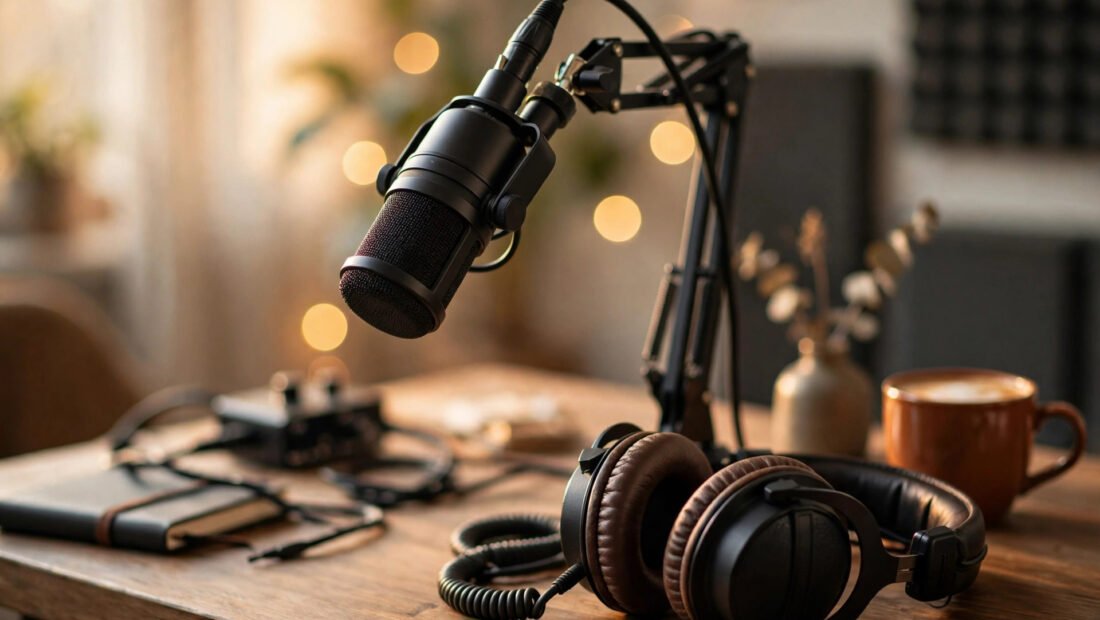
You do not need a studio. A USB microphone like the Samson Q2U or Audio-Technica ATR2100x (£60–£90) plus closed-back headphones is enough to sound professional. Record in the smallest, softest room available — bedrooms with curtains and carpet beat echoey kitchens — and hang a duvet behind you if the room sounds hollow.
For software, Audacity (free) or GarageBand (free on Mac) handle recording and editing perfectly well; Descript adds AI transcription and easy editing for around £12/month. Record a test episode and listen back on earbuds, a car stereo and a phone speaker — if it sounds clear on all three, your setup is good. The gov.uk copyright guidance is worth reading before you use any music, since most commercial tracks need a licence even for podcasts.
Step 3: Record, Edit and Launch
Write a loose outline — not a script — with your hook (first 60 seconds), 3–4 main points and a clear ending. Record 3–5 episodes before launching so listeners who discover you have something to binge, and batch-record to stay ahead of schedule. Edit out long pauses, ums and mistakes, but do not over-polish; conversational energy beats sterile perfection.
Choose a podcast host — Buzzsprout, Podbean or Spotify for Creators (free tier available) — which generates your RSS feed and distributes to Spotify, Apple Podcasts, Amazon Music and others automatically. Hosting costs £0–£15/month to start. Write keyword-rich episode titles and descriptions, design simple cover art (1400×1400px minimum, readable at thumbnail size), and launch with your bank of episodes plus a short trailer.
Growing Your Podcast
- Publish consistently: the algorithm and your audience both reward reliability — pick a schedule you can keep for a year.
- Repurpose every episode: turn each one into short video clips, quote graphics and a blog post to feed social media.
- Guest strategically: appear on 2–3 established podcasts in your niche; it is the fastest organic growth lever.
- Ask for ratings early: a simple “please leave a review” CTA in your first 20 episodes compounds over time.
- Engage listeners: answer questions on air, run polls, and build an email list from day one.
- Monetise later: sponsorships typically need 1,000+ downloads per episode; affiliate links and premium episodes can start sooner.
Choosing Your Podcast Name and Branding
Your show name is your first marketing asset. Make it descriptive enough that a stranger understands the topic — “The UK Money Podcast” outperforms a clever-but-cryptic title in search results. Keep it under four words, easy to spell after hearing once, and check domain and social handle availability alongside the podcast directories. For cover art, use bold, high-contrast design with large text readable at 55×55 pixels, since most listeners discover shows on phone screens. Consistent branding across your cover art, social profiles and episode templates makes a new show look established from episode one, which measurably improves click-through on browse pages.
Frequently Asked Questions
How much does it cost to start a podcast?
£60–£150 total: a USB microphone (£60–£90), free recording software, and free or cheap hosting (£0–£15/month). You can start for under £100 and upgrade gear only once the show gains traction.
How do podcasts make money?
Through sponsorships (typically £15–£25 per 1,000 downloads per episode), affiliate marketing, premium subscriber content, live shows and merchandise. Most podcasts take 6–12 months to earn meaningful income.
Do I need permission to play music on my podcast?
Yes — commercial music requires a licence. Use royalty-free music from libraries like Epidemic Sound or the YouTube Audio Library, or commission a short original jingle, to stay on the right side of copyright law.
How long should podcast episodes be?
20–40 minutes suits most niches and matches average commute times. Interview shows can run 60–90 minutes if the conversation earns it — but tight editing always beats length.
The Bottom Line
Starting a podcast takes a clear niche, a £60–£100 microphone, free software and the discipline to publish consistently. Record a few episodes before launch, distribute everywhere through a hosting platform, and focus on your first 50 episodes — that is where shows are really built. The barrier to entry has never been lower; the only thing standing between you and a published podcast is the decision to record episode one. Start this week, and a year from now you will wish you had started today.