For all the headlines about AI transforming healthcare, the reality inside the NHS is more interesting: less robot doctor, more quiet systems making the whole machine run better.
Here’s how AI is actually being used in the NHS right now — the real deployments, not the press releases.
How Is AI Used in the NHS Right Now?
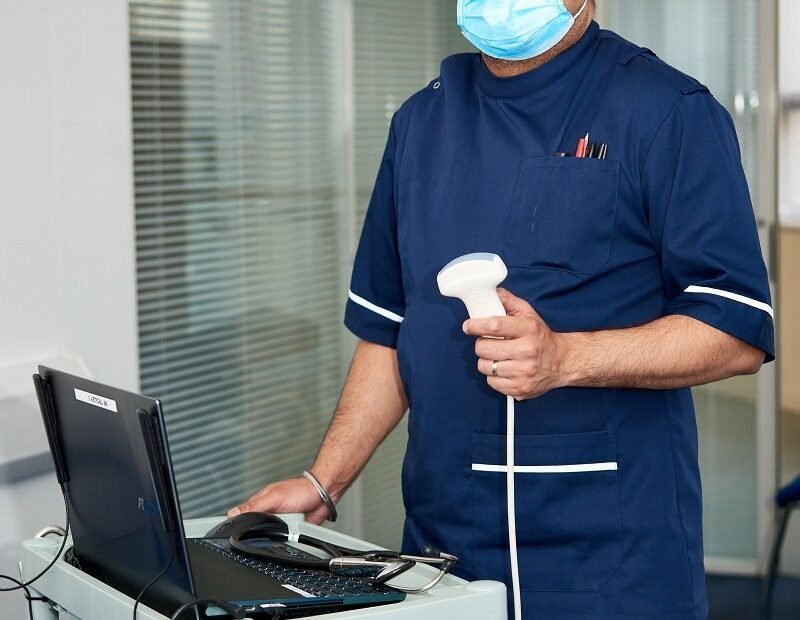
The most advanced use is in medical imaging. AI tools are helping radiologists spot lung nodules on chest X-rays, prioritise urgent stroke scans so specialists see them first, and flag suspicious areas in mammograms — always as a second pair of eyes, with a human clinician making the final call. In general practice, AI scribes that listen to consultations and draft the clinical notes are being piloted to cut the paperwork burden GPs constantly complain about. Behind the scenes, trusts use AI to predict missed appointments and overbook intelligently, forecast A&E demand to plan staffing, and manage waiting lists more fairly. There’s also promising work in pathology, where AI helps analyse biopsy slides, and in eye screening for diabetic retinopathy, where automated systems are already working in some screening programmes.
The NHS is deliberately cautious, and rightly so: every AI tool used clinically has to clear regulatory and safety hurdles, and trusts are wary after years of overhyped tech promises. Data privacy is handled through strict controls — patient data generally stays within NHS systems, and research uses de-identified data. What patients will notice most in the next few years isn’t dramatic: shorter waits for scan results, GPs who spend less of the appointment typing, and smarter scheduling. The revolution, such as it is, looks like the NHS working slightly better rather than differently — which, given the pressures it’s under, is exactly what’s needed.
Stepping back a little
Accessibility is one of AI’s quiet triumphs. Real-time captions, voice control, text-to-speech, translation — features that transform life for disabled and older users are now built into mainstream devices, often free. If you or someone you know could benefit, the tools are probably already on the device in their pocket, waiting to be switched on. Spread the word; awareness is the main barrier.
Prompting is a skill worth deliberately practising. The difference between ‘write me an email’ and a prompt with context, audience, tone and constraints is the difference between generic sludge and something genuinely useful. Give the AI the background a competent colleague would need, specify what good looks like, and iterate — the first output is a draft, not a verdict. Ten minutes learning this beats any amount of expensive software.
What It Means for You as a Patient
You might already have been helped by AI without knowing — if your scan was prioritised or your appointment reminder seemed well-timed, algorithms may have played a part. You’ll always be told when AI is involved in a clinical decision, and a human clinician remains responsible. If you’re offered an AI-assisted service and feel unsure, ask how it works and what the human oversight is — NHS staff are used to explaining this. The direction is assistive, not autonomous: AI doing the pattern-spotting and paperwork so clinicians can do the caring.
Regulation is catching up, unevenly. The EU’s AI Act and evolving UK guidance are pushing toward transparency — knowing when you’re dealing with AI, what data it used, and how to challenge its decisions. You don’t need to follow every development, but knowing your basic rights (to human review of significant automated decisions, to object to certain data uses) turns you from a passive subject into an informed citizen.
Scepticism about AI claims is a healthy default with a long pedigree. We’ve been promised revolutionary AI breakthroughs every decade since the 1960s; most arrived late, smaller than advertised, and still genuinely useful. When you hear a dramatic claim — about jobs, capabilities or timelines — ask who benefits from your belief and what the track record of similar predictions is. Calm, evidence-based expectations beat both hype and panic every time.
AI as a colleague rather than a tool is the mental shift that gets the best results. Instead of asking ‘what can this app do’, ask ‘what would I delegate to a bright assistant’ — drafting, summarising, researching, organising — and direct the AI accordingly, with the same clarity and checking you’d give a human colleague. People who make this shift get dramatically more from the same tools.
Verification is the unglamorous discipline that separates good AI users from dangerous ones. AI is optimised to sound plausible, not to be right, and its errors are confident — wrong dates, invented citations, subtly off advice. For anything that matters — facts you’ll publish, numbers you’ll rely on, advice you’ll act on — check against a trusted source. Make it a reflex, not an afterthought.
There’s an environmental cost to AI that’s rarely mentioned in the marketing. Training and running large models consumes significant energy and water, and every frivolous generated image has a footprint. This doesn’t mean never using AI — the benefits are real — but it does argue for using it purposefully rather than generating a hundred variations of something you needed once. Thoughtful use is sustainable use.
The privacy habit to build now is simple: pause before pasting. Every AI tool has terms about data retention, and the defaults usually favour the company, not you. Check whether there’s an opt-out for training, prefer tools with clear data policies, and keep genuinely sensitive material — health details, financial data, other people’s information — out of chat boxes entirely. These habits take seconds and prevent problems that take months to fix.
What to take away
- Medical imaging: AI flags lung nodules, stroke scans and mammogram areas for review.
- GP pilots: AI scribes draft consultation notes to cut paperwork.
- Operations: predicting missed appointments, A&E demand and waiting lists.
- All clinical AI keeps a human making the final decision.
- Patients are told when AI is involved in their care.
You might also want our take on What should schools teach children about AI, plus What is the cheapest way to accept card payments as a market stall trader for the practical next steps.
For trusted background reading, the NHS website covers this in depth.
Final thought
AI in the NHS today means sharper scan reading, less GP paperwork and smarter scheduling — assistive tools with human clinicians firmly in charge, not robot doctors. Expect quieter, steadier improvements rather than overnight transformation.