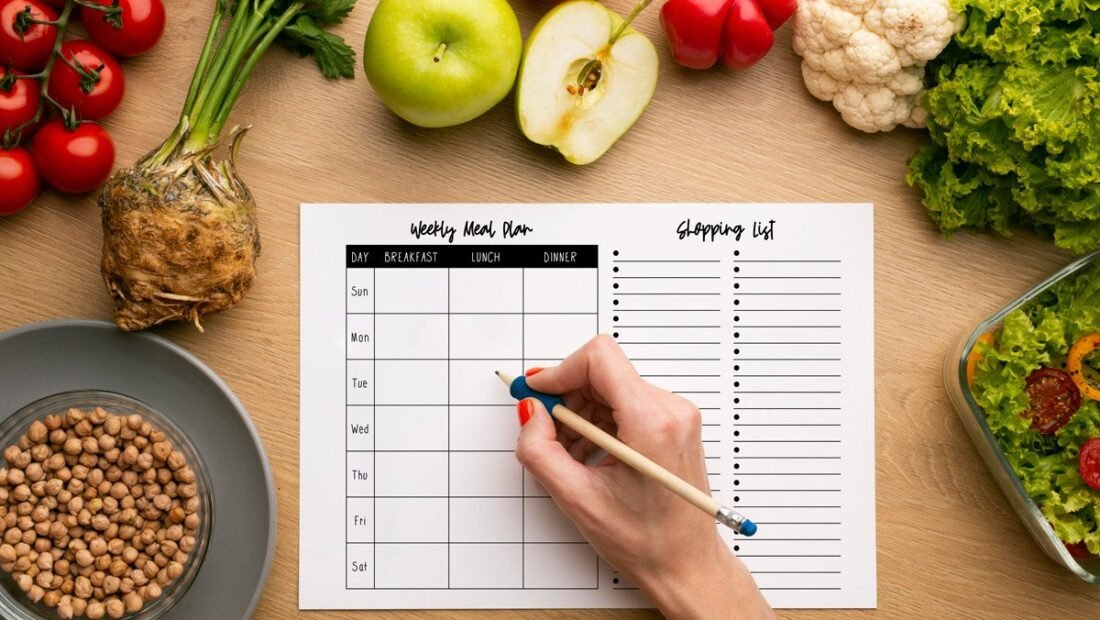
The 6pm ‘what’s for dinner’ panic is a universal experience, and the weekly shop done without a plan is how kitchens fill up with three half-used jars of the same spice. AI turns out to be surprisingly good at fixing both.
Here’s how to get AI to plan your weekly meals and build your shopping list properly.
Can AI Help Me Plan My Weekly Meals and Shopping List?
Yes — and it’s one of the most practical everyday uses of AI going. The trick is giving it proper constraints instead of a vague ‘plan my meals’. Tell it your household size, budget, dietary needs, the shops you use, how much cooking time you have on weeknights, and which ingredients you already need to use up. A good prompt looks like: ‘Plan 5 weeknight dinners for 2 adults and a fussy 7-year-old, under £60 total from Tesco, 30 minutes max cooking, one vegetarian night, and use up the chicken thighs and coconut milk in my fridge.’ What comes back is usually a solid plan with a consolidated shopping list grouped by aisle — the grouping alone saves real time in the shop. You can then ask it to adjust: swap the fish dish, make Thursday quicker, or re-plan around yellow-sticker bargains you found.
Where it really shines is the boring optimisation humans skip: reusing ingredients across meals so nothing goes to waste, balancing the week nutritionally without you thinking about it, and generating variety so you stop cooking the same six dinners on rotation. It’s also handy for special cases — batch-cooking plans for the freezer, lunchbox weeks, or cooking for guests with mixed dietary requirements. The plans aren’t perfect: portion sizes can be optimistic, and it’ll occasionally suggest an ingredient your local shop simply doesn’t stock. Treat the first plan as a draft, tweak it to your reality, and save the prompts that worked — next week’s plan then takes about two minutes.
Some wider context
AI and children deserves its own thought. Kids are growing up with AI companions, homework helpers and synthetic media as background normality — which makes critical thinking about it a core parenting task, not a school-only topic. Talk about what AI is, model checking its outputs, and set boundaries around data sharing early. The children who thrive will be those taught to question the machine, not just use it.
For jobseekers, AI has quietly rewritten the rules of applications. Assume software reads your CV before a human does: standard headings, keywords from the advert, simple formatting. Then write for the human who comes second — specific achievements, real numbers, genuine motivation. The candidates winning now are those who speak both languages: machine-readable structure, human-readable substance.
Getting the Shopping List Right
Always ask for the list grouped by shop section (produce, meat, dairy, cupboard) — it halves your time in the aisles. Ask it to flag what you probably already have (oil, salt, spices) so you don’t rebuy staples. Cross-check the list against your fridge before you shop; AI can’t see your half-used peppers. And if you shop online, paste the list into your supermarket’s site and let it find the items — combined with AI planning, the whole weekly food operation can genuinely take under half an hour.
Your data is the price of most free AI, so spend it consciously. Before signing up for yet another AI app, ask what it collects, how long it keeps it, and whether you can delete it. Prefer services with clear, plain-English privacy policies over those that bury the details. In the AI economy, attention to data terms is the new comparison shopping.
AI literacy is quickly becoming as basic as digital literacy was twenty years ago — not expertise in building models, but a working understanding of what these tools can and can’t do. You don’t need to know how neural networks train; you do need to know that AI outputs need checking, that prompts shape results enormously, and that your data may be retained. An hour spent learning these fundamentals pays off across every tool you’ll touch this decade.
The privacy habit to build now is simple: pause before pasting. Every AI tool has terms about data retention, and the defaults usually favour the company, not you. Check whether there’s an opt-out for training, prefer tools with clear data policies, and keep genuinely sensitive material — health details, financial data, other people’s information — out of chat boxes entirely. These habits take seconds and prevent problems that take months to fix.
Voice assistants and smart speakers deserve a periodic privacy review. They only record after the wake word, but those recordings accumulate — and household members, including children, may not realise they’re being stored. Take ten minutes yearly: review and delete old recordings, check who’s in the household profile, and use the mute button during sensitive conversations. Convenience doesn’t require keeping everything forever.
AI in education is settling into a sensible middle ground. The schools handling it best aren’t banning it or surrendering to it — they’re teaching pupils to use AI as a study aid while assessing actual understanding through supervised work. If you’re a parent, mirror that approach at home: AI for getting unstuck, then ‘explain it back to me’ to confirm learning happened. The technology isn’t going away, so the skill of using it honestly is the one to build.
Quick recap
- Give constraints: budget, household, diet, shops, cooking time, leftovers to use.
- Ask for the shopping list grouped by aisle or shop section.
- AI is great at reusing ingredients so nothing goes to waste.
- Treat the first plan as a draft; save prompts that work for next week.
- Always cross-check against your fridge before shopping.
Related reading: What is the difference between AI and machine learning explained simply walks through a neighbouring topic step by step, and What are the best AI tools for editing photos on a phone covers what to do when things get complicated.
The official guidance at BBC News technology coverage is the definitive source here.
Wrapping up
AI is excellent at weekly meal planning if you give it specific constraints — budget, diet, time and what needs using up. Expect a solid draft with a grouped shopping list, then tweak it to your kitchen’s reality.