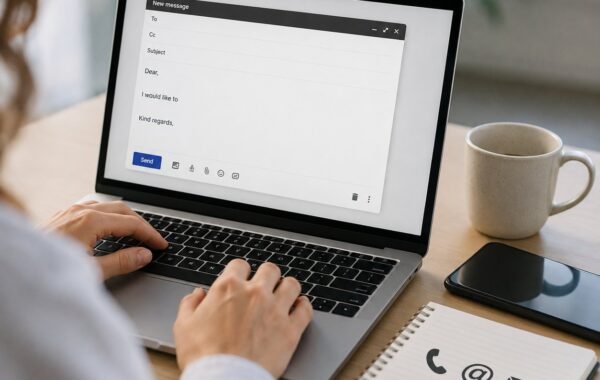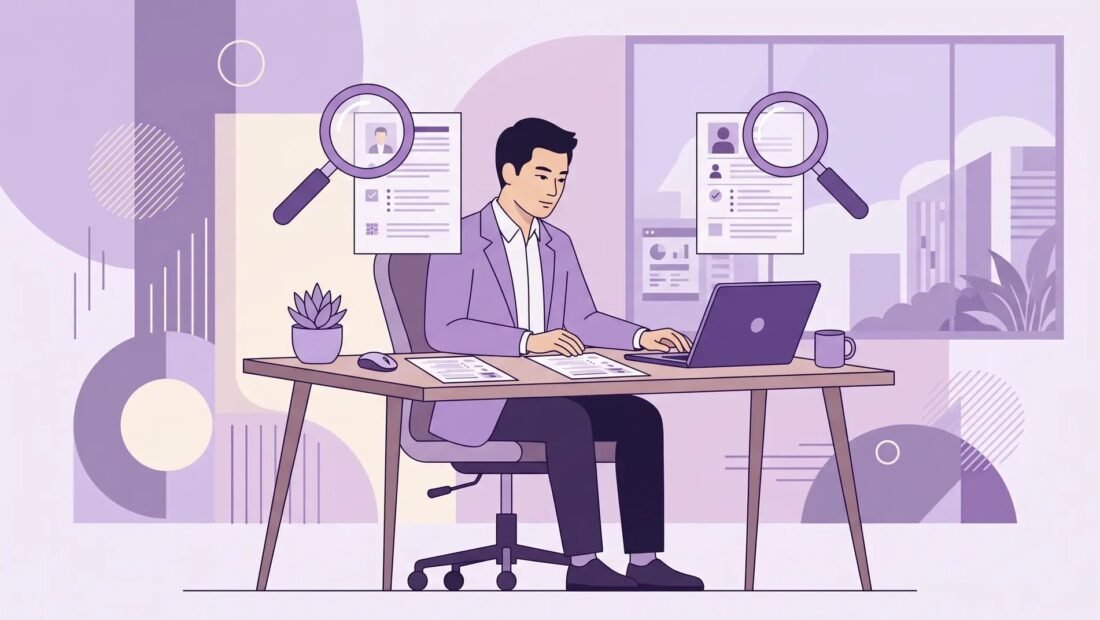
Recruiters now read hundreds of applications that all sound faintly the same — polished, generic, suspiciously fluent. They’re not imagining it.
Here’s what recruiters really think about AI-written job applications, and how to use AI without getting binned.
How Do Recruiters Feel About AI Written Job Applications?
The consensus among UK recruiters is more nuanced than you’d expect: they don’t mind AI assistance, but they can spot untouched AI output instantly — and it irritates them. The tell-tale signs are everywhere: the same sentence structures, vague claims without numbers, and cover letters that could apply to any company in any industry. What frustrates recruiters isn’t the tool, it’s what it reveals: an applicant who couldn’t be bothered to personalise. Several have told me AI applications get a harsher skim — the moment a CV reads as generic, it joins the rejection pile faster than a flawed-but-human one. That said, recruiters also admit AI has raised the floor: fewer applications with typos and formatting disasters, which is genuinely welcome. The bar has simply moved from ‘looks professional’ to ‘sounds like a real person who wants this specific job’.
The practical rule recruiters suggest: use AI for structure and editing, never for substance. Let it tighten your bullets and check your grammar, but the achievements, numbers and motivations must be yours — and specific. Name the company, reference something real about the role, and include at least two achievements with measurable results that only you could claim. Recruiters also warn about the new arms race: many now use AI detection as a first filter, and while the detectors are imperfect, obviously synthetic applications do get flagged. Interestingly, a few forward-thinking employers now ask candidates outright how they used AI in their application — honesty about it, done well, can actually impress.
Stepping back a little
Scepticism about AI claims is a healthy default with a long pedigree. We’ve been promised revolutionary AI breakthroughs every decade since the 1960s; most arrived late, smaller than advertised, and still genuinely useful. When you hear a dramatic claim — about jobs, capabilities or timelines — ask who benefits from your belief and what the track record of similar predictions is. Calm, evidence-based expectations beat both hype and panic every time.
Regulation is catching up, unevenly. The EU’s AI Act and evolving UK guidance are pushing toward transparency — knowing when you’re dealing with AI, what data it used, and how to challenge its decisions. You don’t need to follow every development, but knowing your basic rights (to human review of significant automated decisions, to object to certain data uses) turns you from a passive subject into an informed citizen.
The Cover Letter Problem
If your CV can survive AI assistance, your cover letter often can’t — it’s where personality is supposed to live, and generic AI cover letters are the first thing recruiters complain about. Write it yourself, or at least rewrite the AI draft so thoroughly it’s yours. One specific paragraph about why this company, this role, right now beats three polished paragraphs of nothing. Recruiters read hundreds of these; the human ones are the relief they remember.
AI and children deserves its own thought. Kids are growing up with AI companions, homework helpers and synthetic media as background normality — which makes critical thinking about it a core parenting task, not a school-only topic. Talk about what AI is, model checking its outputs, and set boundaries around data sharing early. The children who thrive will be those taught to question the machine, not just use it.
AI as a colleague rather than a tool is the mental shift that gets the best results. Instead of asking ‘what can this app do’, ask ‘what would I delegate to a bright assistant’ — drafting, summarising, researching, organising — and direct the AI accordingly, with the same clarity and checking you’d give a human colleague. People who make this shift get dramatically more from the same tools.
Keeping your human skills sharp matters more as AI improves. Writing, mental arithmetic, navigating without GPS, having difficult conversations — these atrophy with disuse, and they’re precisely the skills that make you valuable alongside AI rather than replaceable by it. Use AI to handle drudgery, but deliberately practise the thinking it can’t do for you. The goal is augmentation, not atrophy.
Voice assistants and smart speakers deserve a periodic privacy review. They only record after the wake word, but those recordings accumulate — and household members, including children, may not realise they’re being stored. Take ten minutes yearly: review and delete old recordings, check who’s in the household profile, and use the mute button during sensitive conversations. Convenience doesn’t require keeping everything forever.
There’s an environmental cost to AI that’s rarely mentioned in the marketing. Training and running large models consumes significant energy and water, and every frivolous generated image has a footprint. This doesn’t mean never using AI — the benefits are real — but it does argue for using it purposefully rather than generating a hundred variations of something you needed once. Thoughtful use is sustainable use.
AI-generated video has crossed into convincing territory, which changes the trust equation for everything you watch. A clip of a public figure saying something outrageous, a ‘live’ event that never happened — healthy scepticism is now a survival skill. Check the source, look for corroboration from reputable outlets, and remember that extraordinary footage with no mainstream coverage is a red flag. Teach this to older relatives especially; they’re the most targeted.
What to take away
- Recruiters accept AI help but spot and reject untouched AI output.
- Generic phrasing signals you couldn’t be bothered to personalise.
- Use AI for structure and editing; achievements must be yours and specific.
- Include measurable results only you could claim.
- Write cover letters yourself — that’s where personality must show.
Keep exploring: Will AI take over driving jobs like taxi and delivery drivers tackles the question people ask us most on this topic, alongside How is AI helping farmers in the UK and How will AI change the high street shopping experience with further practical advice.
For trusted background reading, the NHS website covers this in depth.
Final thought
Recruiters don’t hate AI-written applications — they hate lazy ones. Use AI as your editor, fill it with your real achievements and specific reasons for wanting the job, and write the cover letter like a human being.