
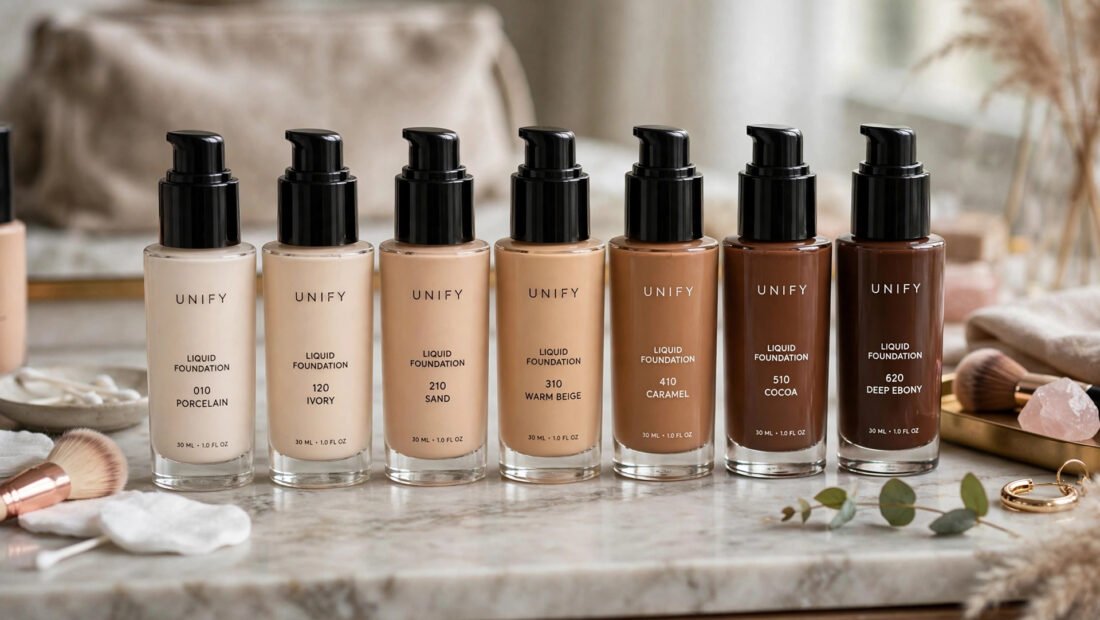
Every woman in London has a drawer containing at least one wrong foundation — too orange, too pink, oxidised two shades darker by lunchtime. Choosing foundation as a complete beginner feels like guesswork because the industry makes it guesswork: inconsistent shade naming, unflattering shop lighting, and sales assistants with sales targets. It does not have to be this hard.
This beginner’s guide walks you through finding your exact shade step by step: understanding undertones, testing properly, choosing formulas, and avoiding the mistakes that fill the drawer of doom.
Step 1: Find Your Undertone (This Is the Bit That Matters)
Foundation matching has two parts: depth (how light or dark) and undertone (the subtle hue beneath). Depth is easy to eyeball; undertone is where mismatches happen. There are three: warm (golden, peachy — veins look green, gold jewellery flatters), cool (pink, red, bluish — veins look blue/purple, silver flatters), and neutral (a mix).
Quick tests: the vein test (check inner wrist in daylight), the jewellery test (which metal looks better against your skin?), and the white-paper test (hold white paper to your face — does skin look yellowish, pinkish or greyish?). None is definitive alone; two agreeing is reliable. Most beginners pick the right depth but wrong undertone — the classic “my face is orange but my neck is pink” is a warm foundation on cool skin. Getting undertone right matters more than anything else on this list.
Step 2: Test Properly (Not on Your Hand)
The back-of-hand swatch is nearly useless — hand skin differs in tone and texture from face skin. Test on your jawline, blending a stripe down toward your neck. The right shade disappears into both. Test three shades: your best guess, one lighter, one darker — beginners almost always guess wrong on the first try.
Then — critically — walk away. Shop lighting (especially the flattering warm spots in department stores) lies. Check the swatches in natural daylight outside the shop, and ideally wear the tester for a few hours: many foundations oxidise, darkening as they react with skin oils and air. A shade that matches at 11am but goes orange by 2pm is the wrong shade. Ask for samples — most counters in London (Selfridges, Boots, Space NK) will decant a week’s worth if you ask, and a week of real-world wear beats ten minutes under spotlights.
Step 3: Choose the Right Formula for Your Skin
Oily or combination skin
Look for oil-free, long-wear or matte formulas, and consider whether you need full coverage at all — a tinted moisturiser or skin tint may do the job with far less fuss. Powder foundations suit very oily skin but can look cakey on dry patches.
Dry skin
Hydrating, dewy or serum foundations with hyaluronic acid or squalane. Avoid matte long-wear formulas — they cling to dry patches and emphasise texture. Prep with moisturiser and let it absorb for five minutes before applying.
Sensitive or acne-prone skin
Fragrance-free, non-comedogenic formulas; mineral foundations suit many reactive skins. Patch-test new foundations along the jawline for several days. And keep perspective: NHS and British Skin Foundation guidance both stress that no cosmetic fixes underlying skin conditions — treat the skin, then cover it.
Matching Deeper Skin Tones (Where Ranges Fail Most)
The foundation industry has improved, but deeper skin tones still get the worst shade ranges — too few options, ashy undertones, and the dreaded grey cast from formulas designed around lighter skin. If you wear a deeper shade, the undertone work matters even more: look specifically for rich, warm, red or golden undertones rather than settling for the single “dark” option.
Practical tips: test in daylight as always, but also photograph with flash — flashback (the white cast in photos) reveals mismatches daylight hides, especially with SPF-containing formulas. Do not be afraid to mix two shades to nail your exact tone; many makeup artists do this routinely, and a £10 mixer shade beats a £35 wrong foundation. Seek out brands with genuinely deep ranges (40+ shades extending properly dark, not ten beiges and two browns), and use online shade finders as a starting point only — algorithms guess from selfies under unknown lighting, which is barely better than guessing yourself.
When to ask for help
There is no shame in booking a free colour-matching appointment. Counters in London department stores do this daily, and a trained eye with proper lighting beats solo guesswork — especially for deeper tones, olive undertones (common and poorly served), or skin with significant redness or melasma. Go with a bare face, allow 30 minutes, take samples home, and never feel obliged to buy on the spot. The sample week is where the real decision happens.
The Beginner Mistakes to Avoid
Going too dark (“it’ll look like a tan”) is the number one error — foundation should match your neck and chest, not aspirational holiday skin. Testing only in the shop is number two. Number three: buying full coverage for everyday — heavy foundation highlights texture, pores and fine lines; most beginners look better in light-to-medium coverage. Number four: skipping primer or moisturiser prep, then blaming the foundation for pilling. Number five: never checking the shade seasonally — most Londoners need a slightly deeper shade in late summer and a lighter one in February.
Budget honestly: expensive does not mean better-matched. Several high-street foundations (£8–£12) now offer 40+ shades with excellent undertone ranges, and Which? blind tests regularly find budget foundations outperforming luxury ones on wear. Spend money on the shade match, not the brand name.
Application Basics (Because Formula Is Only Half)
Even the perfect shade looks wrong applied badly. Start with moisturised, primed skin. Apply a pea-sized amount to the centre of the face and blend outward — most people need far less than they think. A damp beauty sponge gives the most natural finish for beginners (it sheers out excess); brushes give more coverage; fingers work fine for tinted formulas. Blend down the neck slightly to avoid the mask line, set oily zones lightly with translucent powder, and check in daylight before leaving. The goal is “good skin,” not “visible foundation.”
Foundation is also part of a bigger picture: the right shade will not fix the wrong colours elsewhere, so read what colours suit pale skin tones best if you are fair-skinned, and remember that hair frames everything — see whether hair thinning in your 30s is normal if that is a parallel concern.
Conclusion
Choosing foundation comes down to three steps: identify your undertone (veins, jewellery, white paper), test on your jawline in natural daylight with samples worn for days, and pick a formula for your skin type rather than your aspirations. Avoid the classic traps — too dark, shop-lighting-only testing, full coverage for daily wear — and remember that high-street options often match and wear as well as luxury. Get the undertone right and the rest follows.
Frequently Asked Questions
How do I know my foundation undertone?
Combine the vein test (green = warm, blue/purple = cool), the jewellery test (gold vs silver) and the white-paper test. Two out of three agreeing gives a reliable answer.
Why does my foundation look orange after a few hours?
Oxidation — the formula reacting with your skin’s oils and air. Try a shade lighter, look for anti-oxidation formulas, use a mattifying primer, or switch brands; some formulas oxidise far more than others.
Should foundation match my face or my neck?
Your neck (and chest). Faces are often redder or darker than necks; matching the face alone creates the visible mask line. Blend the jawline down to unify.
How often should I replace foundation?
Most liquid foundations last 12 months after opening (check the PAO symbol). Old foundation can harbour bacteria and perform poorly — if it smells off or separates persistently, replace it.


