
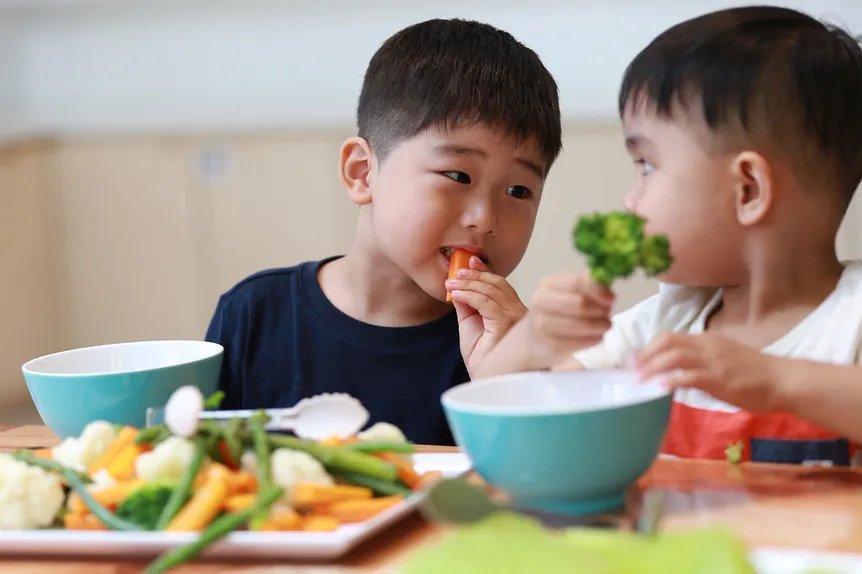
Wondering how to get your kids to eat more vegetables without turning every dinner into a negotiation? You're not alone — it's one of the most common frustrations parents share, and the well-meaning advice ('just keep offering!') can feel useless when your child has eaten nothing green since 2023.
Here's what actually works, backed by child nutrition research and the experience of countless battle-worn parents: it turns out pressure is the enemy, exposure is the answer, and there are more clever routes to veg acceptance than hiding courgette in bolognese (though that has its place). No guilt, no gimmicks — just strategies that work.
Getting Your Kids to Eat More Vegetables: Why Pressure Backfires
The single most important finding in child feeding research is this: pressuring kids to eat vegetables makes them like vegetables less. The 'three more bites', the 'no pudding until', the aeroplane spoon — all of it teaches children that veg is the miserable chore standing between them and the good stuff. It works in the moment and fails over years, creating adults with genuine aversions.
The alternative is the division of responsibility: you decide what, when and where food is served; your child decides whether and how much to eat. Serve the vegetables alongside everything else, eat them yourself with obvious enjoyment, and say nothing about whether your child eats them. It feels impossibly passive, but repeated neutral exposure — it can take 10-15 tries — is what actually builds acceptance. The veg just needs to keep showing up, no strings attached. NHS guidance on children's healthy eating
Make Vegetables Familiar Before They Hit the Plate
Children accept what they know. Let them touch, smell and play with vegetables long before they're expected to eat them — wash the peppers together, let them snap the green beans, grow cress on the windowsill (it takes a week and they can eat their 'harvest'). Kids who've handled raw veg are dramatically more willing to taste it cooked. Shopping together helps too: let them choose one vegetable each week, even a weird one. Ownership breeds curiosity.
Cooking together is even more powerful. A child who grated the carrot for the bolognese or tore the spinach for the pasta will almost always try 'their' contribution. It doesn't need to be elaborate — stirring, tearing, washing and sprinkling are all real cooking to a five-year-old. And eat together as a family whenever you can; children model what they see, so your visible enjoyment of the roast veg matters more than any lecture. Our is it worth making your own baby food in the uk are designed for exactly this kind of family cooking.
- Let kids handle, wash and choose vegetables before cooking
- Grow cress or herbs on the windowsill — a week from seed to harvest
- Give them real jobs: grating, tearing, stirring, sprinkling
- Eat together and visibly enjoy the veg yourself
Sneaky vs Open: The Smart Way to Boost Intake Now
While you're playing the long game of exposure, there's nothing wrong with boosting veg intake through the back door. Blend roasted veg into pasta sauces, add grated carrot and courgette to bolognese, stir spinach into curries where it wilts to nothing, make cauliflower cheese with extra cauliflower, and bake sweet potato into brownies. These aren't tricks to replace learning to eat veg openly — they're nutritional insurance while the learning happens.
But pair the stealth with the open: serve the same vegetable visibly alongside the hidden version. The bolognese has blended carrot in it AND there are roasted carrot sticks on the side for dipping. Over time, the visible version stops being scary because the flavour is already familiar. Dips are a secret weapon here — hummus, yoghurt raita, even ketchup — because dipping makes any vegetable more fun and gives the child control.
Practical Mealtime Tactics That Reduce Battles
Serve vegetables first, when kids are hungriest — a plate of veg sticks and dip while dinner finishes cooking often disappears without comment. Keep portions tiny; a mountain of broccoli is intimidating, three florets is an invitation. Offer choices ('carrots or peas?') rather than yes/no questions, because a choice preserves their autonomy. And vary the preparation: a child who hates boiled carrots might love roasted ones (sweet, caramelised), raw ones (crunchy), or carrot sticks with dip.
Stay neutral about all of it. Don't praise vegetable eating extravagantly ('good girl for eating your greens!') — it signals that veg is medicine requiring reward. Don't offer pudding as a bribe. Just serve balanced meals, include something you know they'll eat alongside the new thing, and trust the process. Most children do come round — the research is clear that persistence without pressure wins. And when they reject tonight's veg for the twelfth time, remember: you're playing a long game, and you're playing it right. For the littlest ones, our guide to what are the best one pot meals for families covers the weaning stage where it all begins.
- Serve veg first as a pre-dinner nibble when hunger is highest
- Tiny portions: three florets invite, a mountain intimidates
- Offer 'carrots or peas?' — choices preserve autonomy
- Try the same veg roasted, raw, and with dip before giving up
When to Worry (and When Not To)
Perspective matters: most children go through fussy phases and come out fine. The red flags worth discussing with your GP or health visitor are narrow: a diet restricted to fewer than 10-15 foods total, weight loss or faltering growth, extreme distress around food, or gagging/vomiting regularly. Picky eating alone — even dramatic picky eating — is developmentally normal and usually resolves.
What doesn't help: comparing your child to the neighbour's kale-devouring toddler (different kids, different timelines), force-feeding, or turning mealtimes into battlegrounds that create lasting anxiety. What does help: the strategies in this guide, patience measured in months not days, and trusting that repeated exposure works. If you're genuinely concerned, your health visitor or GP would rather reassure you early than have you worry alone. That's what they're for.
Practical Takeaway
Getting kids to eat more vegetables works when you drop the pressure and play the long game: repeated neutral exposure, involving them in choosing and cooking, boosting intake sneakily while serving veg openly, and staying relaxed at the table. It can take 10-15 tries per vegetable — that's normal, not failure. Keep serving, keep smiling, and trust that familiarity wins in the end.


