

AI sounds like something for tech giants, but some of the most useful applications cost a small shopkeeper nothing. The trick is ignoring the hype and picking the boring, practical stuff.
Here’s how small shops can use AI for free or nearly free, starting this week.
How Can Small Shops Use AI Without Spending Much Money?
Start with the free tools hiding inside things you already use. Your card reader or till software probably has AI-assisted sales reports you haven’t switched on — they’ll show which products sell when, helping you order smarter and waste less. Free chatbots (Tidio, for example, has a genuinely useful free tier) can answer ‘what are your opening hours’ and ‘do you stock X’ on your website overnight. For marketing, free AI image tools in Canva produce decent social media graphics in minutes, and a chatbot can draft a week’s worth of post captions from a rough brief — you just add the human touch and the actual photos of your shop. Stock forecasting sounds fancy but free spreadsheet AI features can spot your seasonal patterns from last year’s sales data if you feed it in.
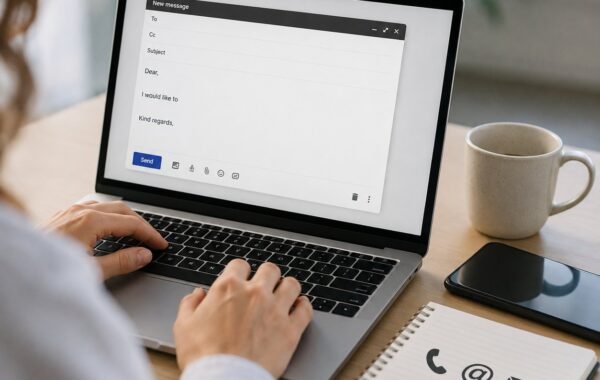
The highest-value use for most shops is saving the owner’s time on writing: supplier emails, job adverts, website product descriptions, responses to reviews. An hour a week saved on admin is an hour back on the shop floor or — radical idea — an evening off. Keep spending at zero by sticking to free tiers until a tool proves its worth; most shops find two or three tools earn their keep and the rest is noise. And never let AI near anything involving customer data or money without checking the privacy terms — free tools and sensitive data are a bad combination.
Some wider context
AI and children deserves its own thought. Kids are growing up with AI companions, homework helpers and synthetic media as background normality — which makes critical thinking about it a core parenting task, not a school-only topic. Talk about what AI is, model checking its outputs, and set boundaries around data sharing early. The children who thrive will be those taught to question the machine, not just use it.
The privacy habit to build now is simple: pause before pasting. Every AI tool has terms about data retention, and the defaults usually favour the company, not you. Check whether there’s an opt-out for training, prefer tools with clear data policies, and keep genuinely sensitive material — health details, financial data, other people’s information — out of chat boxes entirely. These habits take seconds and prevent problems that take months to fix.
A Sensible First Month
Week one: pick your single biggest time-drain and match one free tool to it. Week two: set up a free chatbot with answers to your ten most common questions. Week three: try AI-drafted social posts for a fortnight and compare engagement honestly. Week four: review what actually saved time or made money, keep that, drop the rest. Small shops win with AI not by transforming overnight but by shaving an hour here and a sale there, week after week.
AI in education is settling into a sensible middle ground. The schools handling it best aren’t banning it or surrendering to it — they’re teaching pupils to use AI as a study aid while assessing actual understanding through supervised work. If you’re a parent, mirror that approach at home: AI for getting unstuck, then ‘explain it back to me’ to confirm learning happened. The technology isn’t going away, so the skill of using it honestly is the one to build.
AI literacy is quickly becoming as basic as digital literacy was twenty years ago — not expertise in building models, but a working understanding of what these tools can and can’t do. You don’t need to know how neural networks train; you do need to know that AI outputs need checking, that prompts shape results enormously, and that your data may be retained. An hour spent learning these fundamentals pays off across every tool you’ll touch this decade.
Hype cycles are worth recognising because AI goes through them relentlessly. Every capability gets announced as revolutionary, then quietly settles into being merely useful. The trick is to ignore both the utopian promises and the doom headlines and ask the boring question: what does this actually do for me this week? Tools that survive that question are the ones worth your time.
There’s an environmental cost to AI that’s rarely mentioned in the marketing. Training and running large models consumes significant energy and water, and every frivolous generated image has a footprint. This doesn’t mean never using AI — the benefits are real — but it does argue for using it purposefully rather than generating a hundred variations of something you needed once. Thoughtful use is sustainable use.
Prompting is a skill worth deliberately practising. The difference between ‘write me an email’ and a prompt with context, audience, tone and constraints is the difference between generic sludge and something genuinely useful. Give the AI the background a competent colleague would need, specify what good looks like, and iterate — the first output is a draft, not a verdict. Ten minutes learning this beats any amount of expensive software.
Your data is the price of most free AI, so spend it consciously. Before signing up for yet another AI app, ask what it collects, how long it keeps it, and whether you can delete it. Prefer services with clear, plain-English privacy policies over those that bury the details. In the AI economy, attention to data terms is the new comparison shopping.
Quick recap
- Free till analytics reveal sales patterns for smarter ordering.
- Free chatbots answer common questions on your website overnight.
- Canva’s free AI tools handle social graphics and captions.
- Biggest win: AI drafts for emails, adverts, descriptions, review replies.
- Keep customer and financial data out of free tools.
If you found this useful, our guide on What is the difference between gross profit and net profit explained simply digs deeper into a related question, while How much sleep does an adult actually need every night answers the follow-up most readers ask next.
The official guidance at the NHS website is the definitive source here.
Wrapping up
Small shops can use AI for nothing by targeting real time-drains: free analytics, chatbots, design helpers and writing assistance. Start with one painful task, prove the value, then expand slowly.



1 Comment