Being a teenager with fashion ambitions and pocket money is a specific kind of challenge. You want to look good, express yourself and keep up without the budget for any of it. The good news: teenagers have advantages adults do not, including time, creativity and a peer culture where second-hand is cool.
Here is how can teenagers dress fashionably on a pocket money budget: real strategies for real budgets, from £20-a-month pocket money to part-time job wages.
How can Teenagers Dress Fashionably on a Pocket Money Budget
The formula is: charity shops and Vinted first, Primark and supermarkets for basics, sales and outlets for the rest, with creativity doing the heavy lifting. Build around versatile basics in your personal style, add trend pieces cheaply, customise and upcycle for uniqueness, and trade with friends. A realistic fashionable wardrobe costs £30 to £60 a month with smart shopping. The secret weapons teenagers have: time to hunt for bargains, the confidence to wear second-hand proudly, and friend groups for clothes swaps. Style at this age is about creativity and confidence, not spending.
Related reading: How can Men Dress Smart Casual for a UK Pub Dinner
The hunting grounds: where the bargains live
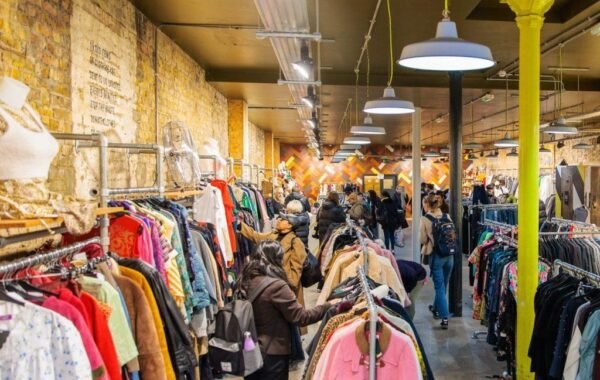
Charity shops are the number one teenage fashion resource: endlessly restocked, incredibly cheap (£3 to £10 per piece), and full of unique finds no one else will have. Learn which local shops are best; affluent areas yield the best donations. Vinted is the online equivalent: search your size in brands you like, make offers (sellers expect it), and check seller ratings. Primark covers trend pieces and basics at pocket-money prices; quality varies, so inspect before buying. Supermarkets (George, Tu) do solid basics. eBay is brilliant for specific items: search new-with-tags for bargains. Car boot sales and jumble sales are old-school goldmines. The hunt is part of the fun; make it a social activity with friends.
Building style on a budget: the strategy
Start with versatile basics that work together: plain tees, good jeans, a hoodie, trainers, a jacket. These are the canvas. Add trend pieces cheaply and sparingly; trends die fast, so never spend big on them. Develop a personal style signature: maybe it is vintage band tees, oversized fits, a particular colour, or customised pieces. Signatures make outfits memorable without costing anything. Customise and upcycle: crop tops, distress jeans, add patches, tie-dye, embroider; DIY turns cheap basics into one-of-a-kind pieces. Follow style inspiration critically; adapt trends to your budget and body rather than copying exactly. And remember that confidence is the main ingredient; the best-dressed teenager in school is rarely the richest, usually the most self-assured.
- Charity shops and Vinted first; Primark for cheap basics.
- Build versatile basics, add trends cheaply and sparingly.
- Customise and upcycle for unique pieces that cost nothing.
- Organise clothes swaps with friends; free new wardrobe.
- Confidence and creativity beat spending at any age.
Worth a read: Is Fast Fashion Really That Bad and What are the Alternatives
Clothes swaps and the sharing economy
The ultimate budget fashion hack is free: clothes swaps. Organise with friends: everyone brings pieces they no longer wear, and you all leave with new-to-you clothes. It is social, sustainable and genuinely effective; one person’s bored-with-it is another’s new favourite. Extend it to siblings and cousins; hand-me-downs are only uncool if you let them be. Borrowing for one-off events beats buying; formal dresses, suits for occasions, all better borrowed. Some friend groups run permanent swap boxes. This is not just budget strategy; it is the future of fashion, circular and community-based. Teenagers, who pioneered the normalisation of second-hand, are already living it.
Earning more: the part-time job advantage
For older teens, a part-time job transforms the fashion budget: even a few hours a week at minimum wage adds £100+ monthly. Retail jobs often include staff discount, which is a double win for fashion lovers. But the smart move is budgeting: decide a monthly clothing amount and stick to it, because lifestyle inflation eats pay rises fast. Save for investment pieces worth the money: quality jeans, a good jacket, proper trainers that last. Avoid buy-now-pay-later schemes; they are debt dressed as convenience, and the fees punish exactly the budgets they target. Financial literacy and fashion sense grow together; learning to budget for style now is a life skill.
Avoiding the traps
Several traps target teenage budgets specifically. Ultra-fast-fashion hauls normalise buying 20 items at once; the cost adds up and the quality disappoints. Buy-now-pay-later encourages spending money you do not have on clothes you do not need. Dupes of luxury items are fine, but counterfeits fund crime and fall apart. Peer pressure to wear specific brands is real but resistible; true style is personal, not logo-driven. And social media creates artificial urgency; trends cycle faster online than in real life, and nobody at school is tracking whether your outfit is this week’s microtrend. Spend on what you love and will wear, ignore the rest, and let your style be yours rather than the algorithm’s.
The school uniform hack
If your school has a uniform, make it work harder: the blazer, white shirts and school shoes are a ready-made smart base. Customise within the rules: the way you wear the uniform, rolled sleeves, chosen accessories, is where personal style shows. A uniform done well is the original capsule wardrobe.
Before you spend, it is worth checking Which? independent reviews for unbiased buying advice.
See also: How do i Take Care of Leather Shoes So They Last Years
The swap-and-sell loop
The smartest teen fashion hack costs nothing: the swap. Organise a clothes swap with friends every few months; everyone brings five to ten pieces they no longer wear and leaves with a refreshed wardrobe. What feels boring to you is new to someone else, and it is genuinely fun. Alongside that, learn to sell: outgrown trainers, band tees and branded hoodies hold value on Vinted and Depop, and the money funds the next round of buys. Photograph items in daylight, write honest descriptions with measurements, and price 10 percent above what you will accept so there is room to haggle. Teens who run this loop well effectively dress for free.
Stretching pocket money further
A £20 monthly clothing budget goes surprisingly far with the right habits. Charity shops in affluent areas are goldmines for barely worn high-street and even designer pieces at £3 to £8; go on weekday afternoons when new stock hits the rails. Supermarket clothing ranges like George at Asda and Tu at Sainsbury’s do trend-led basics at pocket-money prices, and their quality has improved enormously. Learn two basic skills, sewing on a button and taking up a hem, and charity-shop finds become custom fits. And follow a “one in, one out” rule: every new buy means selling or donating something old, which keeps both the wardrobe and the spending under control. Parents footing the bill for basics? Our tips on finding good second-hand clothes online work for family budgets too.
The bottom line
Teenagers can dress fashionably on pocket money with charity shops, Vinted, Primark basics, clothes swaps and DIY customisation, spending £30 to £60 a month strategically. Build versatile basics, add trends cheaply, develop a personal signature, and avoid debt traps. At this age, creativity and confidence are worth more than any budget. The MoneySavingExpert guides regularly cover how to look good while spending less.