
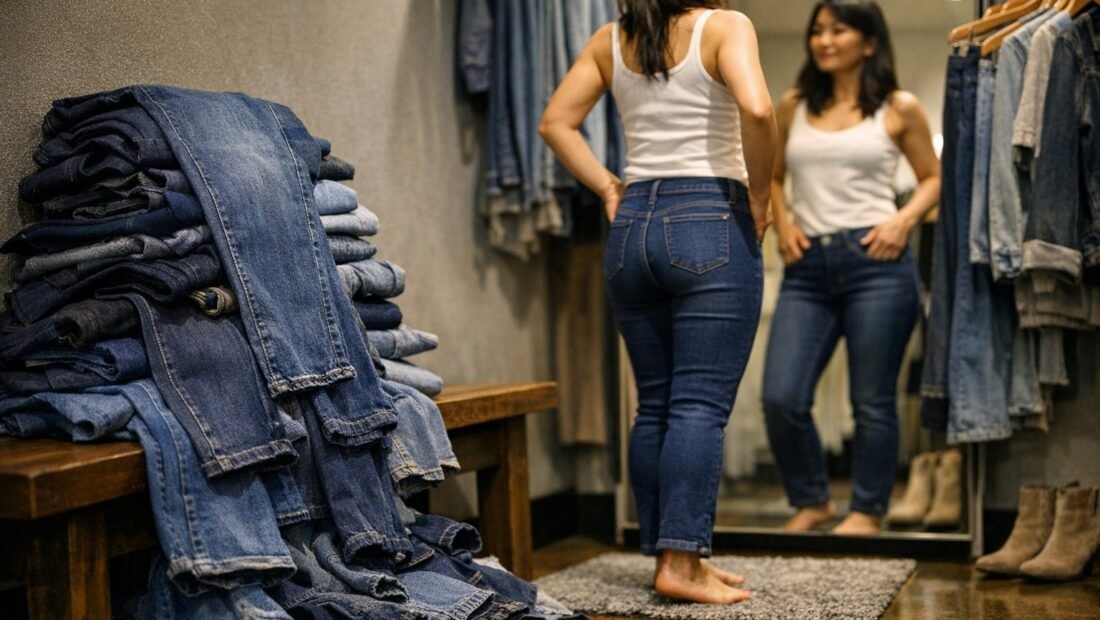
Jeans shopping is a special kind of retail misery. You take twelve pairs into the fitting room, and eleven of them betray you: gaping waists, straining thighs, legs three inches too long. It is not your body that is wrong; it is that jeans are cut to an average that fits almost nobody perfectly.
But the right pair exists for every shape, and finding it is a matter of knowing what to look for rather than trying on the entire shop. Here is how do I find jeans that actually fit my body shape, decoded by cut, rise and fabric.
How do i Find Jeans That Actually Fit my Body Shape
Start by identifying your priorities: waist fit matters most, since a tailor can hem length but a gaping waist ruins everything. Choose rise by torso: high rise elongates legs and contains the tummy, mid rise suits most, low rise is the hardest to wear well. Pick leg shape to balance your proportions: straight legs suit most figures, wide legs balance wider hips, slim and skinny work best on straighter frames, and bootcuts balance hips beautifully. Look for 1 to 2% elastane for comfort without bagging, and always check the fit sitting down as well as standing. When you find the one, buy two.
Related reading: What are the Most Flattering Dresses for a Pear Shaped Figure
Know your shape, then dress it
Forget fruit metaphors for a moment and think proportions. If your waist is much smaller than your hips, your enemy is waist gaping; look for curvy-fit ranges, which several brands now cut with a smaller waist-to-hip ratio, or embrace high-rise styles that sit at your narrowest point. If you are straighter up and down, mid-rise straight legs create shape, and details like back-pocket placement and whiskering add curves. For fuller thighs, prioritise stretch denim with at least 2% elastane and cuts with room through the thigh, because jeans that fit the thigh and gape at the waist can be taken in, but jeans that do not fit the thigh are unwearable. Petite women should check inseam: standard 32-inch legs drown anyone under 5’4″, so look for short or petite ranges rather than paying for hemming every time.
Rise, leg and fabric: the three decisions
Rise is where comfort lives. High rise, sitting at or above the navel, is the most universally flattering modern option: it defines the waist, smooths the midsection and lengthens the leg line. Mid rise suits longer torsos and those who find high rise restrictive. Low rise has returned to fashion but remains the least forgiving and least practical for daily life. Leg shape changes everything: skinny and slim legs streamline but show every lump; straight legs are the safe universal choice; wide-leg and bootcut styles balance hips and look modern with the right shoe. Fabric matters enormously: rigid 100% cotton denim looks premium and lasts, but needs breaking in; 1 to 2% elastane gives comfort and shape retention; more than that and they bag by lunchtime. Heavier denim, 12oz and up, holds its shape far better than flimsy fast-fashion denim.
- Fit the waist first; hemming length is cheap, fixing waists is not.
- High rise flatters most figures; try it before dismissing it.
- Sit down in the fitting room; standing-only try-ons lie.
- Look for 1-2% elastane for comfort that keeps its shape.
- When you find the perfect pair, buy a second immediately.
Worth a read: How can Men Dress Smart Casual for a UK Pub Dinner
The fitting room strategy
Do not start with your usual size; vanity sizing means you might be two sizes different between brands. Grab your usual size plus one up and one down in every style you try. Move in them: sit, walk, crouch, because jeans that are perfect standing can be torture sitting. Check the back view honestly; pocket placement makes or breaks how your backside looks, with higher, smaller pockets lifting and wide-set pockets widening. The waistband should sit without gaping or digging; you should fit two fingers comfortably. Assess the length with the shoes you will actually wear. And give rigid denim a chance: it feels stiff in the shop but moulds to your body within a few wears, while super-stretchy pairs feel great immediately and look tired within weeks.
Brands and ranges worth knowing in the UK
The high street has upped its denim game. M&S offers excellent petite, tall and curvy fits at sensible prices with consistent sizing. Uniqlo’s jeans are remarkable value with free hemming in store. Levi’s remains the benchmark for classic cuts, with the 501, 511 and Ribcage lines covering most shapes; their sale prices are the time to buy. For curvy figures specifically, Abercrombie’s curve range and New Look’s curvy line are cut with realistic waist-to-hip ratios. Men should look at Levi’s 511 and 514, Uniqlo’s smart ankle range, and M&S for reliable basics. Whatever the brand, remember that the same nominal size varies between washes and colours, so always try on the actual pair you are buying.
Making them last: denim care
Wash jeans as rarely as decency allows; denim experts suggest every ten wears or when actually dirty, because washing fades colour and breaks down elastane. When you do wash, turn them inside out, use cold water and skip the tumble dryer, which is denim’s mortal enemy. Spot-clean marks between washes and air them outside to freshen. Hang by the waistband or fold; never hang by the legs, which stretches the knees. A good pair of jeans, cared for properly, lasts years and looks better with age; a cheap pair washed weekly looks tired in months. The cost per wear of £80 jeans worn 200 times is 40p; that is the maths that matters.
The MoneySavingExpert guides regularly cover how to look good while spending less.
See also: Is Fast Fashion Really That Bad and What are the Alternatives
The bottom line
Jeans that fit come from knowing your rise, leg shape and fabric, trying multiple sizes, and testing them sitting down. Fit the waist first, favour high rise and moderate stretch, and buy from brands with proper fit ranges for your shape. When you find the one, buy two, wash rarely, and enjoy years of service. For the wider retail picture, see BBC News business coverage.


1 Comment