
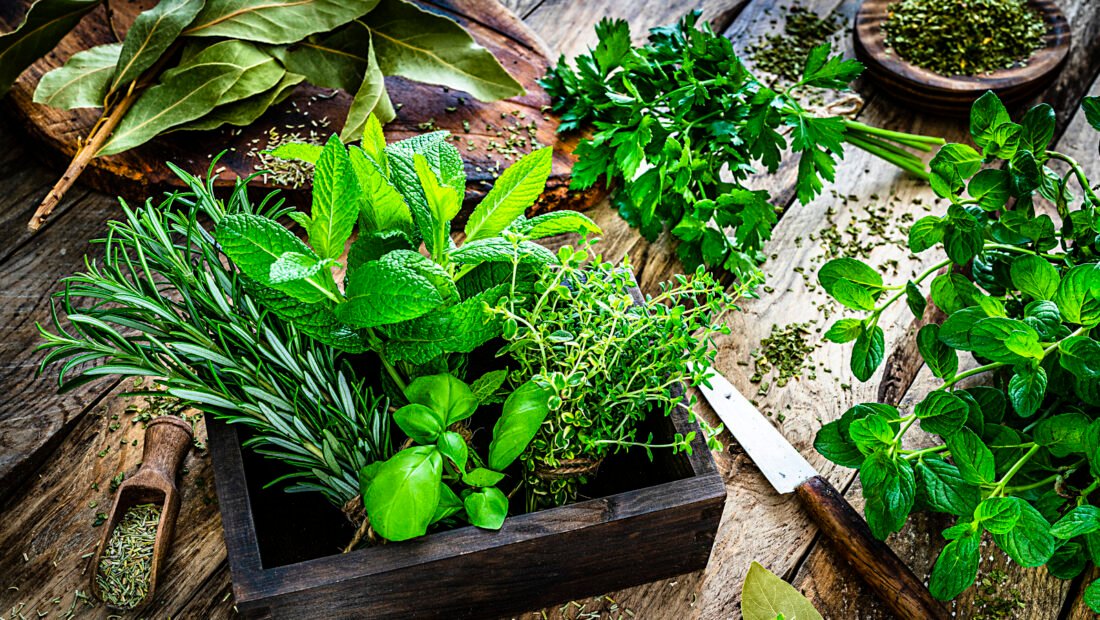
There’s a special kind of guilt in throwing away a £1.25 bunch of coriander that’s turned to green slime after two days. Learning to store fresh herbs so they last longer transformed my cooking — suddenly I could buy herbs without the pressure to use them all immediately, which meant I actually used more of them. The methods below keep most herbs fresh for 1-3 weeks, and they’re all embarrassingly simple.
The Water Glass Method (for Soft Herbs)
This is the big one. For soft, leafy herbs — coriander, parsley, mint, dill, basil (with a caveat, see below) — treat them like cut flowers. Trim the stems at an angle, stand them in a glass or jar with 2-3cm of water, and cover loosely with a plastic bag or damp tea towel. Store in the fridge (except basil — more on that shortly).
Why does this work so well? Herbs wilt because they lose water through their leaves faster than their cut stems can absorb it. Standing them in water keeps the stems hydrated, and the bag creates a humid microclimate that slows moisture loss. Change the water every 2-3 days. Treated this way, parsley and coriander easily last 2-3 weeks — I’ve had mint go a full month. Compare that to the 2-3 days they survive suffocating in their plastic sleeve, and you’ll wonder why nobody told you sooner. It’s also a genuine money-saver and one of the easiest wins in reducing food waste in your kitchen.
Woody Herbs Play by Different Rules
Rosemary, thyme, oregano and sage have tougher, woodier stems and lower water content. They don’t need the water glass — in fact, sitting in water can make them rot faster. Instead: wrap them loosely in a slightly damp piece of kitchen paper, pop the bundle in a sealed container or zip-lock bag, and refrigerate. The damp paper maintains humidity without waterlogging. They’ll keep 2-3 weeks easily; rosemary often goes longer.
Alternatively, woody herbs dry beautifully. Tie them in small bunches and hang upside down in a cool, dark, airy spot for a week or two. Dried thyme and oregano are arguably better than fresh for long-cooked dishes — the flavour concentrates. Dried rosemary is more divisive (it can go woody), so I freeze that instead.
The Basil Exception
Basil hates the cold. Refrigerated basil turns black and slimy within days — it’s a tropical plant protesting at 4°C. Keep basil at room temperature: water glass method on the kitchen counter, away from direct sun. It’ll last a week or more this way. If your kitchen is cold in winter, it’s the one herb worth keeping somewhere warmer, like on top of the fridge.
Basil also freezes better than almost any other herb if you blanch it first (10 seconds in boiling water, then ice water), though honestly, basil’s peak season is summer — buy it then, use it fresh, and don’t mourn it in January.
Freezing: The Long-Term Solution
For herbs you won’t use within a couple of weeks, freezing beats the fridge. The ice-cube-tray method is classic for a reason: chop soft herbs, pack into trays, cover with olive oil or water, freeze, then transfer the cubes to bags. An olive-oil cube of basil, garlic and parsley dropped straight into a hot pan is an instant sauce base. Frozen herbs won’t work as garnish (they go limp on defrosting), but for cooking they’re nearly as good as fresh.
Hardy herbs like rosemary and thyme can be frozen as whole sprigs in bags — no chopping needed. Just strip the leaves from the frozen stem directly into the pot; they crumble off easily when frozen.
Growing Your Own (The Real Answer)
Honestly? The longest-lasting herb storage is a windowsill. A £1.50 supermarket “living herb” pot — the ones sold with roots in soil — will produce for months if you repot it into something bigger and water it properly. Most people kill them by leaving them in the tiny pot they came in; transplanted into a 15cm pot with decent compost, basil, parsley and coriander become near-perpetual.
Mint deserves its own pot (it invades everything), and rosemary and thyme are practically indestructible perennials for a sunny spot. Even a small balcony can host enough herbs to end the supermarket-herb cycle entirely. The BBC Food guides have solid advice on keeping shop-bought herb pots alive if you’re starting out.
Herbs You Shouldn’t Bother Buying Fresh
Some herbs just aren’t worth the fresh premium. Dried oregano is the classic example — it’s actually more potent and better-suited to long cooking than fresh. Dried thyme, bay leaves and rosemary (for stews) are all excellent dried. Save your fresh-herb budget for the ones where freshness is transformative: coriander, basil, dill, mint and flat-leaf parsley. These lose their magic completely when dried, so they’re the ones worth storing properly or growing yourself.
And a word on those plastic “fresh herb” tubes and pots in the supermarket chiller: they’re convenient but wildly overpriced per gram, and the quality is inconsistent. A living pot or a proper bunch, stored with the methods above, beats them every time.
Store Fresh Herbs So They Last Longer: Quick Reference
- Coriander, parsley, mint, dill: water glass in the fridge, 2-3 weeks.
- Basil: water glass at room temperature, about a week. Never refrigerate.
- Rosemary, thyme, oregano, sage: damp paper in a sealed container in the fridge, 2-3 weeks; or dry/freeze.
- Chives: water glass method works, or chop and freeze.
- Long-term: freeze soft herbs in oil cubes; freeze woody herbs as sprigs.
Fresh herbs are the cheapest luxury in cooking — a 50p bunch transforms a dish. Stored properly, they stop being a race against the clock and start being an always-available ingredient. And once you’ve got herbs lasting weeks, you’ll find yourself reaching for them constantly — which is exactly what they’re for. They also brighten up simple meals no end: try them in your weekly meal prep and watch a dull grain bowl become something you actually look forward to.


