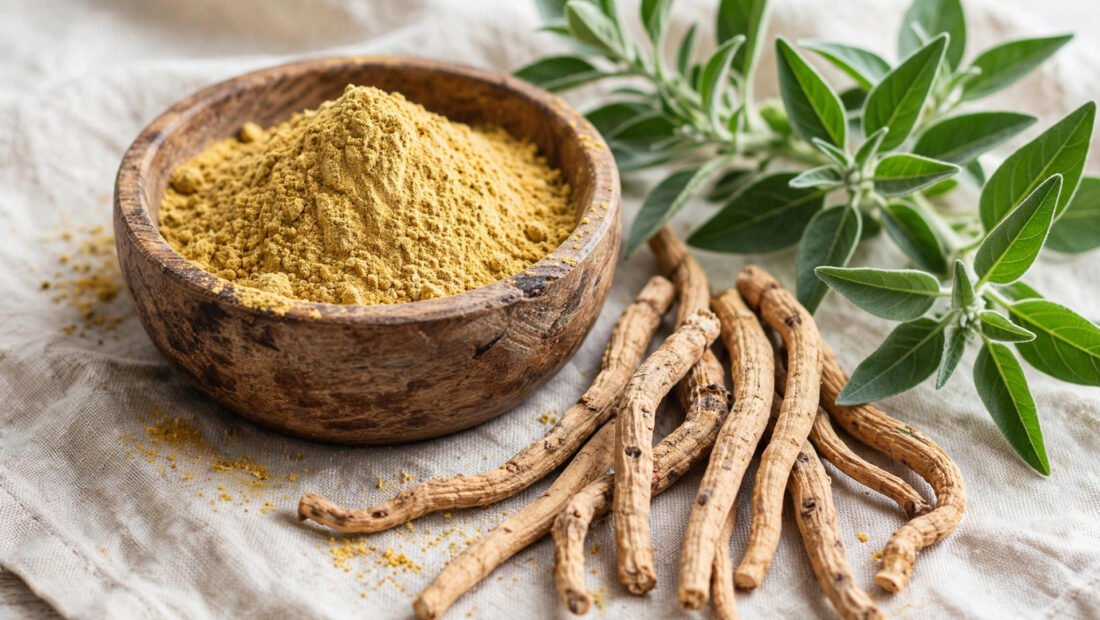
So how long does ashwagandha take to work? It usually takes two to four weeks of daily use before you notice reduced stress and anxiety, four to eight weeks for meaningful improvements in sleep quality, and eight to twelve weeks for measurable gains in strength, testosterone levels and exercise performance. Most clinical trials that found real benefits used 300–600 mg of standardised root extract per day for at least eight weeks. Because ashwagandha works by gradually rebalancing cortisol and stress-response pathways — not by acting like a stimulant — consistency matters far more than taking a bigger dose. Speak to your GP or pharmacist before starting it, particularly if you take thyroid medication, blood pressure drugs, sedatives or immunosuppressants.
What Is Ashwagandha?
Ashwagandha (Withania somnifera), also called Indian ginseng or winter cherry, is a shrub native to India and the Middle East whose roots have been used in Ayurvedic medicine for over 3,000 years. It is classed as an adaptogen — a substance thought to help the body resist physical and mental stress. Modern interest centres on standardised root extracts, the best-studied being KSM-66 and Sensoril, which are manufactured to contain consistent levels of withanolides, the plant’s active compounds. In the UK, ashwagandha is sold as a food supplement rather than a medicine, which means products vary widely in quality — look for brands that state their withanolide content and have third-party testing.
How Long Does Ashwagandha Take to Work? A Timeline by Benefit
Different benefits emerge on different timescales because ashwagandha influences several body systems. Here is what the clinical evidence suggests:
Stress and Anxiety: 2–4 Weeks
This is where ashwagandha acts fastest. Randomised trials — including several using 600 mg of KSM-66 daily — found significant reductions in perceived stress scores and morning cortisol levels after just two to four weeks, with effects strengthening through week eight. Participants commonly report feeling calmer and less reactive to daily pressures rather than feeling “sedated”. If stress relief is your goal, this is the earliest realistic checkpoint: give it a full month of daily use before judging.
Sleep Quality: 4–8 Weeks
Trials on sleep show that ashwagandha shortens the time it takes to fall asleep and improves overall sleep quality, with the clearest results appearing after six to eight weeks of nightly use. Doses of 300–600 mg taken in the evening performed best in studies of adults with insomnia. The effect is gentle — it supports the body’s natural wind-down rather than knocking you out like a sleeping tablet — which is why patience is needed. Pair it with good sleep hygiene (dark room, no screens before bed, consistent bedtime) for the best outcome.
Strength, Muscle and Testosterone: 8–12 Weeks
For physical performance, the timeline is longer. Studies on resistance-trained men found that 600 mg daily increased muscle strength, muscle size and testosterone levels — but only after eight to twelve weeks of combined supplementation and training. Ashwagandha will not build muscle on its own; it appears to support recovery and the hormonal environment around training. Women in smaller trials also saw strength and fitness gains over a similar period.
Thyroid Function and Other Effects: 8+ Weeks
A small number of trials suggest ashwagandha can raise thyroid hormone levels in people with subclinical hypothyroidism after about eight weeks — which is precisely why anyone taking levothyroxine must involve their GP, as doses may need adjusting. Evidence for cognitive benefits, blood sugar control and anti-inflammatory effects is promising but preliminary, with timelines of eight weeks or more in the available studies.
How to Take Ashwagandha for Best Results
To give ashwagandha a fair trial, follow the protocol the research actually used:
- Dose: 300–600 mg per day of a standardised root extract (typically standardised to 5% withanolides for KSM-66). Start at the lower end.
- Timing: with food to reduce stomach upset; take it in the evening if sleep is your goal, or split morning and evening doses for stress.
- Duration: commit to at least eight weeks of daily use before deciding whether it works for you.
- Quality: buy from reputable UK retailers, check for third-party testing, and avoid products that do not disclose withanolide content.
- Cycling: many practitioners suggest taking breaks — for example, eight to twelve weeks on, then two to four weeks off — although long-term safety data is limited.
A month’s supply from a quality brand typically costs £10–£25 in the UK. Do not exceed the label dose hoping to speed things up; higher doses raise the risk of side effects without improving results.
Is Ashwagandha Safe? Side Effects and UK Guidance
Ashwagandha is generally well tolerated in the short term, but it is not risk-free. The most common side effects are mild: stomach upset, nausea, diarrhoea and drowsiness. More seriously, there have been rare reports of liver injury linked to ashwagandha supplements, which is why the NHS advises caution with all herbal medicines and recommends telling your doctor about anything you take.
Avoid ashwagandha, or use it only under medical supervision, if you:
- Are pregnant or breastfeeding — it may increase miscarriage risk.
- Take thyroid medication, sedatives, blood pressure drugs or immunosuppressants.
- Have an autoimmune condition such as rheumatoid arthritis, lupus or multiple sclerosis.
- Have liver disease, or are scheduled for surgery within two weeks (it may slow the central nervous system).
Because UK supplements are not licensed medicines, quality varies — independent lab analyses have occasionally found products with far less active ingredient than claimed, or contamination. Buying from established brands with transparent testing is worth the small premium.
What the Research Does Not Yet Prove
Enthusiasm for ashwagandha has outrun the evidence in several areas. Claims that it boosts fertility, sharpens memory dramatically, treats depression on its own, or “balances hormones” in a general sense rest on small, short or low-quality studies — if any. Many trials were funded by supplement manufacturers, used small sample sizes, or lasted only eight weeks, so results should be read with healthy scepticism. Ashwagandha also will not compensate for chronic sleep deprivation, a poor diet or unaddressed anxiety; it works best as one part of a broader approach that includes exercise, good sleep habits and, where needed, professional support. Treat bold marketing claims — especially around rapid transformations — as advertising, not science.
How Long Does Ashwagandha Take to Work Compared to Other Supplements?
Ashwagandha is slower-acting than many alternatives. Rhodiola rosea can reduce perceived fatigue within days, magnesium glycinate often improves sleep within one to two weeks, and L-theanine calms the mind within an hour — but none has ashwagandha’s breadth of trial evidence across stress, sleep and physical performance. Think of it as a medium-term investment: if you need help this week, magnesium or L-theanine may suit better; if you want broad, building benefits over two to three months, ashwagandha is the stronger candidate. Some people combine them, but check interactions with your pharmacist first.
Frequently Asked Questions
Can I feel ashwagandha working on the first day?
Unlikely. Unlike caffeine or a sleeping tablet, ashwagandha does not produce an immediate noticeable effect for most people. A mild calming sensation in the first days is possible, but the clinically meaningful benefits build over weeks.
Should I take ashwagandha in the morning or at night?
It depends on your goal. Evening dosing suits sleep improvement; morning or split dosing suits daytime stress and energy. Many people take 300 mg twice daily with meals, which mirrors the most-studied protocols.
Can I take ashwagandha every day long-term?
Trials have mostly lasted 8–12 weeks, so long-term safety data is thin. Many experts recommend cycling — a few months on, a few weeks off — and having periodic breaks to reassess whether you still need it.
Does ashwagandha increase testosterone?
In men, several trials found modest testosterone increases after 8–12 weeks, particularly in those who were stressed or strength training. Effects in women are less studied. It is not a substitute for medical treatment of clinically low testosterone.
Can I take ashwagandha with antidepressants?
Potentially risky without medical advice — ashwagandha can have sedative and thyroid effects that interact with psychiatric medicines. Always discuss it with your GP or psychiatrist first rather than adding it yourself.
Is KSM-66 better than ordinary ashwagandha powder?
KSM-66 is a standardised root extract with consistent withanolide levels and the most clinical trial backing, so its effects are more predictable than generic powders of unknown strength. That said, any quality product stating its standardisation can work — consistency and dose matter more than the brand name.
Conclusion
So, how long does ashwagandha take to work? Expect subtle stress relief within a month, better sleep within two months, and physical or hormonal benefits within three — provided you take a quality standardised extract daily and give it a genuine eight-week trial. It is a slow, gentle supplement, not a quick fix, and it demands the same respect as any active compound: check interactions, buy quality, and loop in your GP if you take other medicines.