
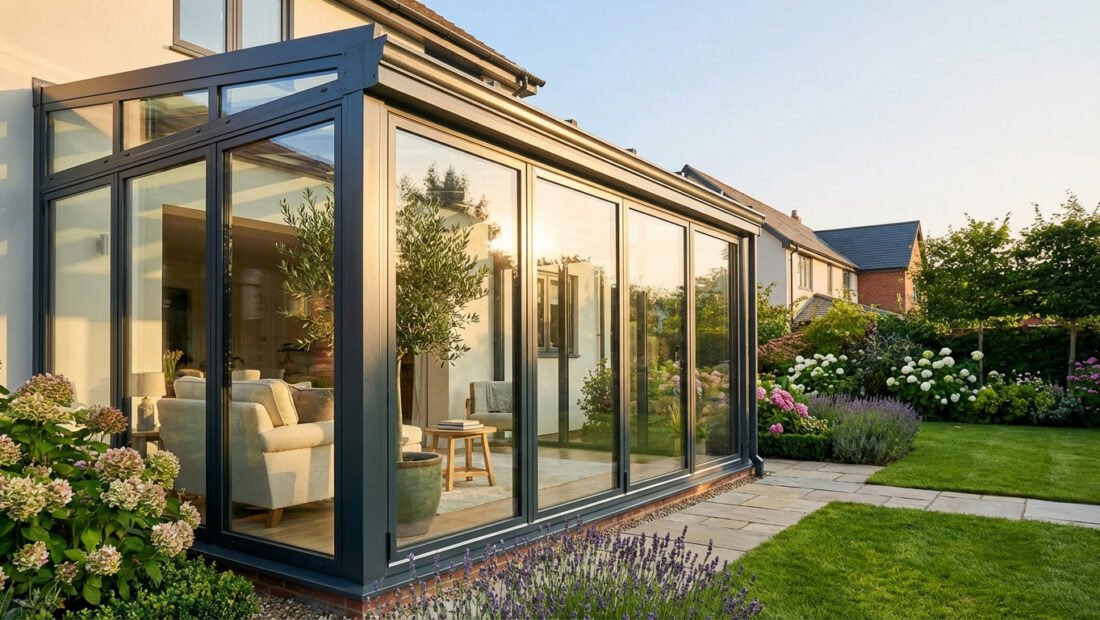
The conservatory is a peculiarly British dream: a glass room bridging house and garden, for morning coffee among the plants and rainy-day views of the lawn. It’s also a purchase where costs spiral easily — the “£5,000 conservatory” advertised on daytime TV bears little relation to what most people end up paying. Here’s how much it costs to build a conservatory in the UK, honestly.
How much does it cost to build a conservatory in the UK?
- Budget lean-to (3x3m, uPVC, polycarbonate roof): £8,000–£12,000
- Mid-range Edwardian/Victorian (4x4m, uPVC, glass roof): £12,000–£20,000
- Large/high-spec (5x5m+, aluminium, glass roof, underfloor heating): £20,000–£35,000
- Bespoke hardwood or large P-shape: £30,000–£50,000+
The typical UK conservatory — a 4x4m Edwardian in uPVC with a glass roof — lands at £14,000–£18,000 fully built. London and the South East add 15–25%.
What drives the price
- Size: roughly £1,000–£1,500 per m² — the biggest single factor.
- Roof: polycarbonate is cheapest but noisy in rain and poor thermally; glass costs £2,000–£4,000 more but transforms usability. A tiled/solid roof (£4,000–£8,000 extra) makes it a true year-round room — but check whether it becomes an “extension” for planning purposes.
- Frames: uPVC is standard; aluminium costs 30–50% more but looks slimmer and more contemporary; hardwood is premium.
- Base work: dwarf walls, foundations and drainage — £3,000–£6,000 of any quote, and where cowboys cut corners.
- Electrics, heating, flooring: £1,500–£4,000 to make it genuinely usable.
- Doors: bi-folds vs French vs sliding — £1,000–£3,000 swing on this choice alone.
The usability question (read this before buying)
Here’s what the brochures downplay: a cheap conservatory with a polycarbonate roof is too hot in summer and too cold in winter — the classic British conservatory experience of a room used about 8 weeks a year. If you want year-round use, you need:
- A proper roof: solar-control glass or a solid/tiled roof. Non-negotiable for usability.
- Heating: underfloor heating or a properly sized radiator (connected to the house system, not a portable plug-in).
- Ventilation: opening roof vents plus trickle vents — otherwise it’s a greenhouse.
- Blinds: £1,000–£3,000 for proper conservatory blinds; they make the difference between usable and unbearable in July.
Budget an extra £4,000–£8,000 over the base price for these. A conservatory without them is an expensive greenhouse; with them, it’s the best room in the house.
Planning permission and regulations
Most conservatories fall under permitted development (under 3–4m projection depending on house type, under 50% of garden, not forward of the house). But building regulations apply in specific ways: traditionally, conservatories are exempt if they’re separated from the house by external-grade doors and have independent heating — remove those doors to open it up, and it becomes an extension needing full regs compliance (thermal performance, structural calculations). Many people don’t realise this until they try to sell. Our conservatory vs orangery guide covers the design alternatives, and the planning logic mirrors our garden office planning piece.
Does it add value?
A well-built, usable conservatory adds 5–10% to property value — often covering its cost in the right area. A cheap, unusable one adds little and can even deter buyers who see a demolition job. The value is in usability: glass roof, heating, proper integration with the house. See our adding value before selling guide for where conservatories rank.
Buying without regret
- Get 4 quotes — the spread in this industry is enormous.
- Visit previous installations — any reputable firm will arrange it.
- Check the guarantee: 10 years minimum, insurance-backed.
- Specify everything: roof type, glass spec (solar control? self-cleaning?), base construction, what’s excluded.
- Never pay more than 25% upfront.
- Consider an orangery instead — more brick, more usable, often better value per usable day. Our comparison guide lays out the trade-offs.
Heating and cooling: making it year-round
The difference between a 3-season conservatory and a 12-month room is climate control. The options, honestly ranked:
- Underfloor heating: the best — even, invisible, no wall space lost. Water UFH adds £2,000–£3,000 to the build; electric £800–£1,500 for the running-cost penalty. See our underfloor heating costs.
- Radiator on the house system: cheap (£300–£600) and effective — but check your boiler can handle the extra load, and note that connecting to the house system can affect building-regulations exemption status.
- Air-to-air heat pump (air conditioning unit): £1,500–£3,000 — heats in winter, cools in summer. The only option that solves both directions. Increasingly the smart choice.
- What doesn’t work: portable electric heaters (£££ to run, heat the air that immediately rises to the glass roof), and log burners (romantic, impractical, and a building-regs headache in a lightweight structure).
Blinds, films and the summer problem
A glass-roofed south-facing conservatory hits 40°C+ in summer without intervention. The defences:
- Roof blinds: £1,000–£3,000 fitted — the effective option. Pleated or pinoleum blinds that reflect heat before it enters. Essential, not optional, for south/west-facing.
- Solar control glass: specify it in the roof glazing from the start (£500–£1,000 premium) — reflects a large fraction of solar heat while staying clear.
- Window film: retrofittable solar film (£200–£500 DIY) — less effective than proper solar glass but a genuine improvement.
- Ventilation: opening roof vents (at least 2) plus trickle vents create the stack effect that dumps hot air. Automated openers (£150–£300) do it while you’re at work.
Budget £2,000–£5,000 for proper climate control on top of the build cost. Without it, you’ve built a very expensive greenhouse. The planning side is usually straightforward — most conservatories are permitted development — but check the current rules on GOV.UK’s planning guidance if you’re near limits or in a designated area.
Furnishing a conservatory: what survives
Conservatory furniture lives in extreme conditions — intense sun, temperature swings, condensation — and normal indoor furniture suffers. What works: rattan and cane (the classic for a reason — handles humidity and sun); teak and acacia (oils survive the environment; avoid softwoods that warp); outdoor-grade fabrics (solution-dyed acrylic like Sunbrella — UV-proof, mould-resistant, washable); and proper outdoor rugs (not indoor rugs, which rot). What doesn’t: flat-pack chipboard furniture (swells with humidity), leather (cracks in the heat/UV cycle), and anything with “indoor use only” on the label. Buy for the environment, not the showroom — the conservatory is closer to outdoors than the brochure admits.
The takeaway
Budget £14,000–£18,000 for a proper 4x4m conservatory — and don’t cheap out on the roof, heating and ventilation, or you’ll own a very expensive greenhouse. Get four quotes, visit previous jobs, and be honest about whether you want a summer room or a year-round one: the price difference is the usability difference.


1 Comment