
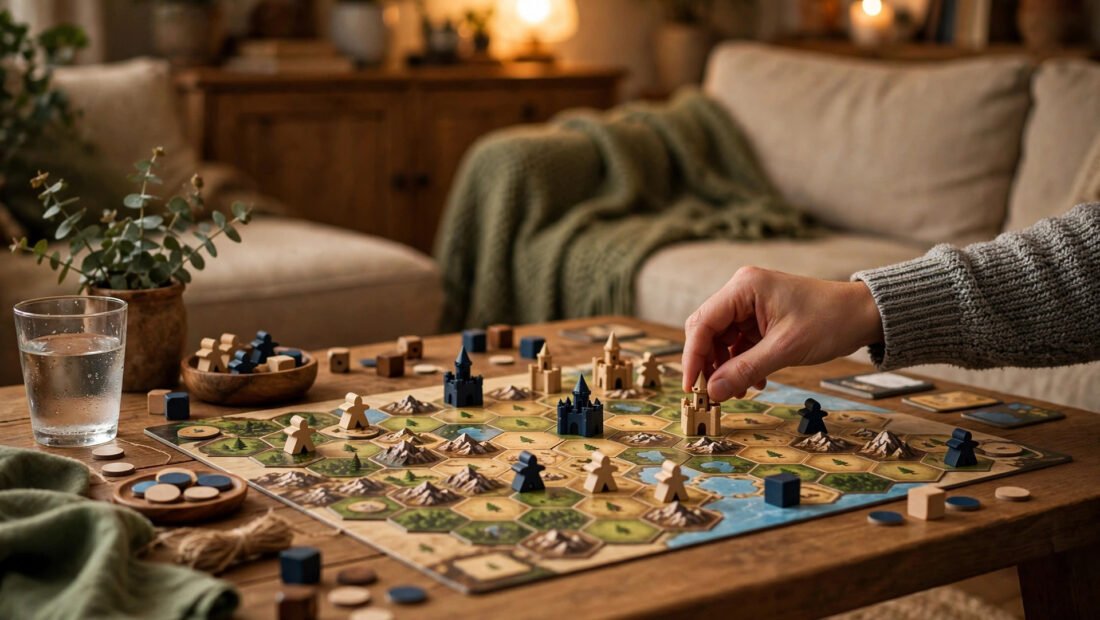
There is a particular frustration in losing a strategy game and knowing the answer is one Google search away — a build order, a tier list, a YouTuber’s “ultimate guide.” Following guides works, in the narrow sense: you will win more. But something is lost when every decision comes pre-chewed. Players who learn to think strategically for themselves do not just win — they understand why they win, adapt when patches change everything, and find the game far more satisfying.
This guide is about improving at strategy games — real-time, turn-based, grand strategy, auto-battlers — through your own thinking rather than someone else’s script. No build orders. No tier lists. Just the mental skills that transfer across every strategy game you will ever play.
Learn to Read the Game State, Not the Guide
Guides give you answers; strong players ask questions. The foundational skill of strategy is reading the game state: what do I have, what does my opponent have, what is the map telling me, and what happens next? Start narrating your games to yourself, out loud if it helps: “They expanded early, so they are vulnerable to pressure now.” “I am ahead on economy but behind on army — I should avoid fighting for two minutes.”
This sounds basic, but most guide-following players never develop it — they execute a memorised plan regardless of what is happening. Practice by watching your own replays and pausing every few minutes to predict what happens next. When you are wrong, ask why. That single habit builds game sense faster than any amount of copied build orders, because it trains the exact skill guides bypass: judgement.
Understand the Core Loop Before the Details
Every strategy game has a core loop — the fundamental cycle of decisions that drives everything. In StarCraft-style RTS games, it is economy versus army: every resource spent on workers is not spent on soldiers, and vice versa. In Civilization-style 4X games, it is expansion versus development. In auto-battlers, it is economy (interest and levelling) versus board strength.
Guides bury you in details — which unit counters which, the optimal build at 3:47. But 80% of improvement comes from internalising the core loop until its trade-offs are instinctive. Ask of every decision: “What am I giving up to do this?” That question, applied consistently, is worth more than a hundred memorised timings. The BBC’s technology coverage regularly explores how game design shapes player thinking — a useful reminder that these systems are designed to be learned, not just copied.
Lose Deliberately: The Fastest Teacher
Here is the counterintuitive method: experiment on purpose. Pick one variable — an unusual opening, an aggressive timing, a weird unit composition — and test it for ten games, ignoring your win rate. You will lose most of them. You will also learn more in those ten games than in fifty games of safe, guide-approved play, because you will discover why the standard approaches work by feeling what happens when they do not.
Keep a simple log: what did I try, what happened, what did I learn? Patterns emerge quickly. “Every time I skip early defence, I die to the same rush” teaches you more about the game’s balance than any guide’s warning. This experimental mindset is also what keeps strategy games fun for years — guide-followers burn out when the meta shifts; thinkers adapt.
Learn from Better Players Without Copying Them
There is a middle path between blind guide-following and reinventing everything: study strong players for principles, not prescriptions. When you watch a skilled player, do not ask “what build is that?” Ask “why did they make that decision at that moment?” What information did they have? What were they afraid of? What trade-off did they accept?
This turns every stream and tournament into a lesson in thinking rather than a shopping list of moves. Discuss games with friends — planning a proper games night gives you a regular lab for testing ideas against real opponents, which teaches adaptation in a way solo ladder grinding never will. Tabletop strategy counts too: the best board games for a family game night include superb strategy titles where the same principles of reading opponents and managing resources apply.
The Mental Game: Tilt, Patience, and Long Thinking
Strategy games punish emotional play more than any other genre. Tilt — playing worse because you are frustrated — destroys decision quality, and the answer is structural, not willpower: take breaks between losses, set session limits, and never queue “one more game” to recover a bad streak. The NHS tips for reducing stress translate surprisingly well to competitive gaming — the physiology of tilt and anxiety is the same. Patience is a strategic skill: the player who can wait for the right moment beats the player who acts from anxiety.
Also practice thinking on multiple timescales simultaneously: what am I doing now, what am I setting up for in five minutes, and what is my win condition? Beginners think only about now; intermediate players think about the next fight; strong players are always shaping the endgame. Holding all three timescales in mind is the master skill of the genre.
Adapting When the Game Changes
Every strategy game evolves — balance patches, new expansions, shifting metas — and guide-followers suffer most when it happens, because their memorised answers expire overnight. Independent thinkers adapt, because they understand principles rather than prescriptions. Build the adaptation habit deliberately: when a patch lands, read the changes and predict how they shift the core loop before playing a single game. “This unit got cheaper, so early aggression is stronger” is the kind of reasoning that keeps you ahead of players waiting for updated guides.
The same applies across games. The skills in this guide — reading game states, understanding core loops, thinking on multiple timescales — transfer between genres far better than any build order. A StarCraft player who understands economy-versus-army trade-offs will grasp the equivalent tension in their first week of Civilization. Guide-followers start from zero with every new game; thinkers start from principles. That compounding is the real reward of learning to think for yourself — each game makes you better at the next one.
Conclusion: Think, Don’t Memorise
Improving at strategy games without guides means building the skills guides replace: reading the game state, understanding core loops, experimenting deliberately, studying principles rather than prescriptions, and managing your own mind. It is slower at first and far more rewarding — and when the next patch invalidates every guide overnight, you will be the player who adapts while everyone else relearns from scratch.
Frequently Asked Questions
Can you get good at strategy games without guides?
Yes. Guides accelerate early wins, but the underlying skills — game sense, decision-making, adaptation — are built through practice, replay analysis, and experimentation. Many top players emphasise understanding over memorisation.
What is the best strategy game for beginners?
Turn-based games (Civilization VI, Into the Breach) are friendlier than real-time ones because they let you think without time pressure. Start where the pace suits you and graduate to faster games as your fundamentals solidify.
How do I stop tilting in strategy games?
Structural rules beat willpower: take a break after two consecutive losses, set session time limits, and treat losses as data by reviewing what went wrong. Tilt is a decision-quality problem, so protect your decision quality.
Should I watch pro players to improve?
Yes, but watch for decision-making principles rather than build orders to copy. Ask why they made each choice given the information they had — that transfers to your own games; memorised builds do not.


