Glasgow gardeners face a peculiar problem: the same soft, damp climate that makes lawns lush also makes weeds unstoppable. With around 1,100mm of annual rainfall and mild winters that kill off almost nothing, a bare patch of soil turns green in a fortnight. No wonder so many gardeners are ditching chemical weedkillers. Yet one pattern keeps emerging from allotments in Pollok to community gardens in Govanhill: people abandon the spray bottle with the best intentions, then make a handful of predictable mistakes that leave them with more weeds than before.
This guide walks through the seven biggest errors Glasgow gardeners make when ditching the weedkiller bottle — and the spray-free methods that genuinely work in our soggy climate. Whether you are tending a tenement back green or a suburban plot in Bearsden, the principles are the same.
Mistake 1: Hoeing on a Damp Morning and Calling It Done
The classic error is hoeing weeds on one of Glasgow’s perpetually damp mornings, chopping the tops off and walking away feeling victorious. In wet soil, a severed weed stem can re-root itself within hours — particularly creeping buttercup and couch grass, two of the West of Scotland’s most aggressive invaders. The Royal Horticultural Society notes that hoeing works only when conditions are dry enough to desiccate the severed foliage; in Glasgow, that dry window can be narrow.
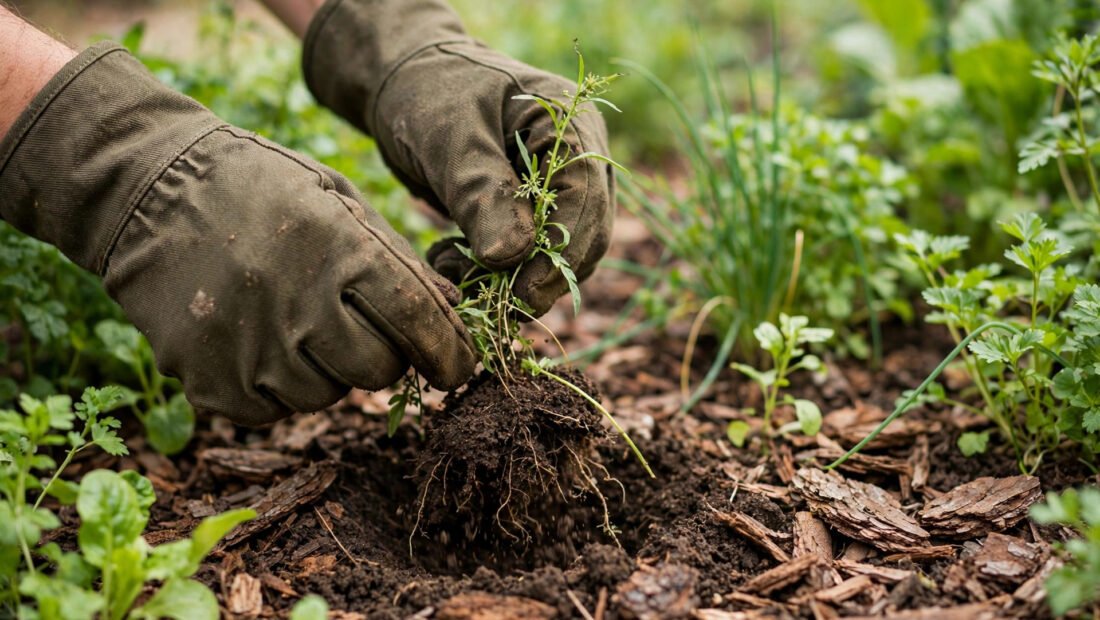
The fix is simple but non-negotiable: hoe on the driest day of the week, ideally with a stretch of bright weather ahead, and rake the chopped weeds onto the path or into a bucket rather than leaving them on the soil surface. For perennial weeds with deep roots — dandelions with their taproots, dock with its stubborn crown — hoeing is never enough. Those need lifting with a fork, root and all, because every fragment left behind becomes a new plant. If you are still laying out your growing space, our guide to starting a small vegetable garden in your UK backyard shows how to prepare weed-free beds from day one.
Mistake 2: Mulching Too Thinly to Smother Anything
Mulch is the most effective spray-free weed strategy in a wet climate, yet most gardeners apply it far too thinly — two or three centimetres of bark does nothing to established weeds. Organic growing trials show mulch needs to be 7–10cm deep to block light properly. Wood chip is cheap in the Central Belt (many Glasgow tree surgeons give it away free for collection) and suits borders and paths; for vegetable beds, compost or well-rotted manure is better, since wood chip temporarily locks up nitrogen. Always clear existing weeds before mulching — burying couch grass under chip in damp soil just tucks it into bed.
Mistake 3: Ignoring the Seed Bank Lurking in the Soil
Every Glasgow garden sits on a buried seed bank: millions of dormant weed seeds, some viable for decades, waiting for light and disturbance. The mistake is rotavating a weedy patch thoroughly, then acting surprised when a fresh green carpet appears — each soil-turning brings a new cohort of seeds to the surface.
The smarter approach is the “stale seedbed” technique. Prepare your bed, water it, and wait two to three weeks. Hoe off the flush of seedlings, and repeat once more. You will have exhausted a huge portion of the surface seed bank before a single crop goes in. After that, disturb the soil as little as possible — the no-dig method, championed by gardener Charles Dowding, keeps old seeds buried and is arguably even more valuable in weed-happy Glasgow than in drier parts of the country. The RHS guide to managing weeds without chemicals backs this up: minimal cultivation is a cornerstone of organic weed control.
Mistake 4: Letting Weeds Set Seed Even Once
A single hairy bittercress plant can fire seeds over a metre and produce several generations in one Glasgow growing season. Groundsel, chickweed and annual meadow grass flower and seed in weeks. The mistake is the “I’ll deal with them at the weekend” delay — in our long, mild season, a weekend’s delay can mean thousands of new seeds.
Adopt the ten-minute rule: every time you are in the garden, spend ten minutes pulling anything in flower before it seeds. Focus ruthlessly on seeders rather than trying to achieve a pristine plot. Deadheading is not just for ornamentals — snapping the flower heads off weeds is one of the highest-leverage habits a spray-free gardener can build. Keep a dedicated “weed bucket” by the back door; anything with seed heads goes in, never on the compost heap unless your heap genuinely reaches the 60°C+ needed to kill seeds.
Mistake 5: Using Landscape Fabric as a Permanent Solution
Weed-suppressant membrane feels like a spray-free shortcut, but in Glasgow’s climate it routinely backfires. Soil washes over the top within a season or two, weed seeds germinate in that silt, and their roots knit through the membrane making them harder to pull than before. Cardboard sheet mulch — plain cardboard topped with 10cm of wood chip — suppresses weeds for a full season, then rots down into the soil, improving it rather than degrading it. Glasgow allotment sites increasingly recommend exactly this approach for new plots. If the wider plot needs a refresh, see how to make your garden look nice without spending much for budget-friendly transformations.
Mistake 6: Composting Weeds with Roots and Seeds Attached
The domestic compost heap is where good intentions go to multiply. Perennial weed roots (couch, bindweed, dock), seed heads, and diseased material survive cool home composting and return to the garden disguised as free fertility. The mistake is treating the compost bin as a weed disposal service.
The rule is strict but simple: only compost annual weeds that have not set seed, and never compost perennial roots. Everything else goes in the council green-waste bin — Glasgow City Council’s brown bin collections are processed at commercial facilities that reach temperatures high enough to destroy seeds and roots. Alternatively, drown perennial weeds in a bucket of water for a month (they rot into a usable liquid feed) or dry them on a hot patio until crisp before composting. This single discipline transforms a compost heap from a weed nursery into the asset it should be.
Mistake 7: Expecting a One-Time Fix Instead of a System
The deepest mistake is psychological: treating weed control as a job to finish rather than a system to run. Chemical weedkillers encouraged this mindset — spray, done. Spray-free gardening is won through layered, ongoing habits: mulch maintained at depth, edges kept crisp (a sharp spade edge along lawns and paths stops half the invasion), bare soil never left exposed, and the ten-minute patrol kept up through the season.
Glasgow’s climate means the weeding season runs from March to November, but it also means mulch breaks down fast and keeps working. Gardeners who embrace the routine report something surprising within a year or two: dramatically less weeding, not more. Each season of prevented seeding shrinks the seed bank; each season of thick mulch improves the soil. The organic growing charity Garden Organic documents exactly this compounding effect in its long-running trials. Ditching chemicals is not the hard part — building the system is, and in Glasgow’s forgiving, fertile conditions, that system pays back faster than almost anywhere in Britain.
Conclusion
Stopping weeds without chemical sprays in Glasgow is entirely achievable, but only if you avoid the traps that catch most beginners: shallow mulching, damp hoeing, soil-turning that wakes the seed bank, and the fantasy of a one-time fix. Layer your defences — stale seedbeds, deep organic mulch, cardboard for new ground, ruthless deadheading and disciplined composting — and the weeds lose ground every season. Within two years the ten-minute patrol will genuinely be enough.
Frequently Asked Questions
What is the best mulch depth for weed suppression in Glasgow?
Aim for 7–10cm of bark chip or compost on borders, topped up each spring as it rots down. In Glasgow’s wet climate organic mulch decomposes quickly, so the annual top-up is what keeps light blocked from weed seeds.
Does vinegar kill weeds effectively as a chemical-free alternative?
Household vinegar (5% acetic acid) only burns the top growth of young annual weeds and does nothing to roots; it is largely useless on established perennials. Stronger horticultural vinegar (20%+) works better but can harm soil life and is caustic to handle — mulching is more reliable.
How do I kill weeds on a new Glasgow allotment without weedkiller?
Cover the ground with cardboard topped with 10–15cm of wood chip or compost for 3–6 months to smother existing growth, then plant through it. For couch grass and mare’s tail, you may need a full season of smothering plus hand-forking of remaining roots.
Can I put weeds in my Glasgow City Council brown bin?
Yes — perennial weed roots, seed heads and all. Council green waste is processed at commercial composting facilities that reach temperatures high enough to destroy weed seeds and roots, which domestic heaps rarely achieve.