Every beginner fishkeeper faces the same seductive trap: the tiny, stylish nano tank on the shop shelf, promising a slice of underwater calm for your Sheffield flat. It looks easy. It looks cheap. And it is the single biggest reason beginners fail at fishkeeping — because small tanks are not easier. They are dramatically harder.
So should you choose the right fish tank size now, or start small and upgrade later? The honest answer: choose properly now, because “later” usually means dead fish, wasted money, and a hobby abandoned within months. This guide explains why size matters so much, what size beginners should actually buy, and how to avoid the most common sizing mistakes.
Why Small Tanks Are Harder, Not Easier
It feels backwards, but it is chemistry. In a small volume of water, everything goes wrong faster: ammonia from fish waste spikes to toxic levels in hours rather than days, temperatures swing wildly with room changes, and there is no margin for the beginner mistakes you will inevitably make. A 60-litre tank forgives a missed water change. A 15-litre tank punishes it with dead fish.
Small tanks also cruelly limit your stocking options. Most of the hardy, beginner-friendly fish — tetras, guppies, corydoras — need groups and swimming space that tiny tanks cannot provide. The result is the classic beginner’s doom loop: an overstocked nano tank, constant water problems, and fish dying mysteriously. The RSPCA’s guidance on fish environments stresses adequate space as a core welfare need, not a luxury.
The Beginner Sweet Spot: 60–110 Litres
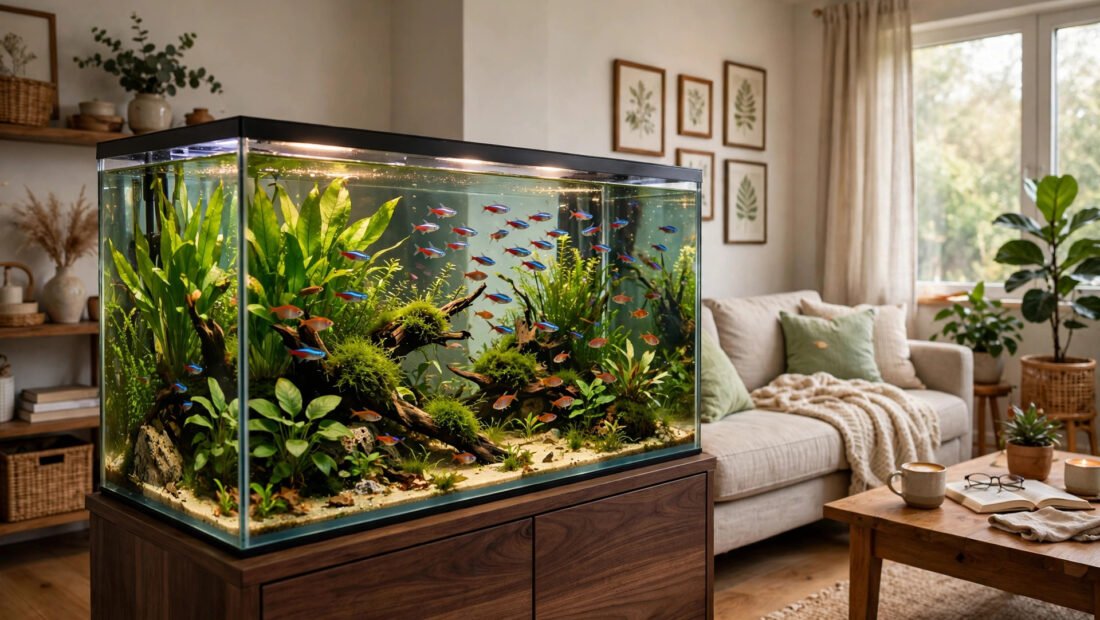
For most beginners, a tank in the 60–110 litre range (roughly 60–80cm long) hits the sweet spot. It is stable enough to forgive mistakes, large enough for a proper community of small fish, and still fits comfortably in a typical UK home. A 64-litre starter kit — a hugely popular size — can happily house a school of neon tetras, a small group of corydoras, and a centrepiece fish like a dwarf gourami.
Go bigger if you have the space and budget: a 125–180 litre tank is even more stable and opens up far more stocking options. The main constraints are practical — weight (a 100-litre tank weighs over 100kg filled, so it needs a proper stand on a solid floor), and cost of equipment, which scales with size.
The “Start Small, Upgrade Later” Fallacy
The upgrade-later plan fails for three reasons. First, you pay twice: the small tank, its undersized filter and heater, then all of it again at the proper size. Second, upgrading means cycling a whole new tank — the 4–6 week process of establishing beneficial bacteria — while your existing fish wait in an overcrowded old tank. Third, and most importantly, most people never upgrade; they quit instead, after the small tank’s endless problems drain their enthusiasm.
There is one legitimate exception: a small quarantine or hospital tank (20–30 litres) is genuinely useful alongside a proper main tank. But as a first and only tank, small is a false economy. Spend the starter-tank money on the right size once.
What to Buy: The Beginner’s Kit List
A proper starter setup needs: the tank with a lid (fish jump, and lids cut evaporation), a filter rated for at least your tank’s volume, a heater with a thermostat (most tropical fish need 24–26°C, and UK homes are not that warm year-round), a thermometer, substrate, water conditioner (tap water contains chlorine that kills beneficial bacteria), and a liquid test kit for ammonia, nitrite, and nitrate.
Do not buy the fish on the same day as the tank. New tanks must be “cycled” — run with ammonia source for several weeks to grow the bacteria that process waste — before any fish go in. Shops that tell you to add fish immediately and “it’ll be fine” are selling you fish, not advice. The PDSA’s fish care advice covers the nitrogen cycle in beginner-friendly terms and is worth reading before you spend a penny.
Choosing Fish for Your Tank Size
Once cycled, stock slowly — a few fish at a time, weeks apart. The old “one inch of fish per gallon” rule is crude but keeps beginners out of trouble. Better: research each species’ adult size and needs before buying, because the shop’s juveniles grow. A common pleco sold at 5cm becomes a 30cm tank-buster; “assorted tetras” may include nippy species unsuited to your setup.
Good beginner communities for a 60–110 litre tank: 8–10 neon or ember tetras, 6 pygmy or bronze corydoras, a small group of guppies or platies, and optionally a honey or dwarf gourami as a centrepiece. All are hardy, peaceful, and forgiving of the water-parameter wobbles beginners produce. Fish also suit busy households well — if you are still deciding which pet fits your lifestyle, our guide on whether getting a dog while working full-time is realistic is a useful comparison, and finding pet-friendly holiday accommodation is worth planning for whatever animal you choose.
Maintenance: The Weekly Routine That Keeps It Alive
A cycled tank is not a self-sustaining ecosystem — it needs a simple weekly routine. Every week: test the water (ammonia and nitrite should read zero, nitrate below 40ppm), change 20–25% of the water using dechlorinated water matched to tank temperature, gently rinse filter media in old tank water (never tap water — chlorine kills the beneficial bacteria you spent weeks growing), and vacuum the substrate lightly to remove waste. The whole routine takes 20–30 minutes once practised.
Do not over-clean. Beginners kill tanks with kindness: scrubbing everything sterile, changing all the water, replacing filter cartridges monthly as the box instructs (a marketing tactic — cartridges last until they fall apart; replacing them discards your bacteria colony). Algae is normal and healthy in small amounts; an algae outbreak usually means too much light or overfeeding, not a dirty tank. Feed only what fish eat in two minutes, once or twice daily — uneaten food is the number one water-quality killer. Consistency beats intensity: a stable, slightly imperfect routine keeps fish healthier than sporadic deep cleans.
Conclusion: Buy the Tank Your Future Self Will Thank You For
Choose the right size now: 60–110 litres minimum for a first tropical community, bigger if you can. Resist the nano tank, cycle patiently before adding fish, and stock slowly with researched species. Fishkeeping rewards patience and punishes shortcuts more than almost any other pet hobby — but get the foundation right and you will have a living centrepiece that calms the whole room for years.
Frequently Asked Questions
What is the best fish tank size for beginners?
60–110 litres (about 60–80cm long). This range is chemically stable enough to forgive beginner mistakes while fitting in a normal home. Anything under 40 litres is significantly harder to maintain successfully.
Can I keep a goldfish in a small bowl?
No. Goldfish grow to 20–30cm, live 20+ years, and produce enormous amounts of waste — they need 75+ litres for the first fish, ideally a pond. Bowls are unsuitable for any fish and cause suffering.
How long should I wait before adding fish to a new tank?
Typically 4–6 weeks for a fishless cycle, confirmed by water testing showing zero ammonia and nitrite. Adding fish to an uncycled tank exposes them to toxic ammonia spikes.
How many fish can I put in a 60-litre tank?
Roughly 15–20 small fish (tetras, guppies, small corydoras) once fully cycled, added gradually over weeks. Always research adult sizes — shop juveniles grow.