To clean retainers, rinse them under lukewarm water every time you remove them, brush them gently each day with a soft toothbrush and mild liquid soap (not toothpaste), and soak them in a retainer cleaning tablet solution for 15–20 minutes a few times a week. Never use hot water, bleach or abrasive toothpaste, which can warp or scratch the plastic. Done properly, this routine keeps retainers clear, odour-free and hygienic.
Why Cleaning Your Retainer Matters
Your retainer sits in your mouth for hours every day, collecting saliva, plaque, bacteria and food debris. Without regular cleaning it quickly develops a cloudy film, an unpleasant smell and a slimy biofilm — and a dirty retainer can contribute to bad breath, gum irritation and even tooth decay. Learning how to clean retainers properly also protects your investment: replacement retainers in the UK typically cost £70–£200 privately, so good maintenance genuinely saves money.
There are three main types, and the cleaning principles are similar for all of them: clear plastic retainers (Essix-style), traditional Hawley retainers with a wire and acrylic plate, and fixed bonded retainers glued behind the front teeth. The NHS guidance on orthodontics explains the different retainer types your orthodontist may provide.
Daily Cleaning Routine: Step by Step
Step 1: Rinse Every Time You Remove It
Get into the habit of rinsing your retainer under lukewarm tap water the moment you take it out — before eating, and again when you put it back in. This 10-second habit prevents saliva and plaque from drying onto the surface, which is what causes most stubborn build-up and odour. Use lukewarm water only: hot water can warp clear plastic retainers permanently.
Step 2: Brush Gently with a Soft Toothbrush
Once a day, brush your retainer with a soft-bristled toothbrush and a small amount of mild, non-abrasive liquid soap or fragrance-free washing-up liquid. Use gentle circular motions on all surfaces, inside and out, paying attention to the crevices where the plastic meets the teeth. Rinse thoroughly afterwards — you do not want soap residue sitting against your gums overnight.
Avoid regular toothpaste for daily cleaning. Most toothpastes contain abrasive particles that create micro-scratches in clear plastic, making retainers look cloudy and giving bacteria more places to hide. A dedicated soft brush kept just for the retainer is ideal; replace it every few months like a normal toothbrush.
Step 3: Soak in a Cleaning Solution Weekly
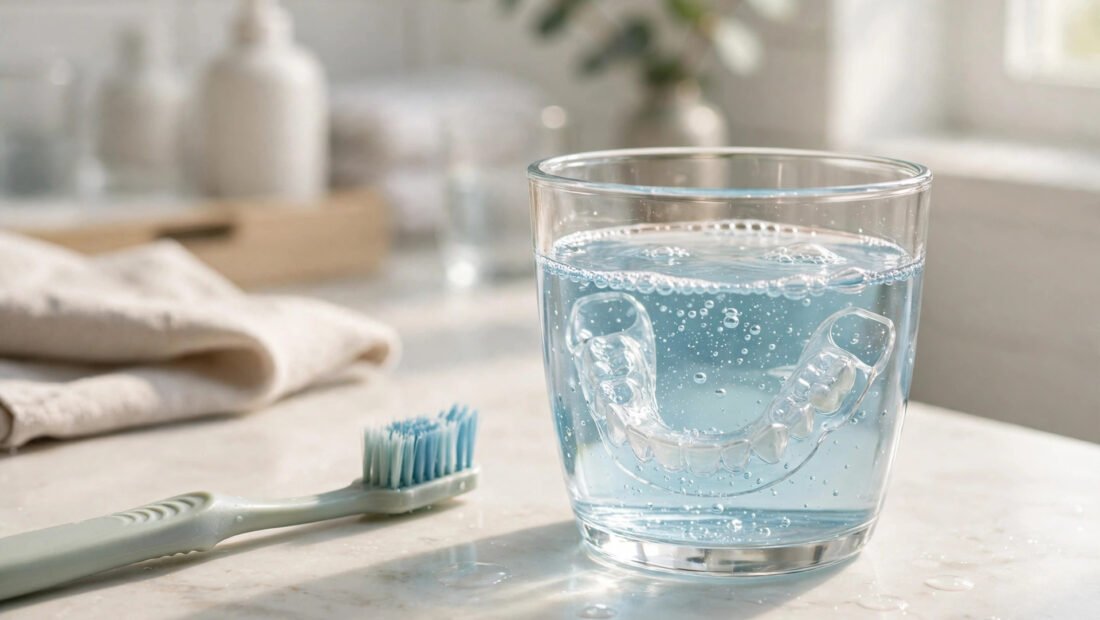
Two to three times a week, give your retainer a deeper clean by soaking it for 15–20 minutes in lukewarm water with a denture or retainer cleaning tablet (brands like Retainer Brite or Steradent, around £3–£6 for a pack). These effervescent tablets dissolve biofilm and kill odour-causing bacteria without scrubbing. After soaking, give the retainer a quick brush and rinse before wearing it again.
A cheap DIY alternative is a 15-minute soak in lukewarm water with a tablespoon of baking soda, which deodorises effectively. A 50/50 mix of lukewarm water and white vinegar for 20 minutes tackles limescale-like tartar deposits, but rinse very well afterwards and do not use this method daily — the acidity can degrade plastic over time.
What NOT to Do When Cleaning Retainers
- Hot or boiling water: warps clear plastic retainers and can distort Hawley acrylic, ruining the fit.
- Bleach or harsh chemicals: damages the material and leaves toxic residues — never safe for something that lives in your mouth.
- Abrasive toothpaste or baking soda scrubs: scratch clear plastic, causing permanent cloudiness.
- Alcohol-based mouthwash soaks: can dry out and crack plastic over time; if you use mouthwash, choose an alcohol-free one and only briefly.
- The dishwasher or microwave: the heat will destroy your retainer in minutes.
- Leaving it to “air out” on a napkin: retainers wrapped in tissue get thrown away with alarming regularity — always use the case.
Cleaning a Fixed (Bonded) Retainer
A bonded retainer — the thin wire glued behind your front teeth — cannot be removed, so cleaning means meticulous brushing and flossing around it. Brush the wire and surrounding teeth thoroughly twice daily, and use floss threaders, interdental brushes or a water flosser to clean beneath the wire where plaque accumulates. Tartar builds up quickly on bonded retainers, so keep up with six-monthly hygienist visits. If the wire feels loose, rough or partially detached, see your orthodontist promptly — a loose wire can allow teeth to shift.
How to Remove Stains, Smells and Tartar
If your retainer has already gone cloudy or smelly, a longer soak can often rescue it. Try 30 minutes in a retainer cleaning tablet solution, or an hour in the baking soda soak described above, followed by a gentle brush. For chalky white tartar deposits, the diluted white vinegar soak (20–30 minutes, then thorough rinsing) is the most effective home method. If deposits will not budge, ask your dentist or orthodontist — they can professionally clean the retainer with ultrasonic equipment, often for a small fee.
Persistent brown or yellow staining that resists all cleaning usually means the plastic has absorbed pigments from coffee, tea, curry or smoking over many months. At that point, discuss a replacement with your orthodontist rather than using aggressive chemicals.
Storing Your Retainer Correctly
Always store a removable retainer in its ventilated hard case when it is not in your mouth — never loose in a pocket, bag or wrapped in tissue. Ventilation matters: a sealed, damp container breeds bacteria and smells. Keep the case clean too, washing it with warm soapy water weekly. Keep retainers away from heat sources like radiators and car dashboards, and away from pets — dogs famously love to chew them. If you wear your retainer only at night, the morning rinse-brush-store routine takes under two minutes.
When to Replace Your Retainer
Even with perfect cleaning, retainers wear out. Replace yours if it is cracked, warped, no longer fits snugly, has rough edges that irritate your mouth, or remains cloudy and smelly despite deep cleaning — typically every 1–3 years for clear retainers. Contact your orthodontist rather than ordering a cheap online copy of an old, possibly shifted fit. Teeth can move surprisingly quickly without retention, and the cost of re-treatment dwarfs the price of a new retainer.
Travelling with Your Retainer
Holidays and overnight stays are when most retainers get lost or damaged, so plan ahead. Always pack the hard case — never wrap the retainer in tissue or leave it loose in a wash bag. Bring a small travel toothbrush dedicated to the retainer, a few cleaning tablets in a sealed bag, and mild soap sachets if you prefer your usual routine. On flights, keep the retainer in your mouth or its case in your hand luggage, never in hold luggage where heat and crushing are risks. If you lose or break a retainer while away, wear it as normal is impossible — contact your orthodontist as soon as you return, and in the meantime avoid anything that could shift your teeth. Some orthodontists can arrange an emergency replacement through a local practice if you will be away for weeks.
Frequently Asked Questions
Can I use toothpaste to clean my retainer?
Occasionally it will not destroy it, but daily use is a bad idea — the abrasives in most toothpastes scratch clear plastic, turning it cloudy and harbouring more bacteria. Mild liquid soap and a soft brush is the better daily choice.
How often should I deep-clean my retainer?
Rinse it every time you remove it, brush it daily, and do a cleaning-tablet soak two to three times a week. If you notice odour or film building up, increase soaking frequency rather than scrubbing harder.
Why does my retainer smell even after cleaning?
Persistent smell usually means biofilm has built up in micro-scratches or the retainer has absorbed odours over time. Try a longer effervescent soak, switch to a fresh dedicated brush, and make sure the storage case is ventilated and clean. If the smell survives all of that, the retainer may need replacing.
Can I soak my retainer in mouthwash?
Brief rinses in alcohol-free mouthwash are fine, but avoid long soaks in alcohol-based mouthwash, which can degrade and discolour the plastic. Effervescent retainer tablets are cheaper and more effective for soaking.
Is it safe to clean retainers with vinegar?
Yes, in moderation — a 20–30 minute soak in equal parts lukewarm water and white vinegar dissolves tartar well. Rinse thoroughly afterwards and limit this to once a week or so, as frequent acid exposure can weaken the plastic.
Conclusion
Knowing how to clean retainers properly is simple: rinse every time you remove it, brush daily with a soft brush and mild soap, soak in a cleaning tablet a few times a week, and avoid heat, bleach and abrasive toothpaste. Store it in a ventilated case and replace it when it cracks, warps or stops fitting. Two minutes of daily care keeps your retainer clear, fresh and doing its job — protecting the smile you invested in.