A dash cam is one of the few car accessories that can genuinely save you thousands of pounds. When someone pulls out of a side street in Cardiff and claims you ran the red light, or a parked-car hit-and-run leaves you with a dented wing, video evidence settles the argument in minutes. Insurers increasingly accept dash cam footage, and some even offer small discounts — but only if the camera is worth installing in the first place.
For beginners, the dash cam market is bewildering: dozens of brands, specs that sound impressive but mean little, and prices from £30 to £400. This guide cuts through it with a simple framework: what actually matters, what is marketing fluff, and which features are worth paying for on UK roads.
What a Dash Cam Is Actually For
Strip away the marketing and a dash cam does one job: it records what happens in front of (and ideally behind) your car, continuously, and keeps the footage safe when something goes wrong. That footage is evidence. It proves you were not at fault in a crash, documents dangerous driving by others, and deters the growing problem of “crash for cash” fraud — staged accidents designed to extract insurance payouts.
It is not a toy, a vlogging tool, or a substitute for careful driving. The best dash cam is the one that works silently for years and delivers clear footage on the one day you need it. Everything in this guide flows from that single principle.
The Five Specs That Actually Matter
1. Video resolution — 1080p minimum, 1440p sweet spot. You need to read number plates, which demands genuine detail. 1080p Full HD is the floor; 1440p (Quad HD) captures plates more reliably at distance. 4K sounds better but creates huge files, runs hotter, and often uses aggressive compression that can actually hurt clarity.
2. Night performance. Most incidents worth recording happen in poor light — winter evenings, rain, unlit roads. Look for cameras with a Sony STARVIS sensor or equivalent, which genuinely outperform generic sensors after dark. Reviews with real night footage are worth more than any spec sheet.
3. Loop recording with a G-sensor. The camera records in short loops, overwriting the oldest footage when the card fills — but a built-in G-sensor detects impacts and locks that segment so it cannot be overwritten. This is non-negotiable; without it, the footage you need may be gone.
4. Parking mode. A camera that keeps watching while parked (using a hardwire kit or battery pack) catches hit-and-runs and vandalism. It needs proper installation to avoid draining your car battery, so factor in fitting costs.
5. GPS. Embedded speed and location data strengthens footage as evidence and is useful if you ever need to prove where you were. It is a genuinely valuable extra, not a gimmick.
What You Can Safely Ignore
Wi-Fi and app connectivity sound convenient but are often clunky in practice; a memory card reader does the job. Lane-departure and collision warnings on dash cams are notoriously unreliable — your car’s own systems, if it has them, do this better. Fancy touchscreens add cost and distraction. And “170-degree wide angle” beyond about 140 degrees distorts the image without adding useful evidence.
Also ignore the cheapest £30 no-name cameras. They overheat in summer, corrupt cards, and produce footage so poor it is useless as evidence. A dash cam that fails on the day of the crash is worse than no dash cam, because it gives you false confidence. Budget £80–£150 for a solid single-channel camera from an established brand, or £150–£250 for a good front-and-rear pair.
Front-Only or Front-and-Rear?
A front camera covers the most common scenarios: someone braking suddenly ahead, pulling out, or running a light. But rear-end shunts are among the most frequent UK accidents, and a rear camera proves the other driver hit you — invaluable in disputed claims. If your budget stretches, a dual-channel setup is the better investment. Installation is more involved for the rear unit (cable routing through the headlining), so many beginners sensibly pay a professional £50–£80 to fit it. It is a one-off cost for years of protection.
UK Legal Points Beginners Should Know
Dash cams are legal in the UK, but data protection law applies if you share footage publicly — number plates and faces are personal data. The Information Commissioner’s Office guidance on CCTV and video surveillance is worth a skim before you post footage online. You do not need to register anything for private use, but be sensible about what you publish.
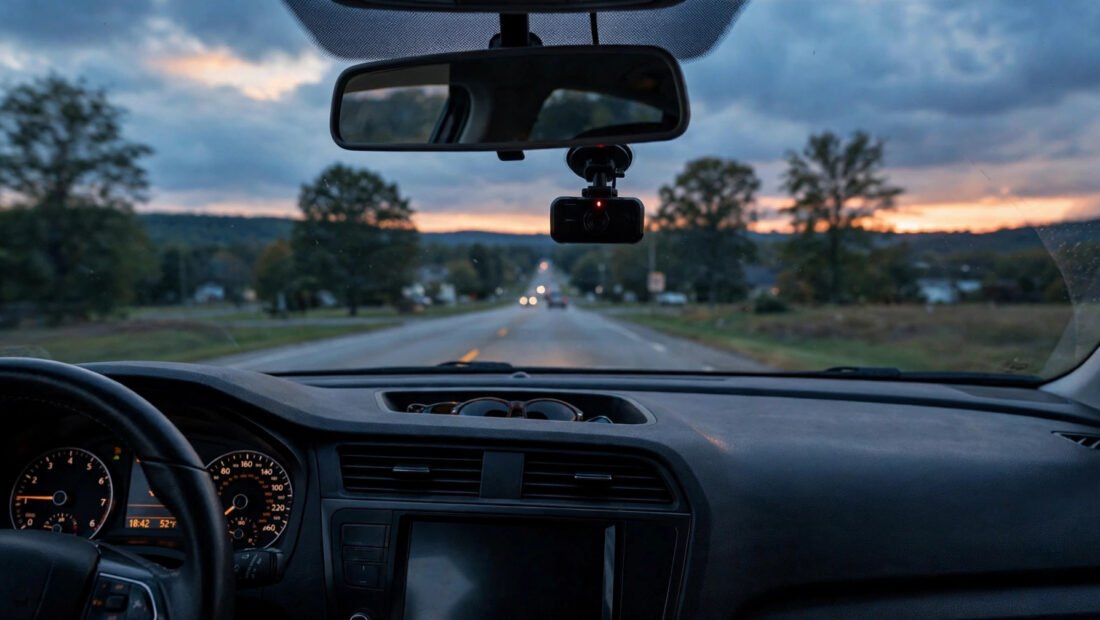
Mount the camera where it does not obstruct your view — behind the rear-view mirror is ideal — and wire it neatly so cables do not dangle across the windscreen, which can be an MOT advisory. Insurers cannot require you to have one, but submitting clear footage with a claim speeds up fault decisions dramatically. For context on how insurers assess claims, MoneyHelper’s guide to making a car insurance claim is a solid starting point.
Choosing in Practice: A Beginner’s Shortlist Approach
Here is the simple decision process. Set your budget (£100–£180 covers most beginners well). Decide front-only or dual-channel. Shortlist two or three models from established names — Nextbase (a UK brand with strong support), Viofo, and Garmin dominate independent reviews for good reason. Then check real-world night footage on YouTube for each, confirm the memory card requirements (high-endurance cards only; ordinary cards fail fast under constant rewriting), and buy from a retailer with a proper returns policy.
Avoid buying purely on Amazon star ratings, which are heavily gamed in this category. Specialist retailers and motoring publications’ tested roundups are far more trustworthy. And if you regularly drive for work, our guide to whether buying or leasing a van suits a small UK business covers the other end of motoring decisions — while connecting your phone to your car over Bluetooth is worth sorting at the same time, since hands-free calling pairs naturally with a tidy dash cam install.
Conclusion: Buy Once, Fit Properly, Forget About It
The safest dash cam choice for a beginner is boring: a well-reviewed mid-range camera from a known brand, fitted neatly, with a high-endurance memory card and the G-sensor enabled. Skip the gimmicks, do not chase 4K, and get the rear camera if you can. Then forget about it — until the day someone else’s driving becomes your problem, and your quiet little camera becomes the most valuable thing in your car.
Frequently Asked Questions
Are dash cams legal in the UK?
Yes. Recording for private use is perfectly legal. If you publish footage showing identifiable people or number plates, data protection rules apply, so be careful what you share online.
Will a dash cam lower my car insurance?
Some insurers offer small discounts, but the real saving comes at claim time: clear footage proving you were not at fault protects your no-claims bonus, which is worth far more than any upfront discount.
Do I need a front and rear dash cam?
Front-only covers the most common incidents, but rear-end collisions are frequent and disputed. A dual-channel setup is the better investment if your budget allows, typically £150–£250 for a good pair.
Can a dash cam drain my car battery?
Only if hardwired for parking mode without a voltage cut-off. A proper hardwire kit includes a cut-off that stops the camera before the battery gets too low. Cigarette-lighter-powered cameras only run with the ignition on and cannot drain the battery.