
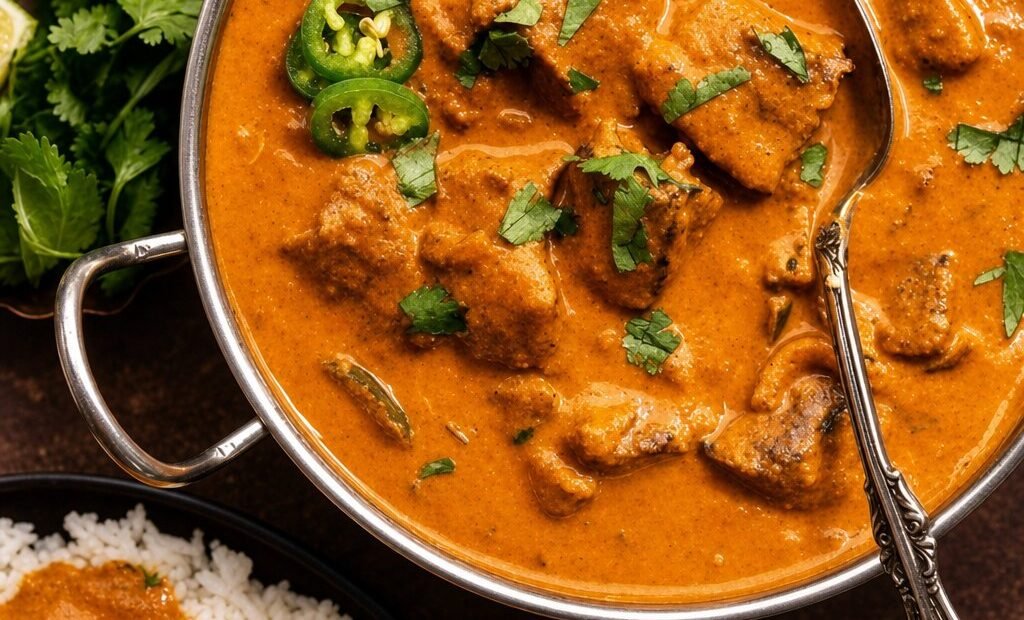
There’s curry, and then there’s curry-house curry — that rich, glossy, deeply savoury sauce that tastes nothing like the same spices cooked at home. I spent years wondering why my homemade curries tasted flat before a chef friend let me in on the secret: learning to make restaurant-style curry at home isn’t about a magic spice blend. It’s about technique — specifically, a base gravy, proper tempering, and patience with onions. Here’s the full method.
The Secret: Base Gravy
British curry houses don’t start each curry from scratch. They make a large batch of “base gravy” — a lightly spiced onion-and-tomato sauce — and every curry on the menu starts from it. This is why restaurant curries have that distinctive savoury depth: the base has been simmering for hours, concentrating flavour.
Here’s a home-scale version. Roughly chop 4 large onions, 2 carrots, a green pepper, and 4 cloves of garlic. Simmer in salted water for 45-60 minutes until completely soft, then blend until silky smooth. That’s your base — it keeps 5 days in the fridge or months in the freezer. Make a big batch on Sunday and weeknight curries become 20-minute affairs. It’s the curry equivalent of one-pot meal prep: front-load the effort, coast all week.
With base gravy ready, a restaurant-style curry comes together like this: heat oil until shimmering, add your whole spices (cumin seeds, cardamom, cinnamon) for 30 seconds until fragrant — this is tempering, and it blooms flavours that stay flat if just dumped in. Add finely diced onion and cook until deeply golden (15-20 minutes; this patience is non-negotiable). Add ginger-garlic paste, then ground spices (turmeric, coriander, cumin, garam masala, chilli) for 60 seconds. Add tomato purée, cook until the oil separates and glistens at the edges — this “oil separation” is the visual cue chefs look for; it means the raw spice taste is gone. Then add 2-3 ladles of base gravy, your pre-cooked meat or veg, and simmer 15-20 minutes. Finish with fresh coriander and a knob of butter or splash of cream.
The Techniques That Make the Difference
Cook the onions properly. I mean really properly — past translucent, past golden, to deep amber and sweet. This takes 15-25 minutes on medium heat and it’s where 80% of the flavour comes from. Rushed onions = thin, sharp sauce. Patient onions = rich, sweet depth. There’s no shortcut.
Layer the spices. Whole spices tempered in hot oil at the start; ground spices fried in the middle; garam masala (a finishing blend) stirred in at the end. Each addition at each stage does something different. Dumping all the spices in at once is the single most common home-cook mistake.
Pre-cook your protein. Curry houses par-cook chicken, lamb and veg separately, then finish them in the sauce. This means the meat is perfectly tender and the sauce isn’t overcooked. For chicken: simmer pieces in lightly spiced water for 15 minutes, then add to the curry for the final simmer. It also lets you make vegetarian and meat versions from the same base.
Don’t skimp on fat. Restaurant curries use generous oil or ghee, and it’s doing real work — carrying flavour and creating that glossy mouthfeel. You can use less at home, but going too lean is why “healthy” curries taste thin. A tablespoon of ghee at the end is transformative.
Restaurant-Style Curry at Home: Three Curries to Master
Chicken tikka masala: The nation’s favourite for a reason. Marinate chicken in yoghurt, lemon, ginger-garlic paste and tandoori masala for at least 2 hours (overnight is better), grill or air-fry until charred at the edges, then simmer in the base-gravy sauce with cream. The char is essential — it’s the smoky note that defines the dish.
Slow-cooked lamb rogan josh: Brown lamb shoulder chunks, build the sauce as above with extra Kashmiri chilli for colour, then simmer low for 90 minutes until the meat surrenders. This is a Sunday curry; it rewards time.
Chana masala (vegan): Chickpeas are the ideal weeknight curry — no protein to pre-cook, and they absorb flavour beautifully. Add amchur (dried mango powder) or lemon at the end for the sour lift that makes it sing.
Serve with proper rice and warm naan (shop-bought is fine; brush with garlic butter and char under a hot grill), finished with fresh coriander — our guide to storing fresh herbs so they last longer means you’ll always have some to hand.
Naan, Sides and the Full Spread
A curry without proper accompaniments is only half the experience. Shop-bought naan is perfectly acceptable — the trick is finishing it: brush with melted garlic butter and blast under a fiercely hot grill for 60-90 seconds until blistered and charred in spots. It’ll fool most people into thinking it’s homemade. For pilau rice, fry the drained rice in a little oil with whole spices (cardamom, cloves, cinnamon stick) before adding water — the toasting step is what separates restaurant rice from plain boiled.
Don’t forget the supporting cast: a simple kachumber salad (diced cucumber, tomato, red onion, lemon juice, salt) cuts through richness brilliantly; mango chutney and lime pickle are non-negotiable condiments; and a cooling raita (yoghurt, grated cucumber, mint, toasted cumin) tames even the fiercest chilli. These take minutes and turn the whole meal from “dinner” into “curry night.”
Spices: What You Actually Need
You don’t need 30 jars. The working curry-house kit: cumin seeds, coriander powder, turmeric, garam masala, chilli powder (or Kashmiri for colour), and whole cardamom/cinnamon/cloves for tempering. Buy small quantities from Asian supermarkets — they’re a third of the supermarket price and far fresher. Ground spices lose potency after 6-12 months; if yours have sat since 2023, replace them before blaming your technique.
The BBC Food curry collection has excellent tested recipes once you’ve got the base method down — use them to expand your repertoire with the fundamentals solid.
Restaurant-style curry at home isn’t about secret ingredients. It’s base gravy for depth, patient onions for sweetness, layered spices for complexity, and the confidence to use enough fat. Master those, and your kitchen will produce curries that make the takeaway menu redundant.


