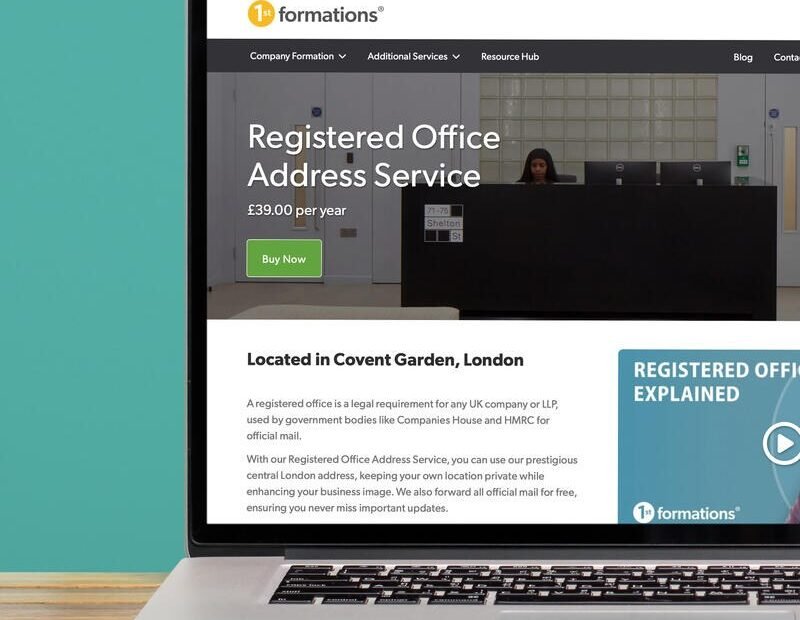
There’s a surprising amount of nonsense talked about what is a registered office address and do i need one for my ltd company. Half of it is out of date, a quarter of it never applied to the UK in the first place, and the rest is people confidently repeating something they heard third-hand.
Time to clear it up. Below is a proper, practical walkthrough based on how things actually work here: the real costs, the options genuinely worth considering, and the traps to avoid. Every limited company must have a registered office address on the public record. By the end you’ll be able to handle this with confidence.
Fair warning: specifics like prices drift over time, so treat any figures here as a guide rather than gospel. The principles won’t go stale, but it’s always worth a quick sanity check on current numbers before you spend money.
What is a registered office address and do i need one for my ltd
Cutting straight to it: Every limited company must have a registered office address on the public record. There, that’s the headline. It can be your home address, your accountant’s, or a paid service at £30 to £100 a year.
Of course the headline never tells the whole story. Your specific situation changes the maths: where you live, how much hassle you’ll tolerate, and whether you’re optimising for price, convenience or peace of mind. The sections below walk through each of those properly.
And don’t let perfect be the enemy of good. A decent decision made this week beats a perfect decision you never get around to. Most of this stuff is adjustable later anyway, so there’s no need to agonise.
What you need to know before you decide
Official post from Companies House and HMRC goes here, so it must be reliable. It sounds obvious when you read it, but this is the detail that trips people up most often. They focus on the headline question and miss the practical reality underneath it.
Then there’s this: Using your home address publishes it for anyone to find. If that’s useful, our guide to What are the most common reasons small businesses fail in the uk digs into the next question you’ll probably have. Worth keeping in mind as you weigh things up, because it changes which option makes sense for you.
The practical bit: what to do about it
Right, let’s make this actionable. Work through these in order and you’ll be sorted:
- It can be your home address, your accountant’s, or a paid service at £30 to £100 a year.
- Official post from Companies House and HMRC goes here, so it must be reliable.
- Using your home address publishes it for anyone to find.
- The address does not have to be where you actually work.
- You must display it on your website, invoices and business letters.
Follow that sequence and the whole thing becomes a minor errand rather than a saga.
Common mistakes worth avoiding
Here’s where it tends to go sideways for people:
- Skipping written terms because it feels awkward to ask for them.
- Mixing personal and business money from day one.
- The address does not have to be where you actually work.
- You must display it on your website, invoices and business letters.
The part people usually skim past
Here’s a detail that deserves more airtime: Official post from Companies House and HMRC goes here, so it must be reliable. On its own it looks minor, but it’s exactly the kind of thing that separates a smooth experience from an annoying one. Ask anyone who’s been through this and they’ll usually point to something like this as the thing they wish they’d known.
And on a related note: You must display it on your website, invoices and business letters. Between that and the point above, you now know more than most people who’ve already been through this process. That knowledge is what turns a stressful decision into a straightforward one.
Three quick things to keep in your back pocket while you decide:
- Remember: It can be your home address, your accountant’s, or a paid service at £30 to £100 a year.
- Don’t forget: Using your home address publishes it for anyone to find.
- And finally: The address does not have to be where you actually work.
None of this is meant to put you off, quite the opposite. Knowing the awkward bits in advance is what lets you sidestep them entirely. Most people who have a bad experience here skipped exactly this kind of detail and paid for the lesson afterwards.
Your options at a glance
It helps to think of this as a spectrum rather than a single right answer. Every limited company must have a registered office address on the public record. The address does not have to be where you actually work.
The budget route gets you there cheapest but demands the most legwork and patience from you. The middle route, which is what I’d recommend to most people, balances cost against convenience sensibly. The premium route costs more but removes nearly all the hassle. If you want a second opinion from an authoritative source, check MoneySavingExpert’s small business section. Be honest about which of those people you are and choose accordingly.
Whatever route you take, give it a proper chance before second-guessing yourself. Most options here work fine when given a fair go; it’s the constant chopping and changing that causes the real headaches.
And if you’d like a second opinion from somewhere authoritative, MoneySavingExpert’s small business section covers this well.
A couple of questions that come up a lot:
What’s the single most important thing to get right?
Every limited company must have a registered office address on the public record. Honestly, most people overthink this part. Pick the sensible middle option and move on with your day.
Is the cheapest option ever the right one?
You must display it on your website, invoices and business letters. Put simply, don’t rush it; the right choice is usually obvious once you’ve compared two or three options side by side.
What would you personally do here?
Official post from Companies House and HMRC goes here, so it must be reliable. Put simply, don’t rush it; the right choice is usually obvious once you’ve compared two or three options side by side.
The bottom line: If I had to boil it down to one sentence: Every limited company must have a registered office address on the public record, so start there and don’t overthink the rest. Worth a read next: How do i write a simple business plan for a uk startup. Also relevant: How do i write an invoice that meets uk requirements.