
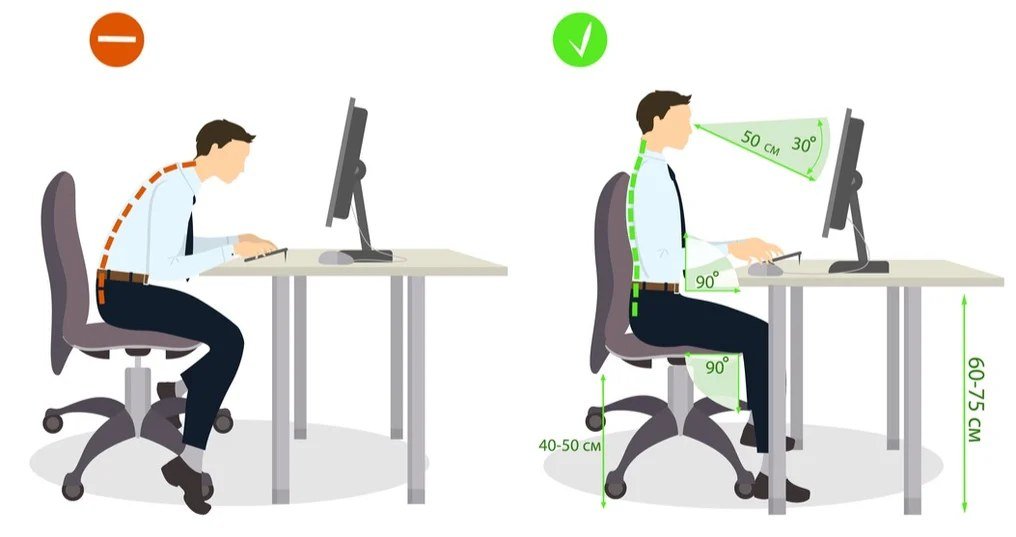
By 4pm your neck aches, your shoulders have migrated toward your ears, and standing up straight feels like a performance. Welcome to desk posture in 2026. The average office worker now sits for nine hours a day, and our bodies were not designed for it.
Forget the scary diagrams of the hunchback of the future. Your posture is adaptable at any age, and small changes compound fast. Here is how can I improve my posture if I sit at a desk all day, with fixes that fit around actual work.
How can i Improve my Posture if i Sit at a Desk All Day
Start with your setup: screen top at or just below eye level about an arm’s length away, chair supporting your lower back with feet flat on the floor, and keyboard and mouse close enough that your shoulders stay relaxed. Then build movement into the day: stand and walk for a few minutes every half hour, do chin tucks and shoulder blade squeezes twice daily, and strengthen your core and glutes two to three times a week. Posture is not about holding yourself rigidly straight; it is about varied positions, strong supporting muscles and not staying frozen in one shape all day.
Related reading: What are the Symptoms of Vitamin D Deficiency in Winter
Fix your workstation first
Most posture problems are furniture problems. Raise your monitor so you are not craning down; a stack of books works as well as a £60 stand. Your chair should let your hips sit slightly above your knees with your lower back supported; a rolled-up towel in the lumbar curve beats an expensive cushion for many people. Keep the mouse close so your arm is not reaching, which is a classic shoulder-pain trigger. If you hot-desk or work from a laptop at home, a separate keyboard and a laptop riser are the two cheapest upgrades with the biggest payoff. Standing desks help, but the evidence says the benefit comes from changing position regularly, not from standing all day, which brings its own problems.
The exercises that undo eight hours of sitting
You do not need an hour of yoga. Three moves, done consistently, cover most of it. Chin tucks: sit tall, pull your chin straight back to make a double chin, hold five seconds, repeat ten times; this directly counteracts forward head posture. Shoulder blade squeezes: pinch your shoulder blades together and down, hold five seconds, ten reps; this wakes up the mid-back muscles that switch off at a desk. And the doorway chest stretch: forearms on a doorframe, lean through until you feel the chest open, hold thirty seconds. Tight hip flexors from sitting respond well to a kneeling lunge stretch. Ten minutes a day, ideally split into two five-minute breaks, outperforms one heroic weekend session.
Worth a read: How can i Stop Snoring without Surgery
- Screen top at eye level, one arm’s length away.
- Feet flat, lower back supported, shoulders relaxed and down.
- Move every 30 minutes: stand, walk, roll your shoulders.
- Chin tucks and shoulder blade squeezes, twice daily.
- Strengthen glutes and core 2 to 3 times a week. Walking counts.
Break up the sitting
The research is clear that uninterrupted sitting is the problem more than sitting itself. Set a timer or use an app reminder to stand every half hour; even a minute of walking to the kitchen resets things. Take phone calls standing or pacing. Drink water from a small glass so refills force you up. Walking meetings, where practical, are genuinely productive for creative thinking. If your workplace has sit-stand desks, alternate roughly every hour rather than standing all afternoon; static standing strains the lower back and feet. The goal is variety: sit, stand, walk, perch. Your spine likes change.
When poor posture needs professional help
Aches from desk work usually respond to the fixes above within a few weeks. See your GP or a physiotherapist if pain persists beyond six weeks despite changes, if you get numbness or tingling in the arms or hands, or if headaches are frequent and severe. Be wary of anyone selling you a posture-correcting brace as a long-term fix; braces can help briefly but they weaken the very muscles you need to strengthen. Likewise, expensive ergonomic chairs are no substitute for movement. And ignore the myth of perfect posture: spines are robust, variation is normal, and the best posture is genuinely your next posture.
Posture myths worth dropping Start with one change this week, perhaps the screen height or the half-hourly stand, and layer the rest in gradually rather than overhauling everything on a Monday morning.
A few persistent myths deserve retiring. First, there is no single perfect posture you must hold all day; research shows posture varies widely among pain-free people, and chasing textbook alignment causes more anxiety than it prevents pain. Second, slouching occasionally will not ruin your spine; spines are strong, adaptable structures, and what matters is how much you move, not the odd slump on the sofa. Third, standing desks are not magic; standing still all day swaps one static load for another. And finally, posture correctors and taping might remind you to sit up, but they do not strengthen anything, so treat them as prompts at best. The unglamorous truth stands: move often, sit well-supported, and build strength. Everything else is marketing.
For the official medical position, the NHS conditions A to Z is the most trustworthy place to start.
See also: Is it Worth Paying for a Private Health Check in the UK
The bottom line
Better desk posture comes down to three things: a workstation that does not fight you, regular movement breaks, and a few minutes of targeted exercises daily. You do not need perfect alignment or pricey gadgets. Set the screen right, move every half hour, do your chin tucks, and give it a month. Your 4pm neck will notice the difference before you do. The NHS Live Well hub has practical, evidence-based tips on diet, exercise and everyday health.




2 Comments