
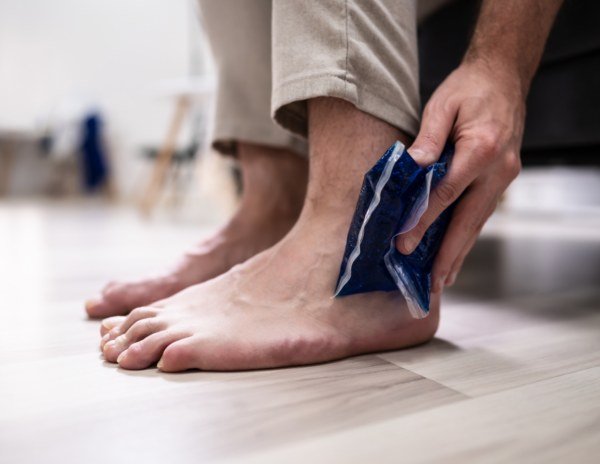
One missed step off a kerb, one awkward landing in five-a-side, and suddenly your ankle is the size of a tennis ball. Sprained ankles are among the commonest injuries in Britain, and most are managed at home. But how do I treat a sprained ankle at home properly, without either ignoring something serious or wrapping it like a mummy for a month?
I have done this twice, once on a run and once stepping off a train. The first time I did everything wrong. Here is the approach that actually works, based on what physiotherapists and the NHS recommend now, which has moved on from the old advice.
How do i Treat a Sprained Ankle at Home Properly
For a mild to moderate sprain: protect it from further injury, rest it for a day or two but not longer, apply ice for 15 to 20 minutes every few hours for the first couple of days, use a compression bandage if it helps with swelling, raise the foot above heart level as much as possible, and use paracetamol or ibuprofen for pain. Then, crucially, start gentle movement and weight-bearing as pain allows within a few days. The modern guidance has shifted away from total rest and rigid immobilisation toward early, gradual mobilisation, which heals ligaments better and faster.
Related reading: How can i Look After my Mental Health During Dark Winter Months
First 48 hours: the POLICE approach
Physios now teach POLICE rather than the old RICE: Protection, Optimal Loading, Ice, Compression, Elevation. Protection means avoiding the movement that caused it, using crutches if you cannot bear weight. Optimal loading is the key change: gentle movement and partial weight-bearing stimulate healing, while complete rest lets the joint stiffen and the muscles waste. Ice in a damp tea towel, never directly on skin, for 15 to 20 minutes at a time. Compression with an elastic bandage should be snug, not tourniquet-tight; if your toes tingle or go numb, it is too tight. Elevation genuinely works: foot above the level of your heart, propped on pillows, for as much of the day as you can manage.
How to tell if it is more than a sprain
Most sprains improve noticeably within a few days, even if the bruising looks dramatic. Get it checked promptly if you cannot bear any weight at all, if there is severe pain directly over the ankle bones, if the foot looks deformed, or if there is numbness. These are the signs clinicians use to decide on an X-ray, based on the Ottawa ankle rules. Also seek advice if the swelling has not started to improve after a week, if it keeps giving way months later, which suggests ligament laxity that physio can fix, or if you heard a distinct pop at the time of injury. When in doubt, your GP, a pharmacist or NHS 111 can triage you quickly.
Worth a read: How Long does it Take to Get a GP Appointment in the UK Right Now
- Ice for 15 to 20 minutes every 2 to 3 hours for the first 48 hours.
- Raise above heart level. A sofa arm plus cushions does the job.
- Start ankle circles and gentle weight-bearing within a few days, guided by pain.
- Do not use heat, alcohol massage or deep heat in the first 48 hours.
- Wear supportive, flat footwear once you are moving again, not flip-flops.
The rehab phase most people skip
This is where home treatment usually fails. Once the pain settles, the ligaments need retraining or the ankle stays weak and you sprain it again, which is how people end up with chronically unstable ankles. Simple exercises work: trace the alphabet with your toes, do calf raises on a step, and practise standing on the injured leg, progressing to doing it with your eyes closed. A resistance band costs a few pounds and is the single best tool for rebuilding strength. Balance work matters more than most people realise; wobble-board training is one of the best-proven ways to prevent repeat sprains. Give it two to six weeks depending on severity, and do not rush back to sport until you can hop on the injured leg without pain.
Painkillers, supports and what not to buy
Paracetamol is fine for pain, and ibuprofen can help with swelling in the first few days if your stomach tolerates it and you have no reason to avoid anti-inflammatories. An elasticated support bandage is useful early on; a rigid brace is overkill for most sprains and can weaken the joint if worn too long. Save your money on fancy ankle braces, magnetic straps and expensive creams marketed to athletes; none outperform the basics. And ignore anyone who tells you to walk it off immediately or, at the other extreme, to stay off it for a month. The evidence sits firmly in the middle: protect briefly, then move.
Returning to sport after a sprained ankle
The question every sporty patient asks is when they can play again, and the honest answer is: when the ankle is ready, not when the calendar says so. A sensible test is whether you can walk briskly, jog lightly and hop on the injured leg without pain or swelling the next day. Build back gradually: straight-line jogging before twisting sports, training before matches, and a proper warm-up every time. An elasticated support or sports tape for the first few games back is reasonable insurance while confidence returns. Recurrent sprains are the real enemy, so keep doing your balance exercises twice a week for at least three months after you feel fine. Most people who rehab properly return to their previous level; most who rush back end up on this page again.
The NHS Live Well hub has practical, evidence-based tips on diet, exercise and everyday health.
See also: How can i Lower my Blood Pressure without Medication
The bottom line
Treat a sprained ankle with protection, ice, compression and elevation for the first couple of days, then start moving it gently as pain allows. Watch for the red flags that need an X-ray, and do not skip the boring rehab exercises; they are what stop it happening again. Most mild sprains are back to normal in two to six weeks with nothing fancier than a bag of frozen peas and a resistance band. If you need a GP appointment, the NHS GP services guide explains how the system works.




2 Comments