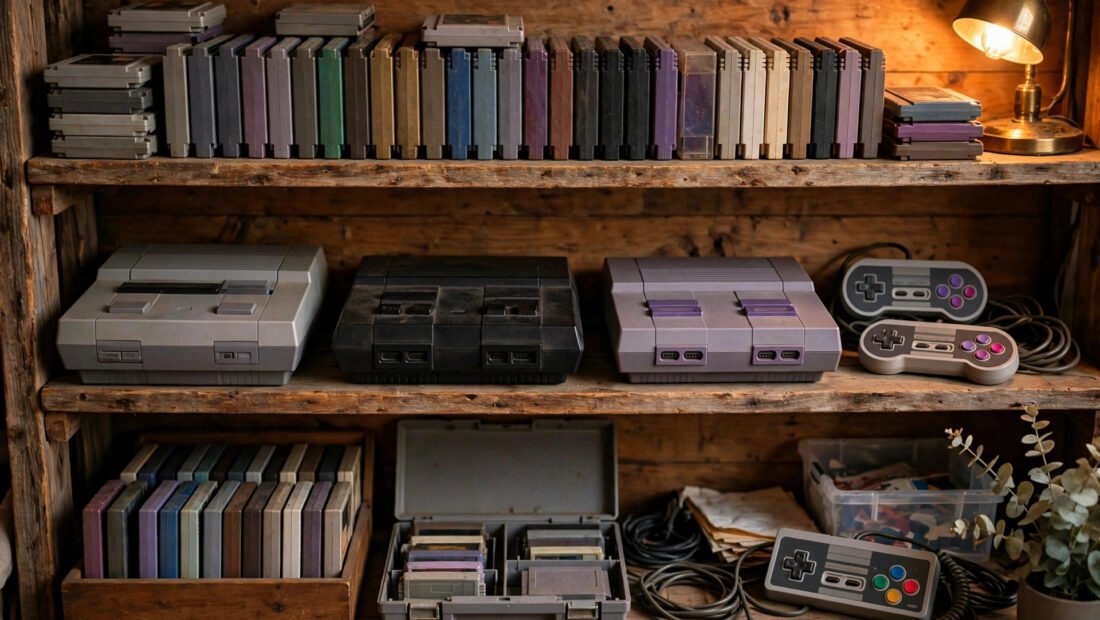
Retro game collecting looks simple from the outside: buy old games, put them on a shelf, feel nostalgic. Then you try it, and discover a world of reproduction cartridges, graded sealed copies selling for thousands, price-charting apps, “complete in box” arcana, and eBay listings where a Super Mario Bros. cartridge costs either £8 or £800 depending on details you cannot see. No wonder beginners find it baffling.
Retro collecting is hard to understand because it is actually three hobbies wearing one trench coat: nostalgia, investing, and preservation. This guide separates them, explains what drives the prices, and gives beginners a sane way in.
Why Old Plastic Costs Real Money
Retro game prices are driven by the same forces as any collectible market: scarcity, condition, demand, and cultural significance. Cartridges were mass-produced but poorly preserved — most were thrown away, leaving surprisingly few in good condition. Add thirty years of nostalgia from the generation now at peak earning power, and you get serious demand chasing limited supply.
Condition is everything, and this is where beginners get confused. A loose cartridge (just the cart) might be £10; the same game complete in box (CIB) with manual could be £60; a sealed, graded copy might be £600+. Collectors pay for completeness and condition the way stamp collectors pay for mint stamps. Regional variants, misprints, and limited releases multiply values further. None of this is intuitive until you learn the grading language — which is exactly why beginners feel lost.
The Three Tribes: Know Which One You Are
Nostalgia collectors buy the games they loved as kids, to play and display. Their collections are personal, values are emotional, and “worth it” means “it makes me happy.” Investor collectors treat games as assets, chasing sealed and graded copies of blue-chip titles. Their world of population reports and auction results looks like the stock market because it partly is one. Preservationists care about the games surviving — dumping ROMs, scanning manuals, maintaining hardware. They are the archivists of the hobby.
Most beginners are nostalgia collectors who wander into investor territory by accident — overpaying for a “rare” game that is actually common, or buying sealed copies they will never open. Decide which tribe you are before spending: it determines what “a good deal” means. If you want to play old games rather than collect them, emulation and official re-releases (Nintendo Switch Online, mini consoles) deliver 95% of the joy for 5% of the cost — our guide to whether a Switch is worth it for casual gaming covers the easiest legal route to classic games.
The Beginner Traps (and How Prices Actually Work)
Trap 1: reproductions. The market is flooded with fake cartridges — new-made copies in convincing shells. They play fine but are worth a fraction of originals, and unscrupulous sellers list them as genuine. Learn the tells (label quality, shell screws, PCB markings) or buy from reputable retro shops, not random auction listings.
Trap 2: price-chart worship. Sites like PriceCharting aggregate eBay sold listings — useful as a guide, dangerous as gospel. Prices vary wildly by condition and region, and a single outlier sale distorts averages. Always check actual sold listings for your specific region and condition.
Trap 3: “rare” means “valuable.” The rarest games are often obscure titles nobody wants. Value needs demand plus scarcity — a common game everyone loves (Pokémon, Zelda, Mario) in great condition often outperforms a genuinely rare game nobody remembers. Trap 4: grading as a beginner. Professional grading (WATA, VGA) costs significant money and only makes sense for genuinely valuable sealed items. Do not grade a £30 game.
A Sane Way to Start
Start with a focus: one console, one genre, one series — “every SNES RPG” or “all the Zelda games.” Focus beats scatter; it builds expertise that protects you from bad deals. Set a monthly budget and stick to it; collecting is a hobby that eats money silently. Buy the best condition you can afford — upgrading later means selling at a loss — and keep boxes and manuals even if you do not care about them now, because future-you (or future buyers) will.
Learn before you spend: join retro gaming communities (r/gamecollecting, UK Facebook groups), watch reputable YouTubers who explain variants and fakes, and visit retro gaming markets and shops where you can handle items before buying. Car boot sales and charity shops still yield finds, but the days of £1 Chrono Trigger are long gone — go for the fun, not the expectation of profit. And once you have a shelf of classics, planning a games night with friends is the perfect excuse to actually play them. Store your collection properly: away from sunlight, heat, and damp, because UV-faded boxes lose value fast.
Preservation: Why Collectors Are Also Archivists
Beyond money and nostalgia, retro collecting serves a purpose the games industry neglects: preservation. An estimated 87% of classic video games are currently out of print and unavailable through legal channels, according to the Video Game History Foundation — a cultural loss comparable to the silent film era, when most films simply vanished. Every cartridge preserved, every manual scanned, every ROM dumped by collectors is an act of archival against corporate indifference.
This gives collecting a dimension beyond the shelf. Preservation-minded collectors document variants, photograph packaging, contribute to databases, and maintain original hardware — skills the community actively teaches. If the archivist angle appeals to you, it is also the most welcoming corner of the hobby: preservation communities value knowledge over spending and will teach beginners freely. And it reframes the cost question — you are not just buying old plastic, you are keeping playable history alive for the generation that comes next. The games you preserve today are the ones your children will actually be able to experience.
Conclusion: Collect What You Love, Learn Before You Spend
Retro game collecting is hard to understand because it mixes nostalgia, investing, and archival preservation into one confusing market — with condition grading, reproductions, and price volatility that punish the uninformed. Pick your tribe, start narrow, budget strictly, learn the fakes, and buy the best condition you can afford. The National Videogame Museum in Sheffield preserves playable British gaming history and is well worth a visit, and BBC Technology regularly covers the retro market’s highs and lows.
Frequently Asked Questions
Why are retro games so expensive?
Scarcity (most copies were thrown away), condition sensitivity (complete-in-box copies are rare), and strong nostalgia-driven demand from buyers at peak earning age. Prices reflect collectible dynamics, not the cost of the plastic.
Is retro game collecting a good investment?
Blue-chip sealed titles have appreciated, but the market is volatile, illiquid, and full of fakes. Collect for love first; treat any investment return as a bonus, not a plan.
How do I spot fake retro cartridges?
Check label print quality, shell screw types, cartridge weight, and (if you can open it) the PCB. When in doubt, buy from established retro shops rather than auction listings, and compare against known-genuine copies in collector communities.
What is the best console to start collecting for?
The one you loved as a child — your existing knowledge is your edge. Practically, popular systems (SNES, Mega Drive, Game Boy, PS1) have the deepest markets, most community knowledge, and easiest resale.